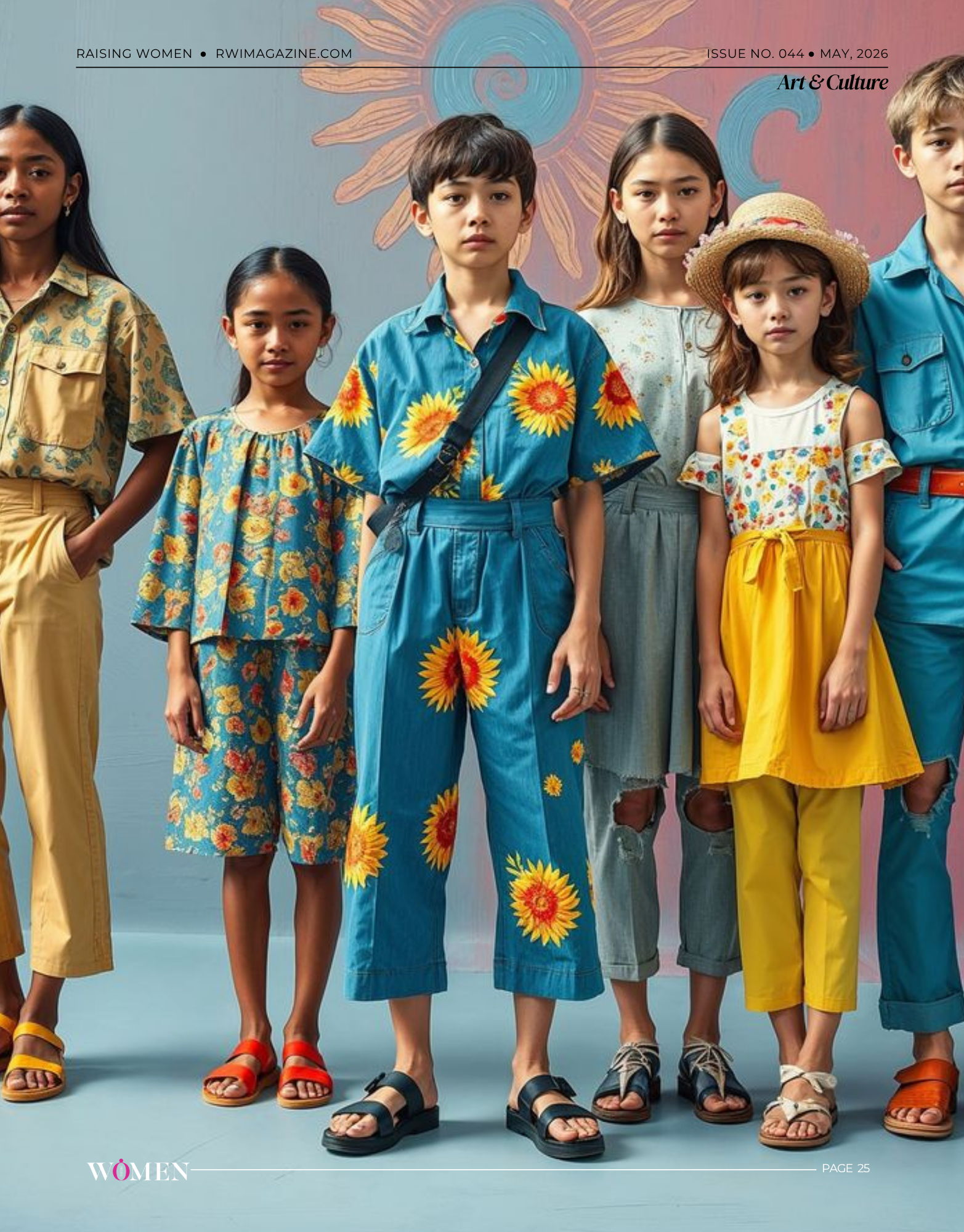
by Francisca Sinjae
I don’t think clothes were ever just clothes.
In the old photos my grandma keeps, children don’t look like me. They look like small versions of serious people. Boys in stiff shirts, like they were already late for important meetings. Girls in dresses that sit too still, like they were told not to spill anything, not even laughter. Back then, I don’t think childhood had its own wardrobe. It borrowed from grown-ups and tried to shrink itself into it.
But even then, there was magic.
Someone always stitched something. Not from shops that blinked lights and played music, but from hands that remembered. An old cloth became a new uniform. A worn wrapper became a Sunday dress. Nothing really ended, it just changed shape and kept living with a smaller heartbeat inside it.
And on special days, everything woke up.
Children were turned into colour. Bright fabrics that almost shouted. Beads that clicked like tiny applause. Shoes that were too shiny to touch dirty ground. You could tell it was a celebration before anyone spoke, because the children looked like walking joy.
Then time learned how to move faster.
And childhood learned how to dress lighter.
Suddenly, clothes started smiling. T-shirts with cartoons that already had opinions. Sneakers that lit up like they had secrets. Dresses that spun just because spinning felt good. Nobody needed to look like a small adult anymore. Now you could just look like… you.
Even school clothes softened their tone. Less “sit still and behave,” more “run but don’t lose your lunch box.”
And now?
Now clothes take pictures too.
Outfits are chosen for how they look before they are worn. Birthday clothes match themes. Families dress like coordinated stories. Even children sometimes look like tiny versions of trends they didn’t ask to understand.
But if I listen closely, I still hear the same thing from every era.
A child in old fabric. A child in new fabric. Both asking the same quiet question:
Do I look like myself in this?
Because in the end, every thread, stitched or bought, borrowed or brand new, is just trying to answer that.