Spotlighting Remarkable Women and Girls

Hire Character. Train Skill.

By Tilly Boateng

In 2023, Gallup reported that only 23 percent of employees worldwide describe themselves as engaged at work. Low engagement is not simply a morale issue; it is an economic one. Gallup estimates that disengagement costs the global economy approximately $8.8 trillion annually in lost productivity. At the heart of this crisis is not a shortage of talent. It is often a failure of leadership, culture and hiring judgement.

The phrase, widely attributed to Richard Branson, “Hire character. Train skill.” may sound like a motivational slogan, but it carries serious economic implications. In an era where businesses invest heavily in technical training, digital transformation and automation, perhaps the most undervalued asset remains human character.

Character in a professional context is not vague morality. It is measurable behaviour. It shows up as accountability, integrity, resilience, emotional intelligence and the ability to collaborate. Skills, by contrast, are technical competencies. They include coding languages, financial modelling, regulatory knowledge, data analysis and sector-specific expertise. Skills can be taught through training programmes, mentorship and repetition. Character, while capable of growth, is more deeply embedded in values and behavioural patterns.

Research supports the argument that character-linked traits influence business outcomes. A landmark study by Google, known as Project Oxygen, found that the highest-performing managers were not those with the strongest technical expertise. Instead, they excelled in coaching, communication, empathy and support for career development. Technical skill ranked far lower than interpersonal competence. In short, soft skills were not soft at all. They were economically strategic.

The cost of poor hiring decisions is also significant. The US Department of Labor has previously estimated that the cost of a bad hire can equal up to 30 percent of the employee’s first-year earnings. Beyond direct financial loss, there are hidden costs: team disruption, reputational damage and lowered morale. When organisations prioritise impressive CVs over ethical alignment and collaborative mindset, they often pay for it later.

From a SHEconomics lens, this conversation becomes even more layered. Women globally continue to navigate hiring systems that often scrutinise personality more than competence. According to McKinsey’s 2023 Women in the Workplace report, women are still underrepresented at every stage of the corporate pipeline, particularly at senior levels. Meanwhile, studies from the Harvard Business Review have highlighted how men are frequently hired or promoted based on perceived potential, while women are assessed based on proven performance.

If businesses genuinely embraced character-based hiring, what would change? Would empathy, adaptability and collaborative leadership finally be valued at the same level as assertiveness and technical bravado? Would more women ascend into leadership roles in environments that recognise emotional intelligence as a strategic advantage rather than a secondary trait?

Globally, the economic case for inclusive and values-based leadership is compelling. A 2020 McKinsey report found that companies in the top quartile for gender diversity on executive teams were 25 percent more likely to achieve above-average profitability compared to those in the bottom quartile. While diversity alone does not guarantee performance, inclusive leadership cultures, which are grounded in fairness and integrity, correlate strongly with financial outcomes.

In emerging markets across Africa, Asia and Latin America, the argument becomes even more practical. Many businesses operate in high-trust ecosystems where relationships drive opportunity. In such contexts, character is not a luxury. It is infrastructure. Founders often rely on lean teams, where one person’s integrity can determine client retention or investor confidence. Technical gaps can be closed through training, partnerships and digital tools. Ethical gaps are harder to repair.

However, the concept of hiring for character must be applied carefully. “Culture fit” has sometimes been misused as a proxy for similarity, reinforcing bias and excluding diverse voices. True character-based hiring should not mean selecting people who look, think or speak alike. It should mean assessing alignment with transparent values such as accountability, respect, inclusion and ethical responsibility.

For women in leadership, this principle offers both opportunity and challenge. Women entrepreneurs frequently build companies rooted in relational leadership, mentorship and long-term trust. These attributes, once dismissed as secondary, are increasingly recognised as critical in volatile and uncertain economies. At the same time, women professionals must continue to develop technical competence, ensuring that skill and character reinforce rather than replace one another.

Ultimately, the future of sustainable business will depend on a recalibration of what we reward. In a digital economy where tools evolve rapidly and technical knowledge has a short shelf life, the capacity to learn, adapt and lead ethically may be the true competitive advantage.

Hiring character and training skill is not sentimental advice. It is economic foresight. Trust reduces friction. Integrity protects reputation. Emotional intelligence strengthens teams. When organisations give opportunity to those who demonstrate these qualities, they gain resilience, loyalty and long-term growth. In a global marketplace shaped by uncertainty, perhaps the smartest investment a business can make is not in software, but in values.

Share:

Trending

Raising Women Magazine Issue 53 – September 2026

Apparently, saving the planet comes with a shopping list. Solar panels, electric cars, sustainable fashion and, preferably, a bank account that understands the assignment.

In Issue 53, our cover woman, Professor Joyashree Roy, challenges us to reconsider what sustainability really costs, who pays, and why the cheapest choices today may leave tomorrow’s generations with the bill.

But this issue is also about the invisible price tags attached to everyday life. From passport privilege and the cultural expectations of a “good woman” to motherhood, personal boundaries and the delicate art of enjoying life before finishing every task, we examine the systems shaping our choices.

We also celebrate women turning overlooked problems into extraordinary opportunities.

Perhaps progress begins when we stop asking only what things cost and start asking what they are worth.

A better world should not be a luxury reserved for those who can afford it.
Happy reading!

.

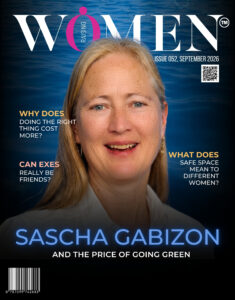
Raising Women Magazine Issue 52 – September 2026

This issue asks a deceptively simple question: can we save the planet without making ordinary people pay the highest price?
Our cover star, Sascha Gabizon, brings that question sharply into focus, challenging us to think about climate action not only through carbon, but through fairness, access and gender. Because going green sounds wonderful until sustainability becomes something only the wealthy can afford.
Across these pages, we follow climate change into unexpected places. Into our wardrobes, our food, our cultural traditions and even the price of our morning coffee. We also continue our important First Daughters conversation, explore what women really mean when they speak about safety, and look at 111 Miss World contestants whose purpose projects remind us that beauty today carries increasingly bigger expectations.
This edition is ultimately about responsibility, but responsibility shared fairly.
Because saving our planet cannot become another luxury.
And perhaps the greenest future is one everyone can actually afford.

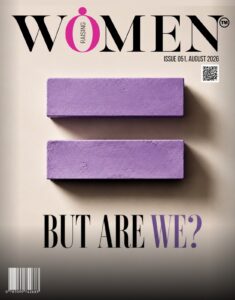
Raising Women Magazine Issue 051 – August 2026

Equal. Such a small word for such a complicated idea.

In this issue, we ask a question that feels almost impolite after decades of progress: women have more rights, education, income and influence than generations before us, but are we equal? We have travelled remarkably far, yet full global gender parity remains generations away. Apparently, equality is taking the scenic route.

Issue 51 looks beyond the equal sign to what equality actually feels like in women’s lives. We follow the money, the power and, importantly, the hours women still disproportionately spend caring. We also explore women’s old financial systems, workplace design, the soft life economy and the changing meaning of opportunity
.
Progress deserves celebration. But celebration should never make us complacent.

We have opened many doors.

Now we must ask what happens after women walk through them.

We are closer.

But are we there?
.

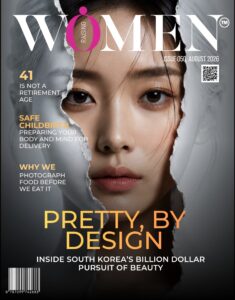
Raising Women Magazine Issue 050 – August 2026

Fifty issues. That feels worth pausing for.
Not because fifty is simply a lovely round number, but because every issue represents another opportunity to ask better questions about women, culture and the world we are building.
And Issue 50 certainly asks questions.
Our cover story, PRETTY, BY DESIGN, takes us to South Korea and its billion dollar pursuit of beauty, examining what happens when appearance becomes intertwined with confidence, opportunity and social capital. But before we become too fascinated by South Korea, perhaps we should check our own mirrors. The pursuit of “better” is increasingly global.
Elsewhere, we meet an Olympic champion who found gold at 41 and after motherhood, explore the AI gap reshaping women’s work, rediscover our grandmothers as archivists and ask why dinner now requires photography before eating.
Fifty editions later, Raising Women Magazine remains curious, global and committed to conversations that matter.
Here’s to 50.
And to everything we are still becoming.

Your guide to IVF and egg freezing in Korea

Empowering your family planning journey with curated fertility treatments at lower costs. Get our guide for Korea’s leading clinics, pricing and service breakdown.

Recommended News

Raising Women Magazine Issue 53 – September 2026

Apparently, saving the planet comes with a shopping list. Solar panels, electric cars, sustainable fashion and, preferably, a bank account that understands the assignment.

In Issue 53, our cover woman, Professor Joyashree Roy, challenges us to reconsider what sustainability really costs, who pays, and why the cheapest choices today may leave tomorrow’s generations with the bill.

But this issue is also about the invisible price tags attached to everyday life. From passport privilege and the cultural expectations of a “good woman” to motherhood, personal boundaries and the delicate art of enjoying life before finishing every task, we examine the systems shaping our choices.

We also celebrate women turning overlooked problems into extraordinary opportunities.

Perhaps progress begins when we stop asking only what things cost and start asking what they are worth.

A better world should not be a luxury reserved for those who can afford it.
Happy reading!

.

Raising Women Magazine Issue 52 – September 2026

This issue asks a deceptively simple question: can we save the planet without making ordinary people pay the highest price?
Our cover star, Sascha Gabizon, brings that question sharply into focus, challenging us to think about climate action not only through carbon, but through fairness, access and gender. Because going green sounds wonderful until sustainability becomes something only the wealthy can afford.
Across these pages, we follow climate change into unexpected places. Into our wardrobes, our food, our cultural traditions and even the price of our morning coffee. We also continue our important First Daughters conversation, explore what women really mean when they speak about safety, and look at 111 Miss World contestants whose purpose projects remind us that beauty today carries increasingly bigger expectations.
This edition is ultimately about responsibility, but responsibility shared fairly.
Because saving our planet cannot become another luxury.
And perhaps the greenest future is one everyone can actually afford.

Raising Women Magazine Issue 051 – August 2026

Equal. Such a small word for such a complicated idea.

In this issue, we ask a question that feels almost impolite after decades of progress: women have more rights, education, income and influence than generations before us, but are we equal? We have travelled remarkably far, yet full global gender parity remains generations away. Apparently, equality is taking the scenic route.

Issue 51 looks beyond the equal sign to what equality actually feels like in women’s lives. We follow the money, the power and, importantly, the hours women still disproportionately spend caring. We also explore women’s old financial systems, workplace design, the soft life economy and the changing meaning of opportunity
.
Progress deserves celebration. But celebration should never make us complacent.

We have opened many doors.

Now we must ask what happens after women walk through them.

We are closer.

But are we there?
.

Raising Women Magazine Issue 050 – August 2026

Fifty issues. That feels worth pausing for.
Not because fifty is simply a lovely round number, but because every issue represents another opportunity to ask better questions about women, culture and the world we are building.
And Issue 50 certainly asks questions.
Our cover story, PRETTY, BY DESIGN, takes us to South Korea and its billion dollar pursuit of beauty, examining what happens when appearance becomes intertwined with confidence, opportunity and social capital. But before we become too fascinated by South Korea, perhaps we should check our own mirrors. The pursuit of “better” is increasingly global.
Elsewhere, we meet an Olympic champion who found gold at 41 and after motherhood, explore the AI gap reshaping women’s work, rediscover our grandmothers as archivists and ask why dinner now requires photography before eating.
Fifty editions later, Raising Women Magazine remains curious, global and committed to conversations that matter.
Here’s to 50.
And to everything we are still becoming.

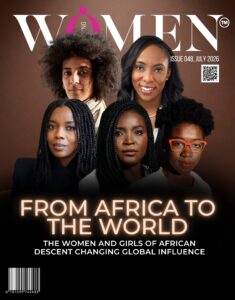
Raising Women Magazine Issue 049 – August 2026

There is a quiet shift taking place in the stories women are telling.

For years, success was measured by titles, milestones, and visibility. Today, we are asking deeper questions. What does influence look like? Who is changing the world? Which friendships shape the women we become? And how do we carry our heritage into a future we are helping to build?

This edition celebrates women and girls of African descent whose ideas, courage, creativity, and leadership are reshaping global conversations. Our cover feature is a reminder that Africa is not waiting to be discovered. It is already influencing the future through remarkable women whose work is changing industries, communities, and generations.

Alongside these inspiring stories, we explore the quiet power of friendship, the economics of modern womanhood, fashion’s changing priorities, and the cultural moments defining our time.

At Raising Women Magazine, we remain committed to one belief: when women rise with purpose, they do not simply change their own stories. They expand what the world believes is possible.

Raising Women Magazine Issue 048 – July 2026

There is a quiet shift taking place in the stories women are telling.

For years, success was measured by titles, milestones, and visibility. Today, we are asking deeper questions. What does influence look like? Who is changing the world? Which friendships shape the women we become? And how do we carry our heritage into a future we are helping to build?

This edition celebrates women and girls of African descent whose ideas, courage, creativity, and leadership are reshaping global conversations. Our cover feature is a reminder that Africa is not waiting to be discovered. It is already influencing the future through remarkable women whose work is changing industries, communities, and generations.

Alongside these inspiring stories, we explore the quiet power of friendship, the economics of modern womanhood, fashion’s changing priorities, and the cultural moments defining our time.

At Raising Women Magazine, we remain committed to one belief: when women rise with purpose, they do not simply change their own stories. They expand what the world believes is possible.