On What 2025 Taught Us and
Why the First Daughter Agenda Matters Now
By Daniel Agusi
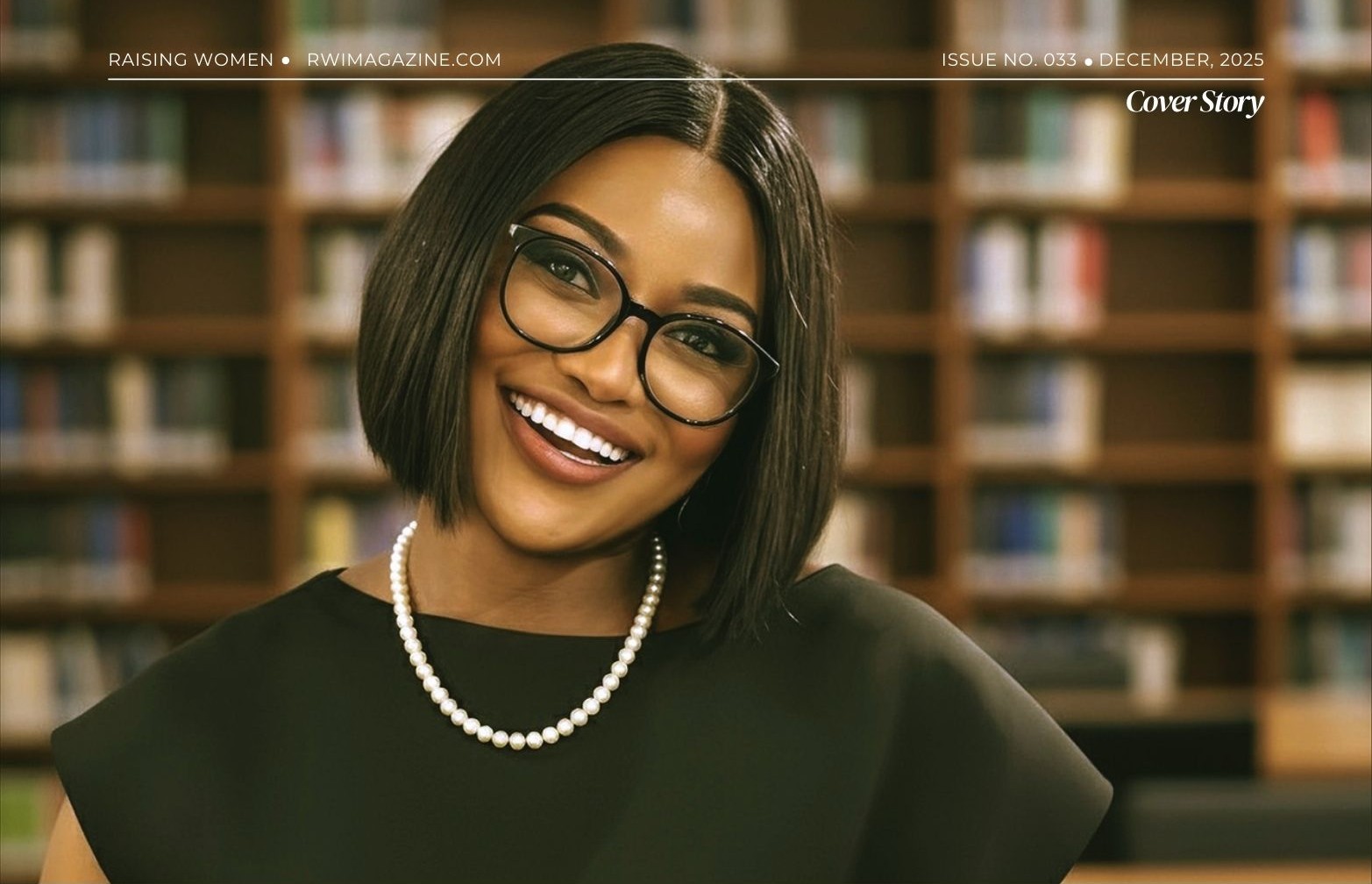
Before a magazine can announce where it is going, it must first reckon with where it has been. This conversation with Raising Women’s Editor-in-Chief, Dr May Ikeora-Amamgbo, sits deliberately at that crossroads. It is both a reflective pause at the close of 2025 and a clear-eyed unveiling of the work ahead. In revisiting the stories that shaped the year, from reproductive health narratives that refused comfort to editorial choices that honoured complexity over polish, she offers readers an unfiltered look into the philosophy guiding the magazine’s evolution. This is not a victory lap. It is an accounting.
Out of that reckoning emerges Raising Women’s 2026 editorial agenda, The First Daughter. Introduced here for the first time, the agenda signals a shift that is intimate, cultural, and deeply interrogative. Rather than chasing novelty, it turns toward the familiar and asks us to see it differently. To question how responsibility is inherited, how girlhood is shaped by expectation, and how strength is often cultivated long before consent.
In this interview, Dr May does more than announce a theme. She names a pattern many women have lived without language. She frames first daughterhood not as a niche identity, but as a global experience that cuts across cultures, homes, and histories. One that has produced leaders, caregivers, and resilient women, often at a personal cost that has gone unexamined.
This introduction marks the beginning of a year-long inquiry. One that blends storytelling with data, reflection with research, and personal truth with collective reckoning. As Raising Women steps into 2026, this conversation invites readers to do the same. Not just to read, but to recognise. Not just to celebrate strength, but to understand its origins.
1. Looking back at this year’s publications, which issue or feature felt the most defining for you? The one that truly captured the heart of Raising Women Magazine in 2025?
Without hesitation, the issue that stands tallest for me was our Reproductive Health focused edition. Not because it was neat or comfortable, but precisely because it was not. It held space for longing, loss, science, faith, choice, and silence, all in the same breath. It reflected the kind of woman Raising Women speaks to, informed, conflicted, hopeful, tired, resilient, and still standing. That issue reminded me why we exist, not to perform empowerment, but to sit honestly with women where they are.
Another deeply personal highlight for me this year was seeing one of the stories we published come full circle in real life.
One of our former cover stars, Hellynn Jung, who shared her extraordinary resilience and vulnerability around her fertility journey in one of our 2024 editions, announced this year that she is expecting after unimaginable rounds of IVF. That moment felt like a quiet miracle.
It was not just good news, it was a full-circle reminder of why these stories matter. To end 2025 with that kind of testimony felt sacred. We cannot wait to share her next chapter in a future edition, because Raising Women has never just documented women’s journeys, we walk alongside them.
2. This year saw bold themes, diverse voices, and powerful storytelling. What moment or editorial decision made you most proud of our evolution as a magazine?
Choosing not to sanitise women’s experiences. That was the turning point. We stopped polishing pain into palatable soundbites and allowed complexity to live on the page. We published stories that did not end with neat lessons or triumphant bows. Some stories simply ended with truth. That decision felt risky, but it matured us. It said, we trust our readers enough to hold nuance.
3. Readers connected strongly with many of our stories in 2025. Was there any feedback, letter, or unexpected reaction that stayed with you and shaped how you think about our work?
One message that stayed with me came from a young woman building her career who said,
“As a young woman building my career, I often search for spaces that are both honest and uplifting. Raising Women Magazine gives me that balance. I have learned from the success stories, but I have also found comfort in the candid confessions and cultural reflections. It feels like a guidebook I can return to every two weeks, reminding me that my journey is valid, even when it is messy.”
That message moved me deeply because it captured exactly what we are trying to build. A space that does not pressure women to have it all figured out, but reassures them that they are not behind. It shaped how I think about our responsibility as a publication. We are not just curating stories, we are accompanying women through their becoming. And that is a responsibility I do not take lightly.
Introducing the First Daughter Agenda
4. As we prepare for 2026, what inspired the decision to make The First Daughter our central editorial agenda for the entire year?
The realisation that so many of us were carrying identical emotional blueprints without ever being taught the language to name them. In therapy rooms, boardrooms, kitchens, and prayer closets, I kept meeting women who were strong, capable, exhausted, and quietly resentful, and almost all of them were first daughters. The agenda emerged naturally. It was overdue.
At Raising Women, we have always believed that women’s empowerment and women’s rights must be examined from multiple angles. Not because the issues are unclear, but because perspective changes everything. The same truth, when viewed differently, can soften hearts, provoke reflection, and inspire social change in ways slogans cannot.
The First Daughter is inspired by the need to rehumanise women and girls. To see them first as someone’s child, sister, mother, aunty, niece, grandmother, before assigning them roles, responsibilities, and expectations that may not align with who they are or who they are becoming. Too often, advocacy skips straight to duty without pausing to acknowledge personhood. This agenda intentionally pauses.
In true Raising Women fashion, we chose an angle that invites people to see differently. Not to accuse, but to reflect. Not to centre blame, but to expand understanding. It is important to say that “first daughters” here is both literal and metaphorical. It refers to birth order, yes, but also to burden. To the woman who became the emotional first responder in her family. The one who stepped into responsibility early, regardless of where she fell on the birth register.
This is not an agenda designed to spotlight only pain or negative experiences. It is equally a celebration. Of resilience, leadership, emotional intelligence, and quiet strength. But it also insists that strength deserves context, and that celebration should not come at the cost of silence.
Ultimately, this agenda reflects our belief that lasting change begins when we tell familiar stories from unfamiliar angles. When we shift how society sees women, we also shift how women are allowed to see themselves.
5. First daughters often carry unique expectations like leadership, responsibility, emotional labour. How would you describe the “first daughter experience” and why does it deserve a global conversation?
The first daughter experience is being praised for maturity you were forced into. It is being dependable before you were allowed to be delicate. It is becoming the bridge, the buffer, the backup plan. It deserves a global conversation because it shapes women long before they make conscious choices. It teaches us who we are allowed to be and who we are expected to carry.
6. From your observation, how does being the first daughter influence a woman’s identity, her confidence, her boundaries, and even the roles she grows into?
It often produces high-functioning women with underdeveloped rest muscles. Confidence mixed with guilt. Leadership paired with people-pleasing. Boundaries learned late, if at all. Many first daughters grow into roles of responsibility effortlessly but struggle with roles of reception. We know how to give. Receiving still feels unfamiliar.
I also think the experience is not monolithic. I am a first daughter of three boys, and that dynamic comes with its own quiet curriculum. There can be a blend of overprotection and premature independence, a tendency towards being boyish, resilient, and emotionally self-reliant, while carrying responsibilities that are difficult to share because there is no obvious peer mirror within the home. You learn to hold your own early, often without realising how much you are holding.
First daughters amongst girls can experience something slightly different. The expectations are louder, the comparisons sharper, and the responsibilities more layered. There can also be strong sisterhood, shared survival, and collective resilience, but it often comes at the cost of constant self-measuring.
In many African contexts, these dynamics are further shaped by culture, gender norms, and unspoken hierarchies of duty. Birth order intersects with tradition in ways that are subtle yet powerful. The first daughter is often the emotional anchor, the moral compass, the unofficial third parent, even when no one names her as such.
That is why I am deeply curious about this agenda. I want to listen not only to first daughters, but to those around them, parents, siblings, extended family members, educators, and faith leaders. Understanding how first daughters are socialised requires widening the lens. This is not just a personal story, it is a collective one, and we can only begin to unlearn it by first seeing it clearly.
7. There’s the strength of being a first daughter, but also the weight. What hidden truths or struggles do you hope our readers will finally see, name, and understand through this agenda?
That strength does not cancel out grief. That being capable does not mean being unbreakable. That many first daughters are not burnt out because they are weak, but because they have been strong for too long without permission to stop. I want readers to see that exhaustion is not a personal failure, it is often a structural inheritance.
8. The first daughter role appears in every culture, but it manifests differently. How do you envision this theme connecting women across backgrounds, countries, and lived experiences?
Because the role speaks a universal language, expectation. Whether in Lagos, London, Lahore, or Los Angeles, the first daughter is often socialised into responsibility before desire. The accents may change, the rules may vary, but the emotional contract feels eerily familiar. This agenda invites women to recognise themselves in each other.
9. What kinds of stories, narratives, or revelations are you hoping women will share with us as we build this year-long project?
I am hoping for honesty in all its forms, quiet confessions, long-held truths, and moments women have never quite found the language for. Stories about responsibility assumed too early, dreams deferred without ceremony, and the unspoken agreements many first daughters made with their families long before they understood the cost.
But I am equally excited about the joyful, powerful, inspiring, and eye-opening stories. Stories that celebrate first daughters, not only through their own voices, but through the voices of those who love them. I want to hear from husbands who witnessed the strength and the softness of the women they married. From brothers who grew up protected by a sister they did not fully appreciate until adulthood. From sisters who saw leadership modelled in real time. From fathers who now recognise the weight their daughters carried with grace.
The First Daughter agenda must not only interrogate experience, it must honour it. It must make room for gratitude, pride, and celebration. These women and girls are not just surviving roles, they are shaping families, communities, and futures. Telling those stories in their fullness is essential to seeing them fully.
10. Ultimately, what impact do you hope the First Daughter series will have, not just on first daughters themselves, but on families, communities, and the broader conversation about womanhood?
At a personal and social level, I hope it disrupts silence. That first daughters finally feel seen, not only for what they do, but for who they are. That families begin to rethink how responsibility, care, and expectation are distributed. That mothers soften where they can, fathers listen more intentionally, siblings reflect more deeply, and women feel permitted to renegotiate roles they never consciously agreed to.
Beyond storytelling, we are also intentional about contributing to socio-cultural and academic knowledge, particularly around the lived realities of first daughters in African contexts. For months now, we have been disseminating questionnaires to first daughters and other key stakeholders involved in their socialisation, parents, siblings, partners, educators, and faith leaders. The responses have been rich, layered, and deeply revealing. But we want more.
This agenda is designed to be empirical as much as it is editorial. We want data alongside narrative. Patterns alongside personal testimony. That is why we are inviting readers to visit @rwiofficial_ on Instagram and complete whichever form best reflects their experience. Every response helps deepen the conversation and ensures that what we publish is not only resonant, but grounded.
Ultimately, I hope the First Daughter series reshapes how womanhood is understood. That it expands the conversation beyond sacrifice to include choice, beyond strength to include care, and beyond expectation to include humanity. If we can influence how families raise girls, how societies assign roles, and how women understand themselves, then this work will have done what Raising Women has always set out to do, create change that is felt, not just read.