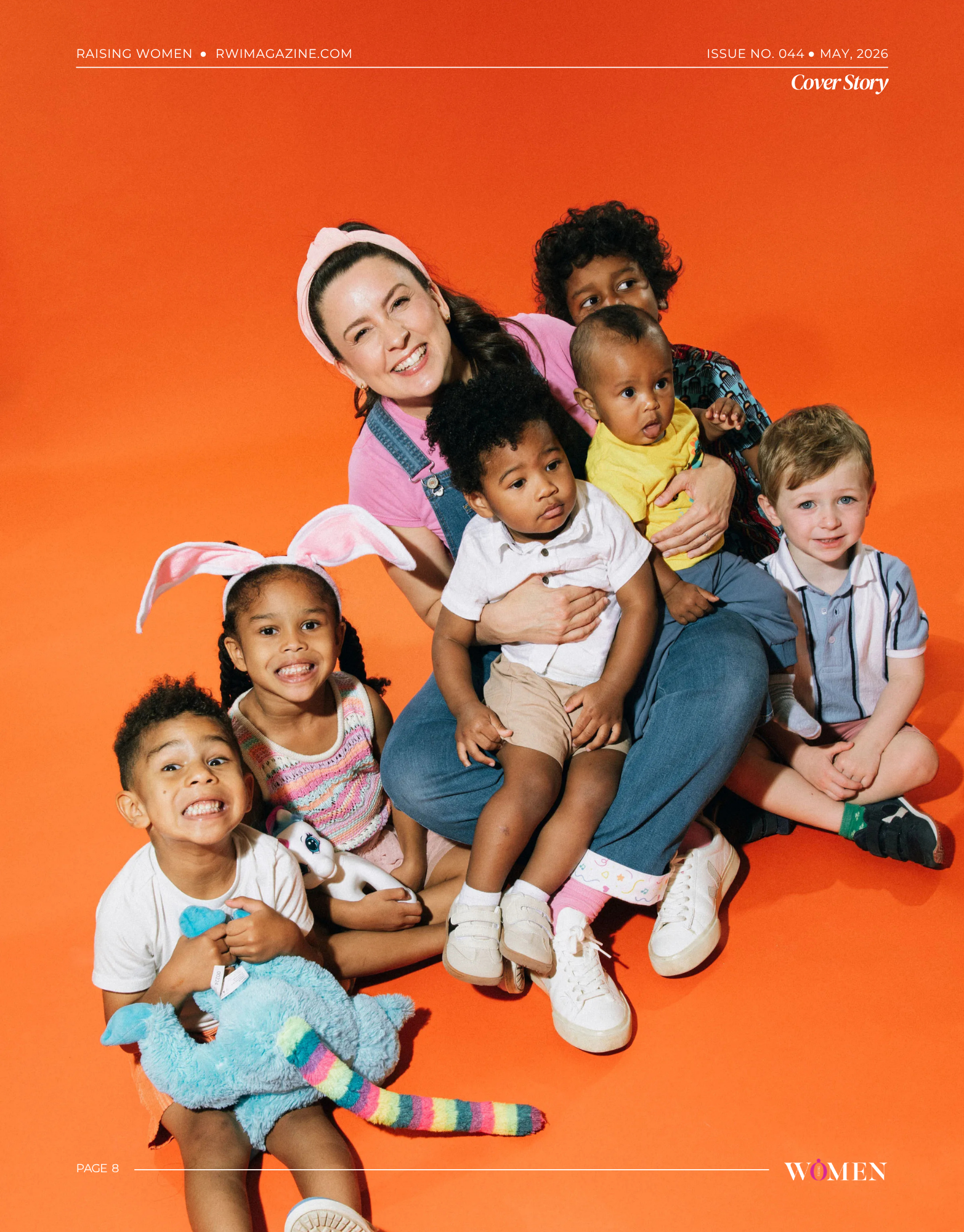
by Emmanuella Abraham
For millions of children, the voice is instantly recognisable. Slow, warm, animated, and encouraging. But behind the bright colours and nursery rhymes is a far more intentional story, one rooted in education, research, and a deeply personal experience with motherhood.
Ms. Rachel, whose real name is Rachel Griffin Accurso, did not set out to become one of the most influential figures in children’s media. Before the internet fame, she was a music educator with a master’s degree in music education from New York University. The idea for Songs for Littles emerged after her son experienced a speech delay and struggled to say his first words. Unable to find the kind of educational content she needed, she decided to create it herself.
What followed was not just another children’s YouTube channel. It became a research-backed educational platform used by parents, speech therapists, and educators around the world. Today, her videos have billions of views and a devoted audience of children and parents who see her not simply as an entertainer, but as part of their child’s early development.
For this Children’s Day issue, we explored the questions parents, educators, and even critics continue to ask about Ms. Rachel and the unexpected cultural impact of her work.
Why did Ms. Rachel start making videos for children?
The answer begins with her son.
According to interviews and statements she has shared publicly, the early stages of motherhood became emotionally difficult when her son experienced a speech delay and did not say his first word until he was close to three years old. She has spoken openly about searching for educational resources that could support speech development while still keeping children engaged. When she could not find what she needed, she and her husband, Broadway composer Aron Accurso, began creating their own videos from their apartment.
What makes this story resonate with so many parents is that the channel was not created from trend forecasting or entertainment ambition. It came from frustration, research, and necessity.
“I wanted to create something that would help children learn language.”
That intention still shapes the structure of her content today.
What makes her videos different from typical children’s content?
A significant part of Ms. Rachel’s popularity comes from how intentional the videos are.
Unlike fast-paced children’s programming designed primarily for stimulation, Songs for Littles uses techniques associated with speech therapy and early childhood education. Her speech is slower and more deliberate. Repetition is used strategically. Gestures and sign language are integrated into communication. Eye contact and pauses are emphasised to encourage interaction rather than passive viewing.
She has repeatedly explained that the content is research-backed and built alongside specialists, including speech-language professionals and educators. The videos are designed to encourage what she describes as “interactive screen time,” rather than simply occupying a child’s attention.
This distinction has become increasingly important in conversations around children and technology, particularly as parents grow more concerned about overstimulation and excessive screen exposure.
Many educational experts have pointed out that one of the strongest aspects of her content is not simply what children watch, but how they are encouraged to respond. Children are spoken to directly. They are asked questions. They are given pauses to think, answer, repeat, or imitate. The structure mimics real-life communication patterns rather than passive entertainment.
Why do so many parents feel emotionally connected to her?
Part of Ms. Rachel’s influence extends beyond education.
Many parents, especially those navigating speech delays or developmental concerns, describe her content as emotionally reassuring. Online discussions are filled with stories from families who say her videos helped their children begin speaking, signing, counting, or engaging more confidently.
There is also a visible emotional transparency in how she speaks about parenting. She has discussed the emotional difficulty of waiting for her son’s first words and the pressure many parents feel when comparing their children’s development to others.
That openness has contributed to her reputation as more than an internet personality. For many families, she represents patience, reassurance, and the idea that developmental journeys are not identical.
In many ways, parents are not only responding to educational value. They are responding to emotional safety. Her tone is calm, predictable, and encouraging at a time when many families feel overstimulated by both media and parenting culture.
Has Ms. Rachel changed children’s media?
In many ways, yes.
Her rise reflects a larger shift in what parents now expect from children’s programming. Educational value is no longer optional. Parents increasingly want content that supports emotional regulation, language development, and inclusive learning environments.
Writers and commentators have compared her influence to figures such as Fred Rogers, particularly because of her calm communication style and child-centred approach.
At the same time, her success demonstrates how digital creators are reshaping early childhood learning outside traditional television systems. What began as YouTube videos filmed at home has evolved into books, toys, streaming partnerships, and a globally recognised educational brand.
Perhaps more importantly, her work has changed the conversation around screen time itself. Rather than framing all digital content as harmful, her approach suggests that the quality and structure of content matter deeply. Educational intent, pacing, and interaction have become central discussions among parents evaluating what their children consume online.
What does Ms. Rachel represent beyond children’s entertainment?
Perhaps the most interesting thing about Ms. Rachel is that she arrived at a moment when many parents were overwhelmed.
During and after the pandemic, families spent more time online while simultaneously becoming more conscious of what children were consuming digitally. Her content entered that space offering something rare on the internet: slowness, clarity, and intentionality.
In interviews, she has consistently reinforced one message. Children learn best through human connection. Her videos were never intended to replace caregivers or therapy, but to support interaction and communication.
That philosophy may explain why her work resonates so deeply. Beneath the songs and bright colours is something more fundamental: the belief that children deserve patience, attention, and care while learning how to communicate with the world.
And perhaps that is why, for so many families, Ms. Rachel feels less like a viral creator and more like a trusted presence in childhood itself.
In an internet culture built around speed, noise, and constant stimulation, her success feels surprisingly countercultural. She slows things down. She repeats words carefully. She pauses. She waits for children to respond.
For adults, those pauses may seem simple. For children learning language, they can mean everything.
That is ultimately what makes Ms. Rachel’s influence significant. She did not just create content for children. She created a space where learning feels patient, where communication feels safe, and where parents feel seen in the process.