By Adaline Sosu & Oluchi Obiahu
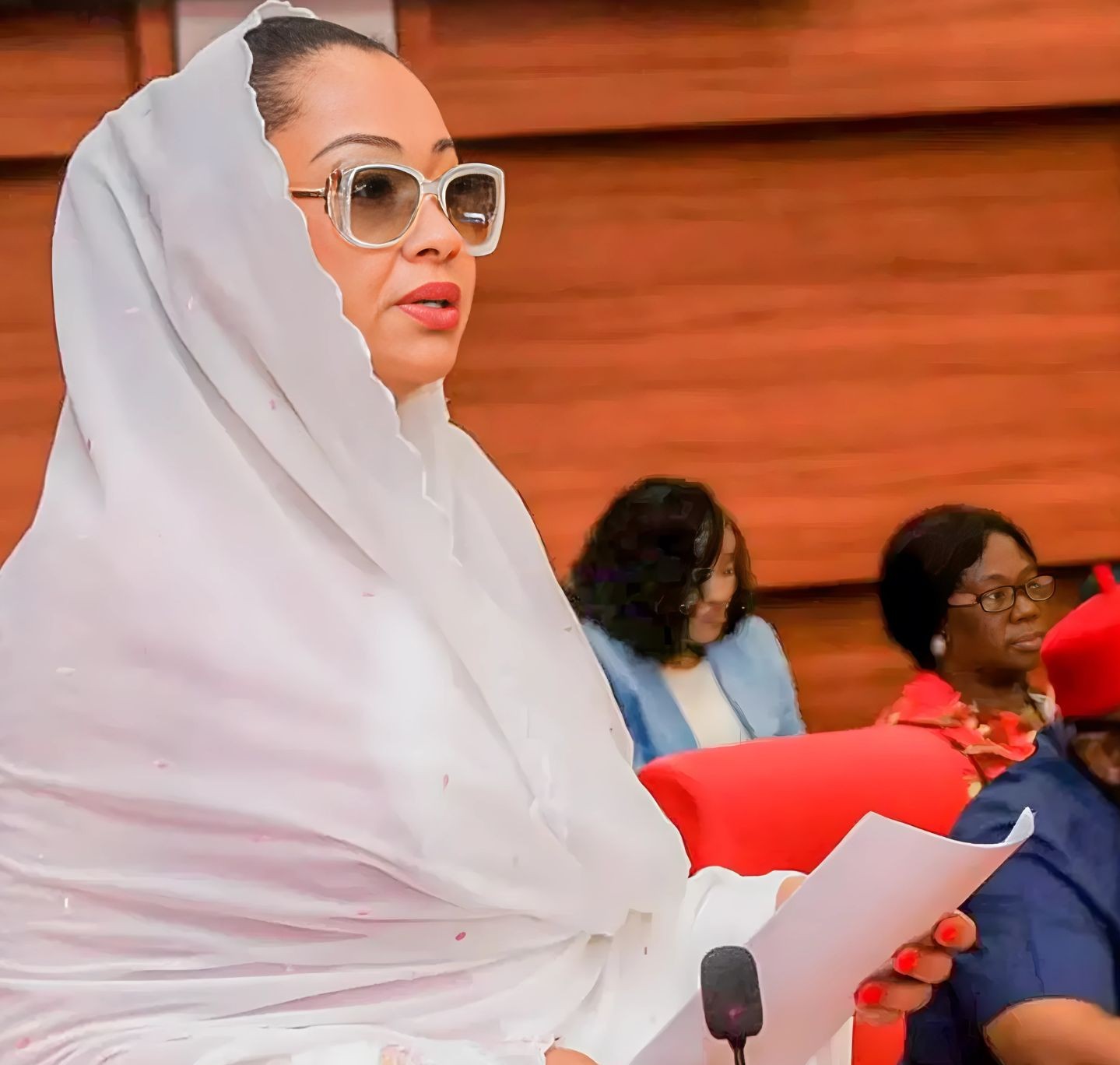
As we commemorate International Women’s Month this March, we turn our attention to a woman who embodies the spirit of resilience, courage, and unyielding advocacy for gender equality: Senator Natasha Akpoti-Uduaghan. Her story is not just a Nigerian narrative; it is a global call to action for women everywhere to rise, resist, and reclaim their rightful place in governance. In a world where women still face systemic barriers to political participation, Akpoti’s fight against intimidation and harassment in Nigeria’s Senate is a powerful reminder of the work that remains to be done. But as with any polarising figure, her story has sparked a national debate, with opinions sharply divided. Let’s explore both sides of the coin.
Who is Natasha Akpoti-Uduaghan?
Born on December 9, 1979, in Kogi State, Natasha Akpoti- Uduaghan is a lawyer, entrepreneur, and politician with a track record of advocating for social justice and political inclusion. A graduate of the University of Abuja and the University of Dundee, Scotland, Akpoti has long been a vocal critic of corruption and a champion for women’s participation in governance. Her journey to the Nigerian Senate in 2023 was no small feat, especially in a country where women make up a dismal 3.6% of political officeholders and a mere 2.8% of the Senate.
For context, Rwanda, a global leader in gender parity, boasts 61.3% female representation in its lower house.
Nigeria, by contrast, ranks among the lowest in the world for female political participation.
Akpoti’s political career began in earnest in 2019 when she ran for the governorship of Kogi State under the Social Democratic Party (SDP). Though she lost the election, her campaign focused on industrialization, job creation, and anti-corruption, earning her widespread admiration. Her eventual election to the Senate in 2023 made her one of only four women in Nigeria’s 109-member Senate, a stark reminder of the systemic barriers women face in politics.
The Controversy That Shook the Nation
In March 2025, Senator Akpoti found herself at the centre of a national and international storm. The controversy began when she resisted a directive to change her seat during a Senate session, arguing that the move undermined her privileges as a senator. Her refusal to comply led to a heated confrontation and, ultimately, a six month suspension by the Senate. But the plot thickened when Akpoti accused Senate President Godswill Akpabio of sexual harassment during an interview on Arise Television. She claimed the seat change was part of a broader pattern of intimidation and harassment.
Akpabio denied the allegations, calling them baseless and politically motivated. However, his refusal to allow an independent investigation only fueled suspicions and intensified calls for accountability. Akpoti’s suspension was not just a personal blow; it was a symbolic act of silencing, a message to women everywhere that challenging the status quo comes at a cost.
In a powerful address at the United Nations Commission on the Status of Women (CSW69) in New York, Akpoti laid bare her ordeal:
“…on the 6th of March 2025, I was suspended as a senator. I was suspended illegally because I submitted a petition of sexual harassment against the president of the Nigerian Senate.”
She went on to explain the severe consequences of her suspension:
“My security has been withdrawn. My salary has been cut off. I am barred from appearing anywhere near the National Assembly, and for six months, I must not introduce myself as a senator, locally or internationally.”
Her words were a stark reminder of the price women pay for speaking truth to power.
The Divided Public Opinion
The controversy has sparked rallies both in support of and against Akpoti. Women’s rights groups, civil society organisations, and political activists have held protests demanding her reinstatement and an independent investigation into her allegations. In contrast, some pro government groups have defended the Senate’s decision, accusing Akpoti of trying to “blackmail” the leadership.
The Case for Akpoti: A Symbol of Resistance
Supporters argue that Akpoti’s suspension is not just a disciplinary measure but a calculated attempt to silence dissent and discourage women from participating in politics. They highlight the broader issue of gender bias in Nigerian politics, where women often face undue scrutiny, intimidation, and exclusion. As one protester in support of Akpoti remarked, “If a female senator can be silenced like this, what hope is there for ordinary women facing harassment in their workplaces and communities?”
Akpoti herself has emphasised that her case extends beyond personal grievances:
“This is bigger than me. This is about ensuring that no other woman in politics or public office will ever be silenced again.”
Her supporters view her as a courageous advocate for her constituents and a symbol of resistance against systemic injustices. They argue that her effectiveness as a senator disrupts the status quo, making her a target for intimidation.
The Case Against Akpoti: A Question of Procedure
On the other hand, critics argue that Akpoti’s resistance to the seat change was a misstep. They question why she felt exempt from a process that other Senators complied with without issue. According to this perspective, rules and decorum are essential for maintaining order in legislative bodies, and openly challenging them can undermine the institution. They suggest that Akpoti should have complied first and then formally raised her grievances, such as poor microphone access or camera angles, through the appropriate channels.
Some also argue that shifting the narrative to sexual harassment detracts from the core issue of legislative procedure. As one critic from Akpabio’s camp stated, “She should have reported the harassment a long time ago. This is all political blackmail.”
However, even critics acknowledge that the Senate’s six-month suspension may have been disproportionate. A warning or a less severe penalty might have been more appropriate, even if her actions were seen as setting a bad precedent.
A Global Issue: Gender Equality and Political Participation
Senator Akpoti’s ordeal is not an isolated incident; it is a microcosm of the global struggle for gender equality. The United Nations has long emphasised the importance of women’s political participation as a cornerstone of sustainable development. According to UN Women, countries with higher levels of gender equality have lower levels of corruption, better governance, and more inclusive policies. Yet, as of 2023, women hold only 26.7% of parliamentary seats worldwide. In Nigeria, the figure is a paltry 4.7%. The Inter- Parliamentary Union (IPU) also confirms that Nigeria ranked among the lowest in women’s representation globally. Akpoti’s case underscores the urgent need for systemic change. As she stated at CSW69:
“If a female senator can be treated this way in the full view of the world, imagine what ordinary Nigerian women go through every day in workplaces, universities, and other aspects of our society. A culture of harassment and silencing must end, and this is not just a Nigerian issue; it’s a global one.”
Her words echo the UN’s call for gender mainstreaming, a strategy to ensure that gender perspectives are integrated into all policies, programmes, and institutional practices. Without this, the systemic barriers that hinder women’s full participation in politics will persist.
The Nigerian Context: A Call to Action
For Nigerian women, Akpoti’s story is both a cautionary tale and a rallying cry. It highlights the pervasive gender biases that continue to shape the political landscape, from sex-for-grades scandals in universities to harassment in workplaces and political spaces. It also exposes the complicity of some women in perpetuating these biases.
As one protester against Akpoti remarked, “We don’t want stubborn women like Senator Natasha.” Such statements reveal the internalised misogyny that often undermines collective progress.
But there is hope. Akpoti’s refusal to back down has inspired a new wave of activism. Women’s rights groups, civil society organisations, and political activists have rallied in her support, demanding her reinstatement and an independent investigation into her allegations. Their message is clear: silence is not an option.
What This Means for Women Globally
Senator Akpoti’s fight is a reminder that the struggle for gender equality is far from over. It is a call to action for women everywhere to challenge the systems that seek to silence them. Whether in Nigeria, the United States, or anywhere else, women must continue to push for stronger legal protections, zero tolerance for genderbased discrimination, and greater representation in all spheres of life.
As Akpoti herself put it: “This is bigger than me. This is about ensuring that no other woman in politics or public office will ever be silenced again.”
Her words are a rallying cry for women everywhere to persist, challenge, and lead. For history remembers the bold, and Natasha Akpoti-Uduaghan is undoubtedly one of them.
A Call to Action: Rise, Resist, Reclaim
To the women of Nigeria and beyond, let Senator Akpoti’s story be a catalyst for change. Here’s what you can do:
Demand Accountability: Hold your leaders accountable for their actions. Support calls for independent investigations into allegations of harassment and intimidation.
Support Women in Politics: Vote for women, mentor young female leaders, and advocate for policies that promote gender equality.
Speak Out: Break the culture of silence. Share your stories, support survivors, and challenge gender biases wherever you encounter them.
Educate and Empower: Equip the next generation with the tools they need to lead. Teach them that their voices matter and that they have the power to effect change.
As we commemorate International Women’s Month, let us celebrate the unyielding spirit of women like Natasha Akpoti-Uduaghan. Her fight is our fight, and together, we can create a world where no woman is silenced, sidelined, or sidelined.