By Tilly Boateng
Venus Guard is one of those inventions that immediately forces a difficult but necessary conversation about safety, bodily autonomy, and how far technology should go when society fails to protect people.
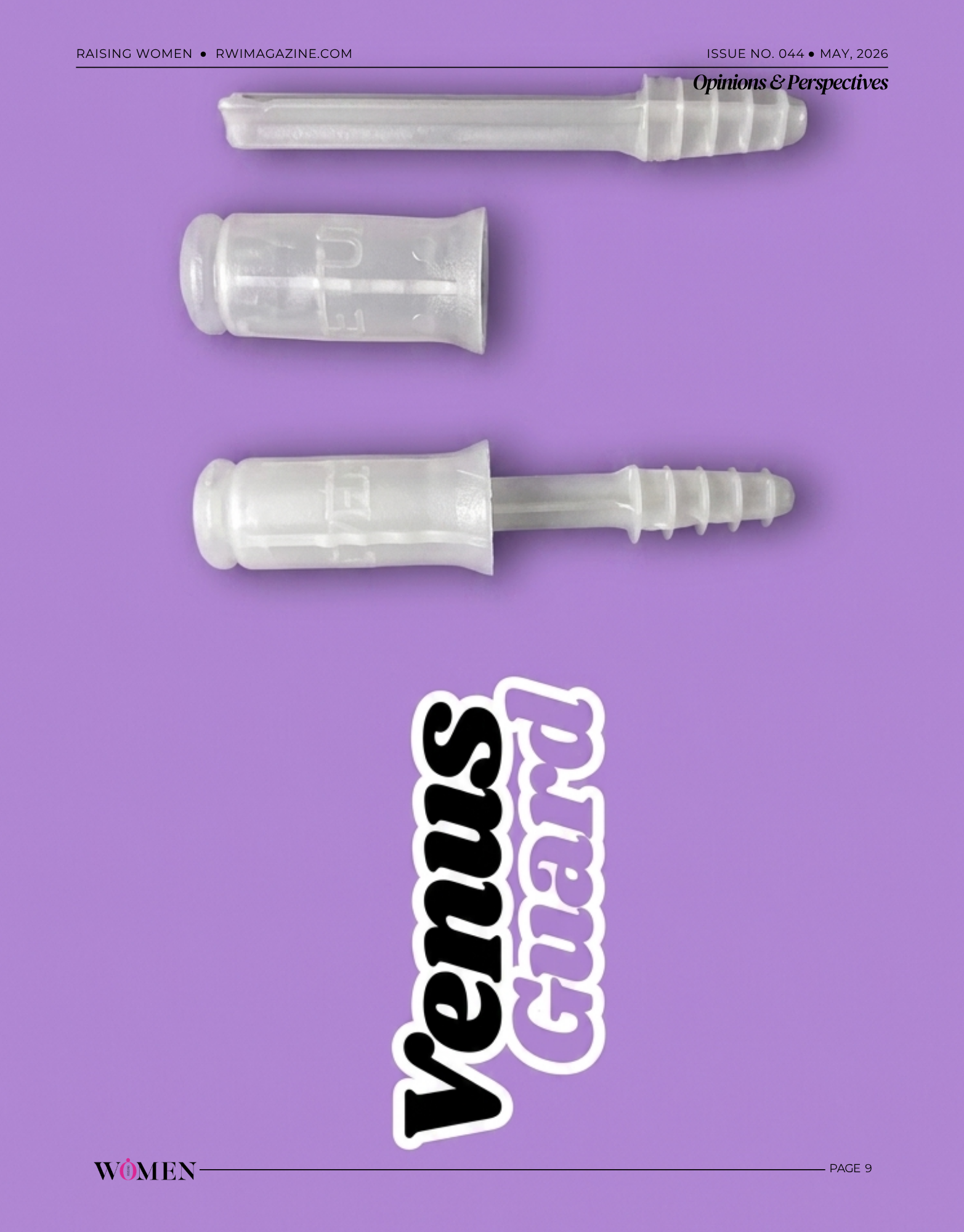
At its core, Venus Guard is a women’s self-defence sleeve designed to prevent rape and preserve evidence in the event of an assault. According to its creators, it is a soft, flexible silicone sheath that is inserted internally and remains invisible and unfelt once in place. Inside the device is a cut-resistant web of barbs designed to activate only during non-consensual penetration.
The mechanism, as described, is straightforward but intense. If an assailant attempts penetration, the device is entered along with them. Upon withdrawal, the barbs are designed to latch onto the attacker’s skin, anchoring the device in place. This causes significant pain, restricts movement, and is intended to incapacitate the attacker long enough for the victim to escape or seek help. The device is also marketed as a way to preserve forensic evidence, as removal would require medical intervention.
The creators emphasise that it is designed to be safe for the wearer, with testing focused on ensuring it does not cause internal harm during insertion, wear, or removal. They present it as discreet, undetectable, and always ready, a kind of silent emergency defence system.
But as always with innovations like this, the public reaction tells its own story.
@pixelx*********: As a victim of rape before, a fear about this, for me, is the fear of retaliation. I’ve fought, I’ve scratched, I’ve kicked, I’ve bit, and everything in between, and hurting them only made them hurt ME more. My fear is that this kind of pain that they’re describing would make them lose all inhibitions (if they even had any left) and just kill me or torture me worse than they’re already doing. I’m not a hater of this idea, but I fear that this might put women in a more dangerous situation than she already was in the first place.
@tuesdaymkwelch: So… women are supposed to just wear this at random or all the time? because a rape isn’t planned by the victim
@emilyrosecharlotte: This should be given out in every woman’s bathroom
@antolarrain: I kinda hate (and love) the way I smiled while I watched this video
@thekristalondon: MEN TESTED THIS?!?! Those men need a round of applause for “taking one for the team” in support of women!!! 👏
@omgosh_omgosh: What if women use it against someone they hate and lure them to have sex and then cry rape??
@dadgotbars: Wow. It’s sad that women even need to consider using this. And ya’ll had men volunteer to test this?!?!?
@laulaureada: let’s just spread the rumour that every woman is wearing this secretly so they are now afraid of us for once 😍
@northwoodsfolk: I hate that we live in a world where this is even necessary 😭
@toriambernikole: We need these passed out like condoms
Taken together, these reactions capture the full emotional spectrum surrounding the device. Some people see empowerment. Some see risk. Some see desperation. And some simply see a reflection of how unsafe the world still feels for women.
There is also a deeper tension underneath the reactions: whether safety should be something individuals must physically carry inside their bodies, or something society should guarantee externally through stronger systems, accountability, and prevention.
From a critical standpoint, Venus Guard sits in a very complicated space. The intention is protection, but the practical implications raise questions. One of the biggest concerns is escalation. In a violent situation, introducing intense pain can sometimes make an attacker more aggressive, not less. Survivors themselves have pointed this out, noting that retaliation is already a real fear in assault situations.
There are also questions about practicality. Would people realistically wear it consistently? Would it be socially normalised? And what happens if awareness spreads among attackers, potentially leading them to check for or anticipate such devices?
Still, it is hard to ignore what this invention represents. It is not just a product idea. It is a response to a gap in protection that many people feel every day. Even if one disagrees with the mechanism, the motivation behind it is rooted in a very real problem.
Personally, I think Venus Guard is both impressive and unsettling at the same time. It is an inventive attempt at bodily autonomy as self-defence, and in theory it could offer some form of protection for those who choose to use it.
However, there is a practical concern that cannot be ignored. If such devices become widely known, they may lose the element of surprise, which is central to how they are meant to function. Safety tools that rely on unpredictability can become less effective once they are expected.
In the end, Venus Guard forces a bigger conversation than itself. It is less about one device and more about a world where such devices feel necessary at all.