By Ifeanyi’s Daughter
It is 6:17am.
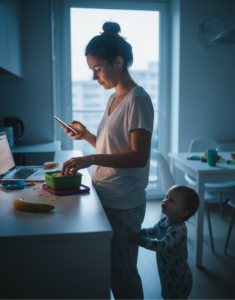
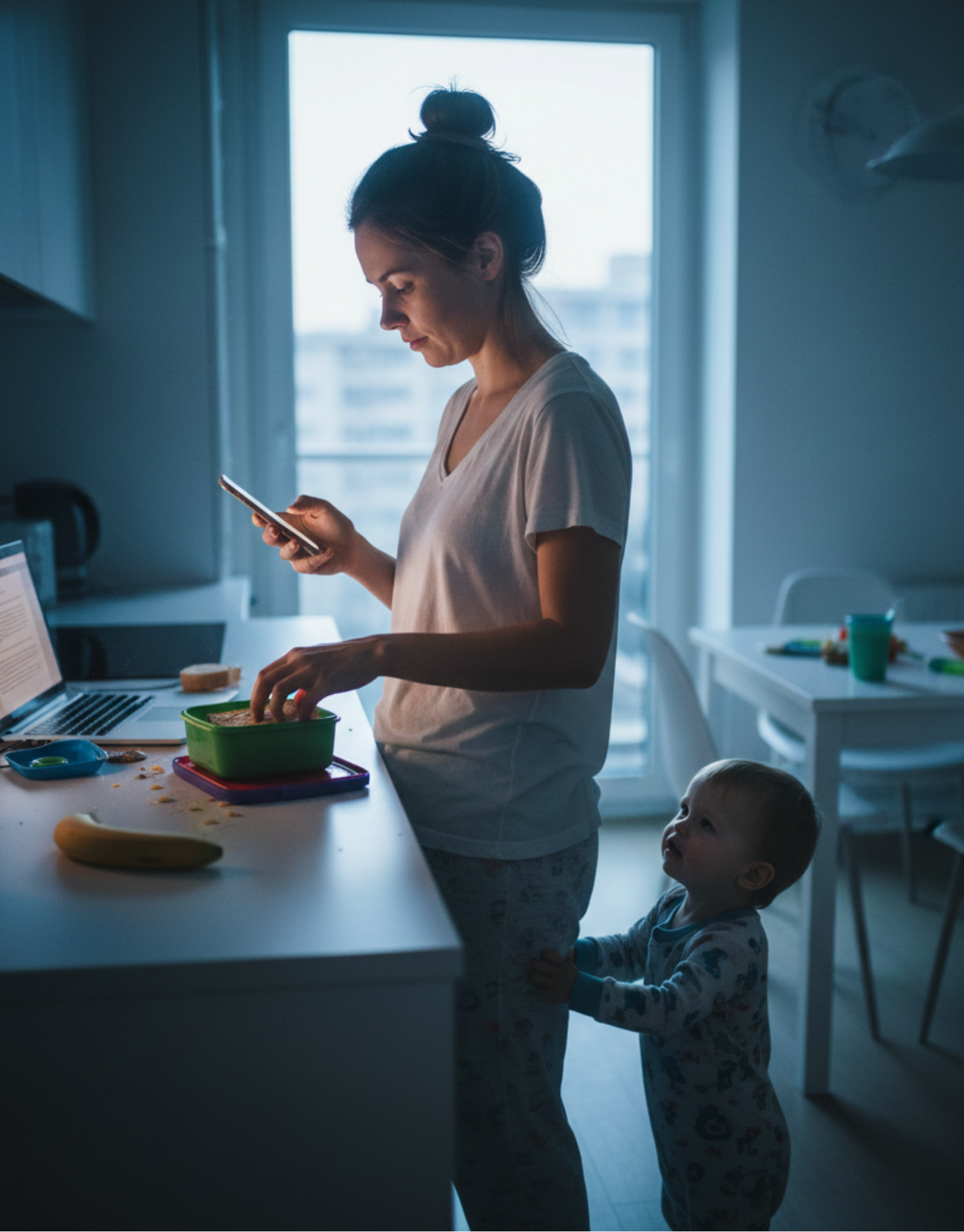
A millennial mother is answering Slack messages while packing lunch, checking the school WhatsApp group, and Googling whether processed snacks will permanently damage her child’s gut health. Her toddler is asking for help with socks. Her baby has already been awake twice. The rent just increased.
Her own mother, at the same age, had more children and fewer conversations about emotional regulation.
Millennial parents are raising children in what may be the most expensive, isolated, and psychologically demanding era in modern history. And yet, data consistently shows that they spend more time with their children than any generation before them.
How can both be true?
The Cost of Simply Existing
For many millennials, parenthood did not begin with stability. It began with student loans, precarious work, rising housing costs, and a global pandemic that blurred every boundary between work and home.
Childcare fees rival rent. In many cities, one parent’s entire salary barely covers nursery. Home ownership feels aspirational. Groceries cost more every month. And in places like Nigeria, the financial pressure is layered: school fees, extended family support, fluctuating exchange rates, migration plans, and the quiet expectation that you will succeed not just for yourself, but for everyone.
Parenting has always required sacrifice. But this generation is sacrificing in an economy that feels fundamentally unstable.
The result is a background hum of anxiety. Not dramatic. Not loud. Just constant.
The Vanishing Village
Millennials are also parenting in isolation.
The extended family compound has become the gated estate. The neighbour who once intervened has become a stranger behind a locked door. Grandparents are still working, or living in different cities, or different countries entirely.
Many are raising children without daily physical support. No aunt to drop the baby with. No cousin to pick up from school. No community rhythm that naturally absorbs some of the load.
Digital communities have stepped in. Instagram therapists. Parenting podcasts. WhatsApp groups. Online forums. Advice is abundant.
But advice is not the same as presence.
And so, parenting becomes both hyper-informed and deeply lonely.
The Most Informed, The Most Anxious
Millennial parents are arguably the most psychologically aware generation to raise children.
They talk about trauma. They read about attachment styles. They try to break generational patterns. They worry about shouting. They apologise when they get it wrong. They want their children to feel heard, safe, and emotionally secure.
Previous generations focused on survival. Millennials are attempting healing.
But healing is exhausting.
When every interaction feels like it carries long-term psychological consequences, parenting becomes high stakes. You are not just feeding a child. You are shaping a future adult. You are correcting history.
The pressure to “get it right” is immense.
More Time, Different Intentions
Despite the financial strain and emotional labour, millennials are spending more time with their children.
There are practical reasons. Families are smaller. Many have fewer children than their parents did. Remote and flexible work has made physical presence more possible, even if it has not made life easier.
But there is also a cultural shift.
Millennial parents value emotional connection. They sit on the floor and play. They attend school events. They schedule therapy. They ask their children how they feel. They want closeness, not just obedience.
Time with children is no longer a by-product of domestic life. It is intentional.
Yet intention comes with scrutiny. If you are home, you should be engaged. If you are working, you should feel guilty. If you take a break, you should question it.
Presence has become both a privilege and a performance.
The Silent Burnout
There is a particular kind of exhaustion that does not announce itself.
It looks like scrolling after midnight because the day never really felt like your own. It looks like snapping over something small and then sitting with the shame of it. It looks like loving your children fiercely while quietly missing the version of yourself that once had fewer responsibilities.
Millennial parents are trying to be emotionally available, financially stable, socially conscious, digitally aware, physically present, and professionally competent all at once.
Many are doing this without adequate childcare infrastructure, without affordable housing, without community scaffolding.
And yet, they continue.
They continue because they want something different for their children. Because they remember what it felt like not to be heard. Because they want to raise daughters who feel free and sons who feel safe enough to be soft.
This generation may be stretched thin, but it is not indifferent.
So, What Does Support Look Like?
If millennial parents are doing more with less, more emotional labour, more time investment, more self-reflection then the conversation cannot end at admiration.
Support must be structural.
Affordable childcare. Flexible work policies that do not punish parents for presence. Honest conversations about shared domestic labour. Communities that do not romanticise exhaustion.
It must also be cultural. A shift away from perfection. Away from the curated image of seamless parenting. Away from measuring love by productivity.
Millennial parents are not perfect. No generation has been. But they are intentional in ways that matter.
They are raising children in uncertain times, with limited safety nets, and unprecedented access to information. They are navigating inflation and identity politics, school fees and screen time, global instability and bedtime routines.
They are present, even when tired. Reflective, even when overwhelmed. Committed, even when unsure.
Perhaps that is the paradox.
Parenting has never been heavier.
And perhaps it has never been more conscious.
If this is the era of pressure, it is also the era of awareness.
And awareness, despite its cost, may be the quiet inheritance they pass on.