best casino sites for Canadians top real money casinos for Canadians safe online casinos for Canadian players Canadian online casino rankings best mobile casino Canada

Spotlighting Remarkable Women and Girls

Recycled Radiance: UpcycledTools And Beauty Hacks FromThe Margins

By Yunik Treasure

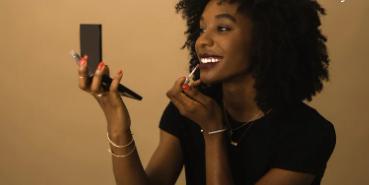
Across refugee communities worldwide, beauty is not a luxury; it is a quiet act of resilience. In the absence of stability, access to commercial products, or privacy

many displaced women find ways to maintain their personal grooming and cultural rituals using natural ingredients, improvised tools, and inherited traditions.

These routines, often built from scraps, carry deep emotional and cultural significance. Whether in refugee camps, displacement shelters, or host communities, beauty becomes a form of self-care, identity preservation, and connection.

Improvised Beauty from Memory and Nature

In Nigeria, where many are displaced due to conflict or insecurity, women rely on black soap, shea butter, and camwood powder for skincare. These natural elements are utilized for cleansing, brightening, and soothing the skin and are often shared in community settings, passed down from older women to younger generations.

Similar practices can be found in other parts of the world:

  • In Myanmar, women use Thanaka, a bark based paste, for sun protection and skincare.
  • In Lebanon and Syria, rosewater, almond oil, and sugar wax (sukar) remain essential for skincare and grooming.
  • In South Asia, mung bean face masks and turmeric pastes are prepared in shelters using basic tools like plastic cups or reused food containers.
  • Henna is widely used in North and West Africa, as well as the Middle East, to dye hair, paint hands, and mark special occasions.

Where combs, mirrors, and brushes are unavailable, women improvise; they use toothbrushes for edge control, spoons as eyelash curlers, and bottle caps as mixing bowls.

Cultural Continuity and Community Connection

Beauty routines in displacement are not just about appearance; they are part of survival. They provide a sense of control, foster opportunities for bonding, and help women feel seen and remembered in systems where they are often invisible.

Maintaining these rituals; such as oiling the hair, braiding, exfoliating, or applying natural treatments, serves as a way to pass down heritage, especially when formal structures like schools and homes are lost.

Some women have even turned these skills into livelihoods, offering braiding, henna, or skincare services within the camp environment.

Beauty, Even When Born from Brokenness, Still Shines

In refugee camps, where everything is temporary, beauty rituals are permanent.

These practices are not about vanity; they are about visibility. They are not about products; they are about presence.

Refugee women may use scraps, but they create radiance. They may lack ‘packaging’, but they preserve legacy. And through cracked mirrors and handmade masks, they demonstrate something profound: beauty, even when born from brokenness, still shines.
Share:

Trending

Raising Women Magazine Issue 045 – June 2026

There is a difference between living and merely functioning.
Somewhere between the notifications, deadlines, responsibilities, ambitions, and endless demands of modern life, many of us have become exceptionally good at keeping going. We show up. We deliver. We carry. We cope. Yet beneath the appearance of productivity, an important question remains: are we truly well?
In this issue of Raising Women Magazine, we explore wellness not as a trend, but as a deeper conversation about humanity, health, purpose, and presence.
Our cover feature introduces Dr. Heidi Beilis, a pioneering physician helping to shape the future of healthcare through artificial intelligence. Her work reminds us that innovation is at its best when it serves people, particularly women whose lives may be transformed by earlier diagnoses and better outcomes.
Elsewhere, we explore grief, ambition, beauty, leadership, healthspan, rest, and the invisible burdens many women carry. We ask difficult questions about what it means to thrive, not simply survive.
As I wrote in this issue’s Find Her Light column, sometimes the rest we need is not sleep. Sometimes it is space. Sometimes it is perspective. Sometimes it is permission.
May these pages offer all three.

Raising Women Magazine Issue 044 – May 2026

There is something deeply revealing about the way a society treats its children. Not just in policy or parenting, but in the stories it tells them, the spaces it creates for them, and the kind of world it quietly prepares them to inherit. In this Children’s Day edition, Raising Women Magazine turns its attention to childhood itself, not as a sentimental phase of life, but as the foundation upon which identity, confidence, memory, and humanity are built.

Our cover star, Ms. Rachel, represents a refreshing reminder that gentleness still matters in an age of noise. Through patience, intentionality, and emotional safety, she has transformed songs and screen time into a global classroom for millions of children and families.

Across this issue, we explore the emotional architecture of childhood, from the girls who learn too early to shrink themselves, to the children quietly carrying adult burdens before they fully understand their own. We also interrogate modern parenting, digital culture, family, safety, and the futures young people are already shaping.

Because childhood is never just preparation for life.

In many ways, it is life itself.

The Family Tree Divide

What Women Are Given, and What They Build By Sipho Khumalo Two women walk into the same room. One is recognised before she speaks. The

Your guide to IVF and egg freezing in Korea

Empowering your family planning journey with curated fertility treatments at lower costs. Get our guide for Korea’s leading clinics, pricing and service breakdown.

Recommended News

Raising Women Magazine Issue 045 – June 2026

There is a difference between living and merely functioning.
Somewhere between the notifications, deadlines, responsibilities, ambitions, and endless demands of modern life, many of us have become exceptionally good at keeping going. We show up. We deliver. We carry. We cope. Yet beneath the appearance of productivity, an important question remains: are we truly well?
In this issue of Raising Women Magazine, we explore wellness not as a trend, but as a deeper conversation about humanity, health, purpose, and presence.
Our cover feature introduces Dr. Heidi Beilis, a pioneering physician helping to shape the future of healthcare through artificial intelligence. Her work reminds us that innovation is at its best when it serves people, particularly women whose lives may be transformed by earlier diagnoses and better outcomes.
Elsewhere, we explore grief, ambition, beauty, leadership, healthspan, rest, and the invisible burdens many women carry. We ask difficult questions about what it means to thrive, not simply survive.
As I wrote in this issue’s Find Her Light column, sometimes the rest we need is not sleep. Sometimes it is space. Sometimes it is perspective. Sometimes it is permission.
May these pages offer all three.

Raising Women Magazine Issue 044 – May 2026

There is something deeply revealing about the way a society treats its children. Not just in policy or parenting, but in the stories it tells them, the spaces it creates for them, and the kind of world it quietly prepares them to inherit. In this Children’s Day edition, Raising Women Magazine turns its attention to childhood itself, not as a sentimental phase of life, but as the foundation upon which identity, confidence, memory, and humanity are built.

Our cover star, Ms. Rachel, represents a refreshing reminder that gentleness still matters in an age of noise. Through patience, intentionality, and emotional safety, she has transformed songs and screen time into a global classroom for millions of children and families.

Across this issue, we explore the emotional architecture of childhood, from the girls who learn too early to shrink themselves, to the children quietly carrying adult burdens before they fully understand their own. We also interrogate modern parenting, digital culture, family, safety, and the futures young people are already shaping.

Because childhood is never just preparation for life.

In many ways, it is life itself.

The Family Tree Divide

What Women Are Given, and What They Build By Sipho Khumalo Two women walk into the same room. One is

First, Believe

By The Lulu They said the sky’s the limit But what if you’re still underground, still digging through the dirt

RudolphCasinos