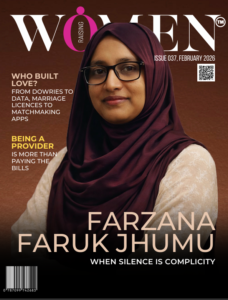
By Daniel Agusi
There are women whose power lies in their voice, and then there are women whose power lies in their silence. Sade belongs firmly to the latter. In an age of constant performance,relentless visibility, and digital over sharing, she has mastered something far more difficult, restraint.
For decades, Sade has resisted the machinery of celebrity. She has never courted controversy, never fed the algorithm, never explained her absence. And yet, her relevance has never wavered. That, perhaps, is the quiet miracle of her career.
As Raising Women Magazine opens 2026 with The Quiet Power of a New Chapter, Sade stands not as nostalgia, but as instruction. Her life and work offer a grounded blueprint for women who are learning that growth does not always need witnesses.
Becoming Sade, Without Becoming Consumed
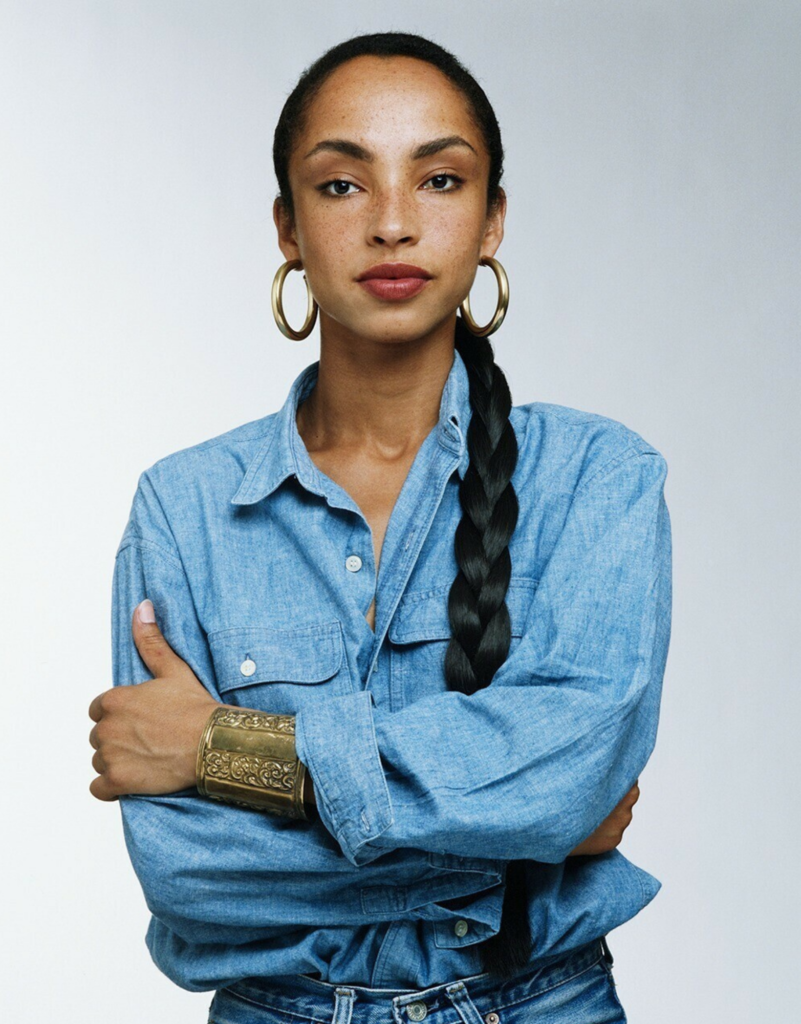
Born Helen Folasade Adu in Ibadan, Nigeria, and raised in the United Kingdom, Sade’s early life already carried the duality that would later define her artistry. Rooted in African heritage, shaped by British culture, she learned early how to hold complexity without spectacle.
Before music, she studied fashion design at Saint Martin’s School of Art. This detail matters. It explains her visual restraint, her understanding of form, and her refusal to be excessive. Even at the height of her fame, Sade never looked over styled. Her presence was deliberate, controlled, and deeply personal.
When Diamond Life was released in 1984, it arrived quietly. No theatrics. No manufactured image. Just sound, mood, and emotional intelligence. The album went on to sell millions, not because it shouted, but because it listened.
From the beginning, Sade positioned herself not as a performer chasing attention, but as an artist in conversation with herself.
The Discipline of Stepping Back
One of the most defining aspects of Sade’s career is not what she has done, but what she has refused to do.
Between albums, she disappears. Not for publicity stunts, not for reinvention theatre, but for life. Her gaps are measured in years, sometimes decades. In an industry that punishes absence, she turned absence into authorship.
This choice is not accidental. Sade has spoken in past interviews about her need for privacy, normalcy, and creative integrity. She has consistently prioritised living over output. Motherhood, personal growth, and quiet domestic life have taken precedence over staying visible.
For many women, especially those navigating ambition and expectation, this is the most radical lesson she offers. You are allowed to pause. You are allowed to retreat. You are allowed to live fully without explaining yourself.
Silence as Strategy, Not Withdrawal
Sade’s silence has often been misread as detachment. In truth, it is discernment.
She does not comment on trends. She does not engage in public debates. She does not reintroduce herself with each return. When she releases music, it arrives fully formed, emotionally precise, and deeply considered. There is no filler. No rush. No obligation to keep up.
This approach mirrors a broader truth many women come to understand with time. Silence is not weakness. It is protection. It creates space for clarity, depth, and longevity.
In a culture that equates visibility with relevance, Sade quietly disproves the rule. Her influence remains intact precisely because it is not diluted.
The Feminine Power of Restraint
Sade’s femininity has never been loud, performative, or demanding. It is soft, grounded, and assured. She does not ask to be seen. She allows herself to be felt.
This matters deeply in a world that often pressures women to constantly assert, justify, and prove. Her presence suggests another way. One rooted in self trust. She does not chase youth. She does not explain ageing. She does not rebrand her identity to remain palatable. Instead, she allows her work to mature alongside her life.
There is power in that kind of self acceptance. A power that feels particularly resonant at the start of a new year, when many women are quietly reassessing what they want to carry forward and what they are ready to release.
Motherhood, Privacy, and Choosing What Matters
While Sade has always protected her private life, it is known that motherhood became a central anchor in her later years. It informed not only her personal choices, but her creative pacing.
Motherhood did not make her more visible. It made her more selective.
This distinction is important. Many women experience motherhood as a moment when the world demands more, even as their inner life deepens. Sade chose differently. She allowed motherhood to reshape her priorities without turning it into a public narrative.
Her decision to live largely outside the spotlight speaks to a broader truth. Fulfilment does not always look impressive from the outside. Sometimes it looks quiet, ordinary, and deeply intentional.
What a New Chapter Really Looks Like
For Raising Women Magazine, Sade’s story is not about fame. It is about authorship. About women who reach a point where they no longer need to perform growth.
A new chapter, as Sade models it, is not announced. It is lived.
It is the moment a woman decides that peace matters more than pace. That integrity matters more than output. That her life does not need constant documentation to be meaningful.
Sade’s quiet power lies in her refusal to be rushed, reshaped, or reduced. She reminds us that relevance earned slowly lasts longer. That boundaries are a form of self respect. And that silence, when chosen, can be deeply articulate.
Why Sade Opens 2026

As the world enters another year of acceleration, Raising Women Magazine chooses to begin differently.
With calm. With intention. With a woman who has never needed to shout to be heard.
Sade’s presence on this cover is not about return. It is about continuity. About the strength of women who know who they are, and no longer feel compelled to prove it.
This is the quiet power of a new chapter.