By Antoine Pepper
Before the first bite, there is a pause.
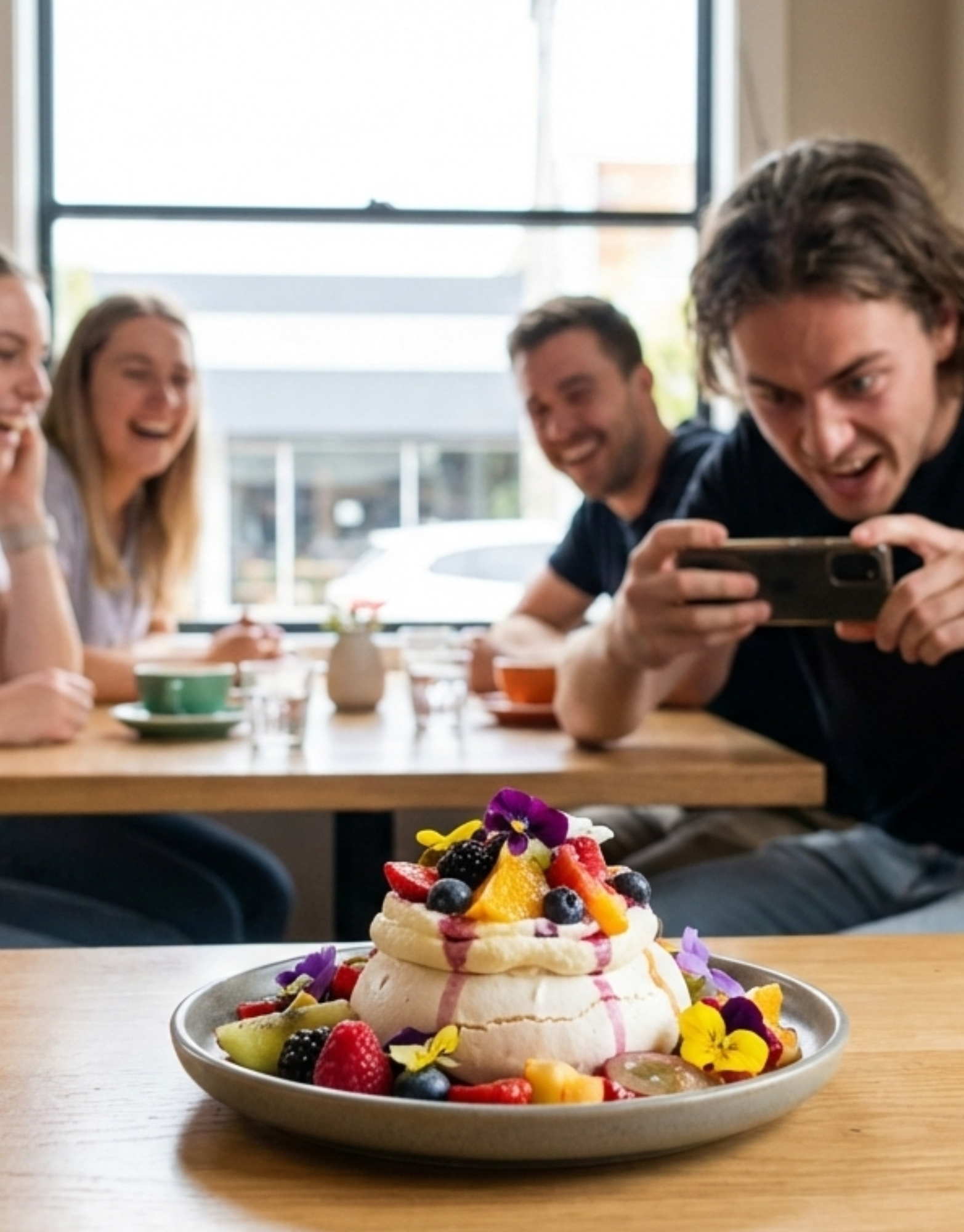
The chair is adjusted. The cappuccino rotated until the foam catches the light. Someone leans in and says, “Wait.” Phones rise. The table stills. The image is captured. Only then do we eat.
Food has always been sensory. Now it is also performative.
In the age of social media, we no longer simply taste our meals. We curate them.
Over the past decade, platforms such as Instagram and TikTok have transformed the way food is presented, consumed and valued. What once lived in kitchens and dining rooms now lives in feeds. Colour, symmetry and plating have become as important as flavour. The camera eats first.
Psychology tells us that visual appeal significantly shapes our perception of taste. Studies show that people often rate food as more flavourful when it is beautifully presented. Social media has amplified this effect. The rise of pastel lattes, edible flowers and perfectly stacked pancakes reflects not only culinary creativity but visual strategy. Restaurants now design dishes that photograph well under natural light. Cafés position seating near windows. Neon signs and textured walls are built not just for ambience but for shareability.
In this new economy of attention, aesthetics drive traffic.
User-generated content functions as free advertising. A single viral brunch post can fill tables for weeks. Influencers are invited to tastings not solely for their palate but for their reach. Dining has become content production. A meal is no longer just an experience. It is a potential asset.
This shift has also created opportunity. Many women, who dominate lifestyle and food influencing spaces, have leveraged aesthetic food culture into profitable ventures. From home bakers to beverage founders, social platforms have democratised visibility. Small businesses that once relied on foot traffic now rely on followers. A visually compelling feed can transform a kitchen into a brand.
Yet visibility does not always equal power. While women frequently curate food culture online, ownership at scale often remains male-dominated, particularly in fine dining and high-end hospitality. The digital table may look inclusive, but capital still determines who expands beyond the algorithm.
There is also a subtle psychological shift at play. When meals become moments to document, the act of eating changes. Choices are sometimes guided by what will photograph best rather than what satisfies. Bright matcha may win over black coffee. Layered desserts overtake simpler dishes. We begin to anticipate the post before the plate.
This does not mean social media has ruined dining. Rather, it has layered it.
Food has become identity signalling. Vegan bowls communicate values. Artisanal coffee signals taste literacy. Fine dining check-ins signal aspiration. What we consume now speaks not only to hunger but to belonging. In this way, eating has become a language.
There is cultural complexity here too. Traditional dishes are often reinterpreted to fit global aesthetics. Street food is rebranded for curated spaces. Recipes travel faster than ever, but sometimes authenticity is softened to meet visual trends. The tension between preservation and performance is ongoing.
Still, something powerful has emerged. Social media has allowed culinary traditions to cross borders without gatekeepers. Diaspora cooks share family recipes with global audiences. Women build communities through supper clubs and pop-up dinners. Taste, once confined to geography, now circulates digitally.
Perhaps the real shift is this: eating is no longer a private act. It is communal theatre.
In the age of the algorithm, we eat with our eyes, our followers and our aspirations. A meal is sustenance, but it is also story. Somewhere between hunger and highlight, flavour meets performance.
The question is no longer simply what tastes good. It is what looks good, what travels well and what says something about who we are.
And so, before the first bite, we pause. Because today, the camera eats first.