By Daniel Agusi
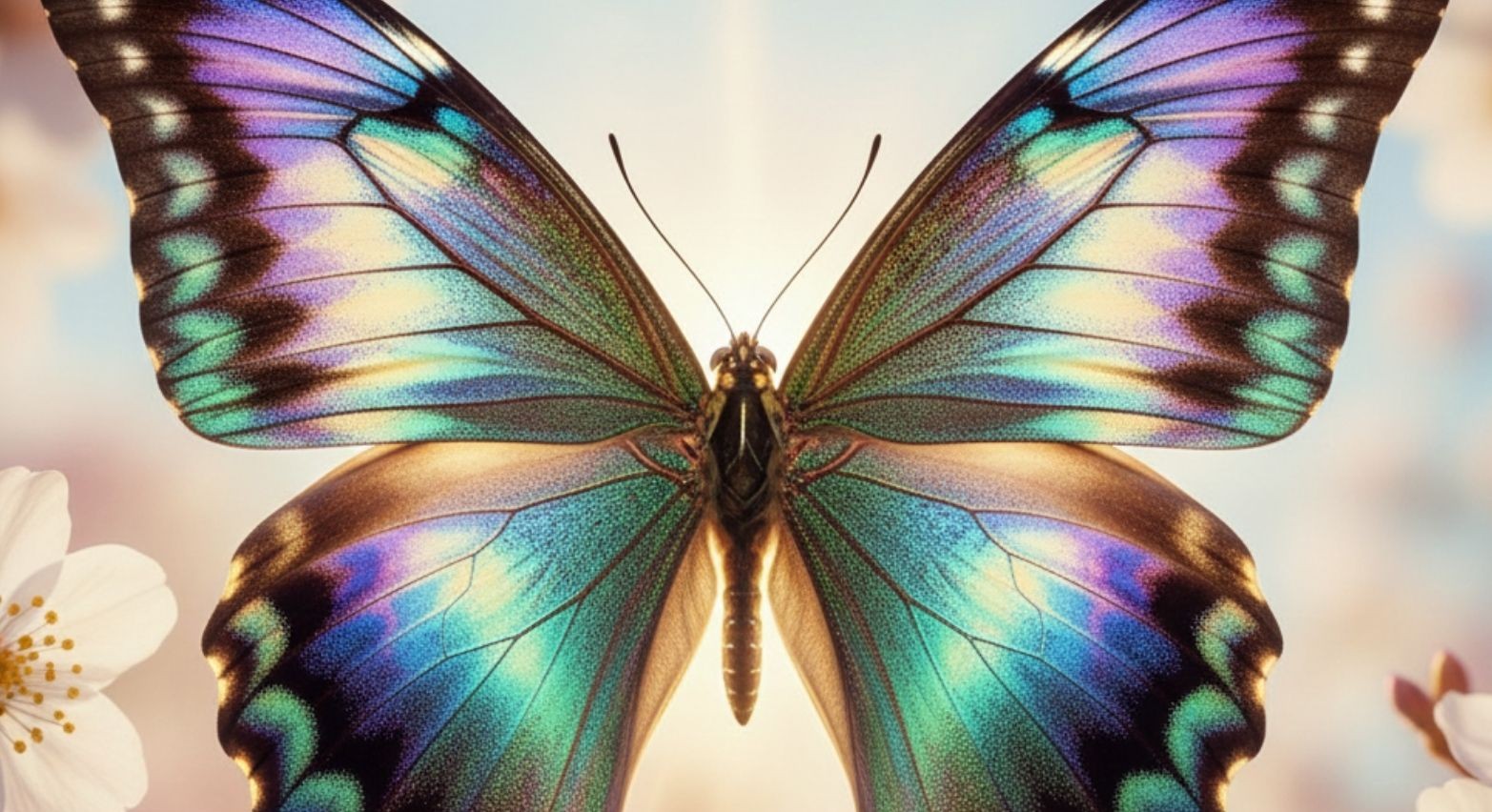
In science, in life, and even in love, butterflies mean far more than their delicate wings suggest. They symbolize transformation, unpredictability, beginnings, and the thrilling emotions that flutter beneath the surface of human experience. The butterfly effect, a term rooted in chaos theory shows how the smallest action can trigger extraordinary, far-reaching outcomes. But beyond the scientific metaphor, butterflies carry deeper meanings about growth, becoming, and the tender electricity of love. In this feature, we explore three powerful angles of the butterfly effect: the scientific phenomenon, the symbolism of growth, and the romance of emotional butterflies.
The Scientific Butterfly Effect — When Small Actions Create Big Consequences
The butterfly effect first emerged from the work of Edward Lorenz, a meteorologist in the 1960s whose discovery changed how we understand complex systems. While running weather simulations, Lorenz rounded a number from 0.506127 to 0.506, assuming the outcome would remain nearly identical. Instead, the entire weather prediction diverged dramatically. This revealed something profound: tiny differences in initial conditions can lead to unpredictable, enormous changes in the long run.
This idea became popularly expressed as:
“A butterfly flapping its wings in Brazil could set off a tornado in Texas.”
Of course, Lorenz didn’t mean butterflies literally cause storms. Rather, he showed that in systems like weather and by extension, life, small actions can trigger ripple effects that reshape the future in unimaginable ways.
We see this in everyday life:
- A chance encounter leads to a job opportunity.
- One decision changes the course of a relationship.
- A small act of kindness transforms someone’s day.
- A single social media post goes viral and shifts global conversations.
The butterfly effect reminds us that nothing is insignificant. Every choice, gesture, and moment carries hidden potential. Life is not merely shaped by grand events; it is shaped by subtle, almost invisible movements that redirect our paths. The power of the butterfly effect is that it invites us to take small actions seriously, because they may be what shape our destinies.
The Butterfly As A Symbol Of Growth — Why Starting Small Is Not Shameful
Beyond science, the life cycle of a butterfly carries one of the most universal lessons about growth. Today, people attach shame to small beginnings. Everyone wants to start big, succeed loudly, or appear instantly accomplished. But nature disagrees. The butterfly begins its journey as:
- a tiny egg, almost invisible
- an unglamorous caterpillar, slow and unimpressive
- a silent cocoon, hidden and inactive
- then finally, a glorious butterfly, admired by all
Every phase is necessary. None can be rushed. None can be skipped.
The caterpillar stage symbolizes the grind, the phase of working, learning, consuming, preparing. The cocoon stage represents the quiet seasons of life: withdrawal, uncertainty, reinvention, internal rebuilding. It is dark, still, and private. But inside that cocoon, the most dramatic transformation happens. The creature literally dissolves before reforming into something completely new.
This is how human transformation works too.
Growth is often:
- slow
- invisible
- uncomfortable
- messy
- misunderstood
But the butterfly teaches us that starting small is not dishonorable, it is divine design. You are allowed to begin quietly. You are allowed to grow in private. You are allowed to evolve in seasons where nobody applauds your progress.
In a world obsessed with speed and spectacle, the butterfly’s journey is a reminder that the greatest transformations require patience. The beauty lies not in appearing perfect, but in evolving authentically. Just like the butterfly, we become our most breathtaking selves only after embracing the gradual, unglamorous, essential work of growth.
Butterflies In The Stomach — The Romantic Flutter We Can’t Explain
There is yet another dimension to butterflies, the deeply human, emotional one. When people say, “I feel butterflies in my stomach,” they’re describing a mix of excitement, nervousness, and overwhelming affection. It is a flutter caused not by wings, but by chemistry.
Psychologically and biologically, those butterflies come from adrenaline, dopamine, and oxytocin, hormones released when you see someone you’re attracted to or deeply connected with. They speed up your heart, heighten your senses, and send signals through your nervous system that create that fluttery, weightless feeling.
In romance, butterflies symbolize:
- fresh attraction
- emotional vulnerability
- the thrill of new love
- the magic of being seen
- the sweetness of hope
- the excitement of possibility
Butterflies appear in love poems, wedding designs, novels, films, and songs because they represent the fragile, beautiful sensation of falling, and not downwards, but into someone. They capture the intensity of affection, the softness of intimacy, and the delicate surrender of letting someone matter to you.
Love itself is a kind of metamorphosis. It changes how you walk, think, speak, dream, and feel. It transforms the heart just as the cocoon transforms the caterpillar. And like the scientific butterfly effect, small gestures in love like a text, a smile, a touch, a thoughtful act, can create enormous emotional shifts. A partner’s tiny action can change your whole day. Sometimes your whole life.
Butterflies in the stomach are a reminder that love is not just logical; it is visceral. You don’t think butterflies, you feel them. They are proof that the heart has its own language and its own way of reacting to beauty.
The Infinite Power Of Butterflies
Across science, personal growth, and romance, the butterfly effect reminds us of one timeless truth: small things matter more than we think. A tiny change can alter a lifetime. A small beginning can lead to extraordinary transformation. A flutter in the stomach can signal a love that touches eternity.
Butterflies, in theory, in biology, and in emotion remind us that every moment is alive with possibility. They teach us to pay attention, to value the small, to honor our growth, and to cherish the delicate magic of the heart.