Spotlighting Remarkable Women and Girls

The Cost of “No Gatekeeping” Is the Supply Chain Being Unravelled?

By Antoinne Pepper

There was a time when knowing where a product came from was considered an advantage. Today, it is content.

Across social media platforms, a new kind of influence has emerged. Not one that sells aspiration, but one that sells access. Factory addresses. Supplier contacts. Price breakdowns. The hidden architecture of commerce, once guarded, is now being narrated in 60 seconds. In Nigeria, this trend has taken on a particular intensity, with creators openly sharing supplier details in the name of transparency, virality, and what has now become a moral stance, no gatekeeping.

At first glance, it feels like progress.

Consumers gain access to cheaper goods. Distributors enjoy higher margins by selling directly. The market appears more democratic. But beneath this surface lies a more complicated question. What happens when access becomes extraction, and visibility replaces structure?

To understand the tension, one must begin with what supply chains were designed to do. Traditionally, products move through layers for a reason. Producers manufacture. Distributors manage volume and logistics. Retailers translate goods into experience, accessibility, and trust. Each layer absorbs risk, adds value, and sustains livelihoods.

What is currently unfolding is not simply transparency. It is compression.

The rise of direct sourcing, accelerated by digital platforms, has begun to collapse these layers globally. Consumers are increasingly bypassing retailers to connect directly with manufacturers, driven by rising living costs, curiosity about origin, and the viral appeal of “insider knowledge.” What was once a corporate advantage is now publicly crowdsourced.

For producers, particularly small-scale and women-led enterprises, this shift can be empowering.

Direct access to global markets means higher margins, stronger brand control, and independence from traditional distribution networks. A woman producing textiles in Abeokuta or skincare in Seoul can now reach buyers in London or Lagos without intermediaries.

But this same shift introduces fragility elsewhere.

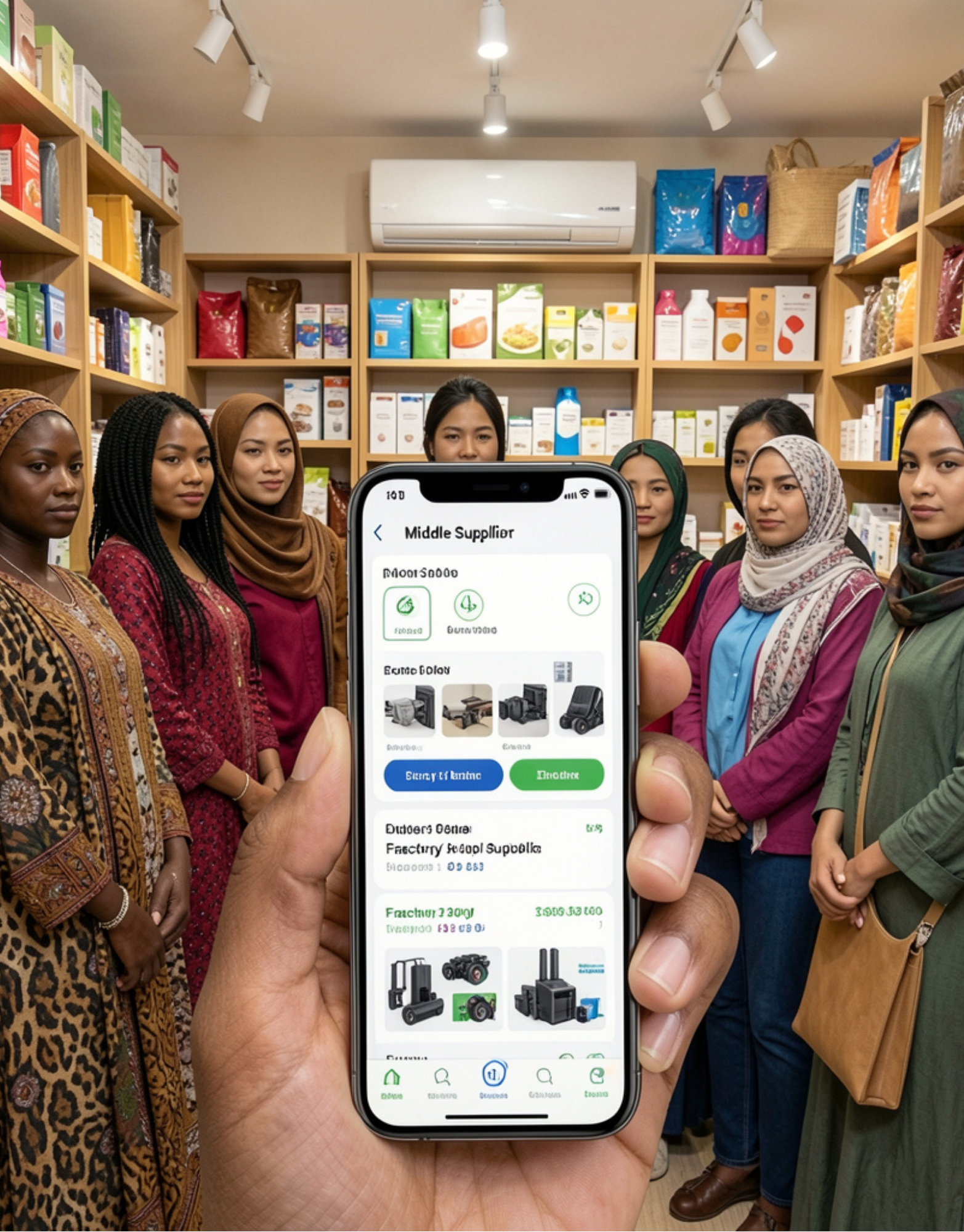
The most immediate pressure is felt by those in the middle layer, retailers, small distributors, boutique owners, many of whom are women. Their business models depend on a margin that justifies curation, customer service, inventory risk, and local accessibility. When customers begin to bypass them, not because of inefficiency but because of newly available information, that margin erodes.

In Nigeria, retailers have begun to voice this concern more openly. The complaint is not simply about competition. It is about disruption without transition.

A customer who discovers a supplier through a viral video may not consider minimum order quantities, shipping complexities, customs duties, quality inconsistencies, or after-sales risk. The retailer, who once absorbed these variables, becomes redundant in the eyes of a consumer focused only on price.

Ironically, this creates a paradox. The same customer who bypasses a retailer for a cheaper product may later return to complain about delays, defects, or lack of accountability. What appears efficient in the short term can become unstable in the long term.

Even for distributors, the apparent benefit of direct sales may not be as sustainable as it seems. Scaling direct-to-consumer relationships requires infrastructure, customer service systems, logistics management, and brand positioning. Not all suppliers are equipped for this transition. What they gain in margin, they may lose in operational complexity.

This is where the conversation becomes more nuanced than the binary of gatekeeping versus openness.

The criticism of influencers who share supplier contacts, including figures like Paramount Plug, reflects a broader anxiety about the erosion of economic ecosystems. Yet it would be intellectually dishonest to dismiss the movement entirely. Transparency is not the problem. In many industries, it has corrected exploitative markups, exposed inefficiencies, and empowered consumers.

The question is not whether information should be shared, but how it is shared, and what responsibility comes with that sharing.
Because markets do not function on information alone. They function on structure.

When content reduces complex supply chains into a single narrative, “buy directly and save,” it ignores the invisible labour embedded within those chains.

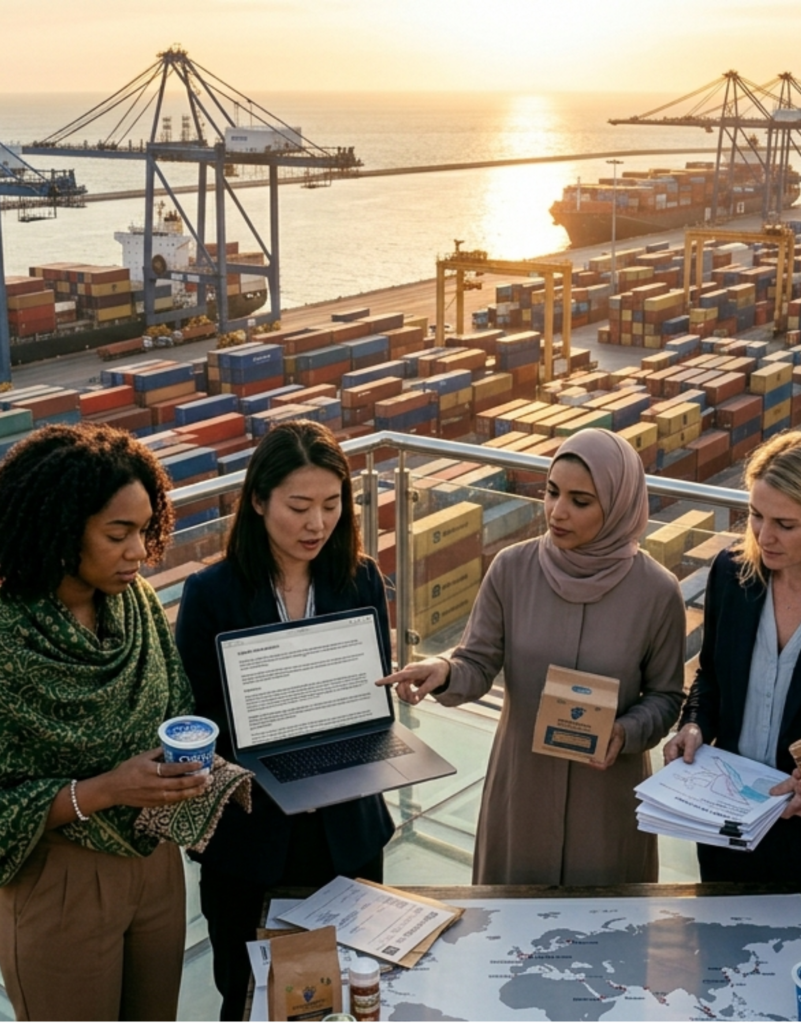
Logistics, trust-building, quality assurance, local market adaptation, these are not inefficiencies. They are value layers.

Globally, what we are witnessing is not the extinction of the supply chain, but its redefinition. The middleman is not disappearing. The middleman is being forced to justify their existence.

Retailers who survive this shift will not compete on access alone. They will compete on experience, trust, and differentiation. They will become curators rather than resellers, educators rather than intermediaries. In many ways, this evolution is overdue.

For consumers, the responsibility is equally important. Price is not the only metric of value. Reliability, accountability, and sustainability matter. Supporting local businesses is not charity. It is participation in an economic ecosystem that ultimately benefits the consumer as well.

And for content creators, perhaps the most powerful shift is this. Influence is no longer just about exposure. It is about consequence.

Sharing information is easy. Understanding its ripple effects is harder.

The future of commerce will not be decided by whether we keep or remove gates. It will be shaped by whether we understand why those gates existed in the first place, and what must replace them when they are gone.

Because when everything becomes accessible, the real question is no longer who has the information. It is who understands the system well enough to sustain it.


Share:

Trending

Raising Women Magazine Issue 046 – June 2026

There is something deeply revealing about the way a society treats its children. Not just in policy or parenting, but in the stories it tells them, the spaces it creates for them, and the kind of world it quietly prepares them to inherit. In this Children’s Day edition, Raising Women Magazine turns its attention to childhood itself, not as a sentimental phase of life, but as the foundation upon which identity, confidence, memory, and humanity are built.

Our cover star, Ms. Rachel, represents a refreshing reminder that gentleness still matters in an age of noise. Through patience, intentionality, and emotional safety, she has transformed songs and screen time into a global classroom for millions of children and families.

Across this issue, we explore the emotional architecture of childhood, from the girls who learn too early to shrink themselves, to the children quietly carrying adult burdens before they fully understand their own. We also interrogate modern parenting, digital culture, family, safety, and the futures young people are already shaping.

Because childhood is never just preparation for life.

In many ways, it is life itself.

Raising Women Magazine Issue 045 – June 2026

There is a difference between living and merely functioning.
Somewhere between the notifications, deadlines, responsibilities, ambitions, and endless demands of modern life, many of us have become exceptionally good at keeping going. We show up. We deliver. We carry. We cope. Yet beneath the appearance of productivity, an important question remains: are we truly well?
In this issue of Raising Women Magazine, we explore wellness not as a trend, but as a deeper conversation about humanity, health, purpose, and presence.
Our cover feature introduces Dr. Heidi Beilis, a pioneering physician helping to shape the future of healthcare through artificial intelligence. Her work reminds us that innovation is at its best when it serves people, particularly women whose lives may be transformed by earlier diagnoses and better outcomes.
Elsewhere, we explore grief, ambition, beauty, leadership, healthspan, rest, and the invisible burdens many women carry. We ask difficult questions about what it means to thrive, not simply survive.
As I wrote in this issue’s Find Her Light column, sometimes the rest we need is not sleep. Sometimes it is space. Sometimes it is perspective. Sometimes it is permission.
May these pages offer all three.

Up Coming Events

by Oluchi Obiahu MEET AFRICA FASHION FESTIVAL (MAFEST) 2026 Date: Monday, May 25, 2026 Location: Abuja, Nigeria Get ready for one of the most creative

Your guide to IVF and egg freezing in Korea

Empowering your family planning journey with curated fertility treatments at lower costs. Get our guide for Korea’s leading clinics, pricing and service breakdown.

Recommended News

Raising Women Magazine Issue 046 – June 2026

There is something deeply revealing about the way a society treats its children. Not just in policy or parenting, but in the stories it tells them, the spaces it creates for them, and the kind of world it quietly prepares them to inherit. In this Children’s Day edition, Raising Women Magazine turns its attention to childhood itself, not as a sentimental phase of life, but as the foundation upon which identity, confidence, memory, and humanity are built.

Our cover star, Ms. Rachel, represents a refreshing reminder that gentleness still matters in an age of noise. Through patience, intentionality, and emotional safety, she has transformed songs and screen time into a global classroom for millions of children and families.

Across this issue, we explore the emotional architecture of childhood, from the girls who learn too early to shrink themselves, to the children quietly carrying adult burdens before they fully understand their own. We also interrogate modern parenting, digital culture, family, safety, and the futures young people are already shaping.

Because childhood is never just preparation for life.

In many ways, it is life itself.

Raising Women Magazine Issue 045 – June 2026

There is a difference between living and merely functioning.
Somewhere between the notifications, deadlines, responsibilities, ambitions, and endless demands of modern life, many of us have become exceptionally good at keeping going. We show up. We deliver. We carry. We cope. Yet beneath the appearance of productivity, an important question remains: are we truly well?
In this issue of Raising Women Magazine, we explore wellness not as a trend, but as a deeper conversation about humanity, health, purpose, and presence.
Our cover feature introduces Dr. Heidi Beilis, a pioneering physician helping to shape the future of healthcare through artificial intelligence. Her work reminds us that innovation is at its best when it serves people, particularly women whose lives may be transformed by earlier diagnoses and better outcomes.
Elsewhere, we explore grief, ambition, beauty, leadership, healthspan, rest, and the invisible burdens many women carry. We ask difficult questions about what it means to thrive, not simply survive.
As I wrote in this issue’s Find Her Light column, sometimes the rest we need is not sleep. Sometimes it is space. Sometimes it is perspective. Sometimes it is permission.
May these pages offer all three.

Up Coming Events

by Oluchi Obiahu MEET AFRICA FASHION FESTIVAL (MAFEST) 2026 Date: Monday, May 25, 2026 Location: Abuja, Nigeria Get ready for

Past Events

By Oluchi Obiahu CANNES FILM FESTIVAL 2026 Dates: May 12 – 23, 2026 For twelve sun-drenched days on the French

POETRY

by The Lulu I miss my childhood. I miss the version of me that laughed from the stomach, that ran