Spotlighting Remarkable Women and Girls

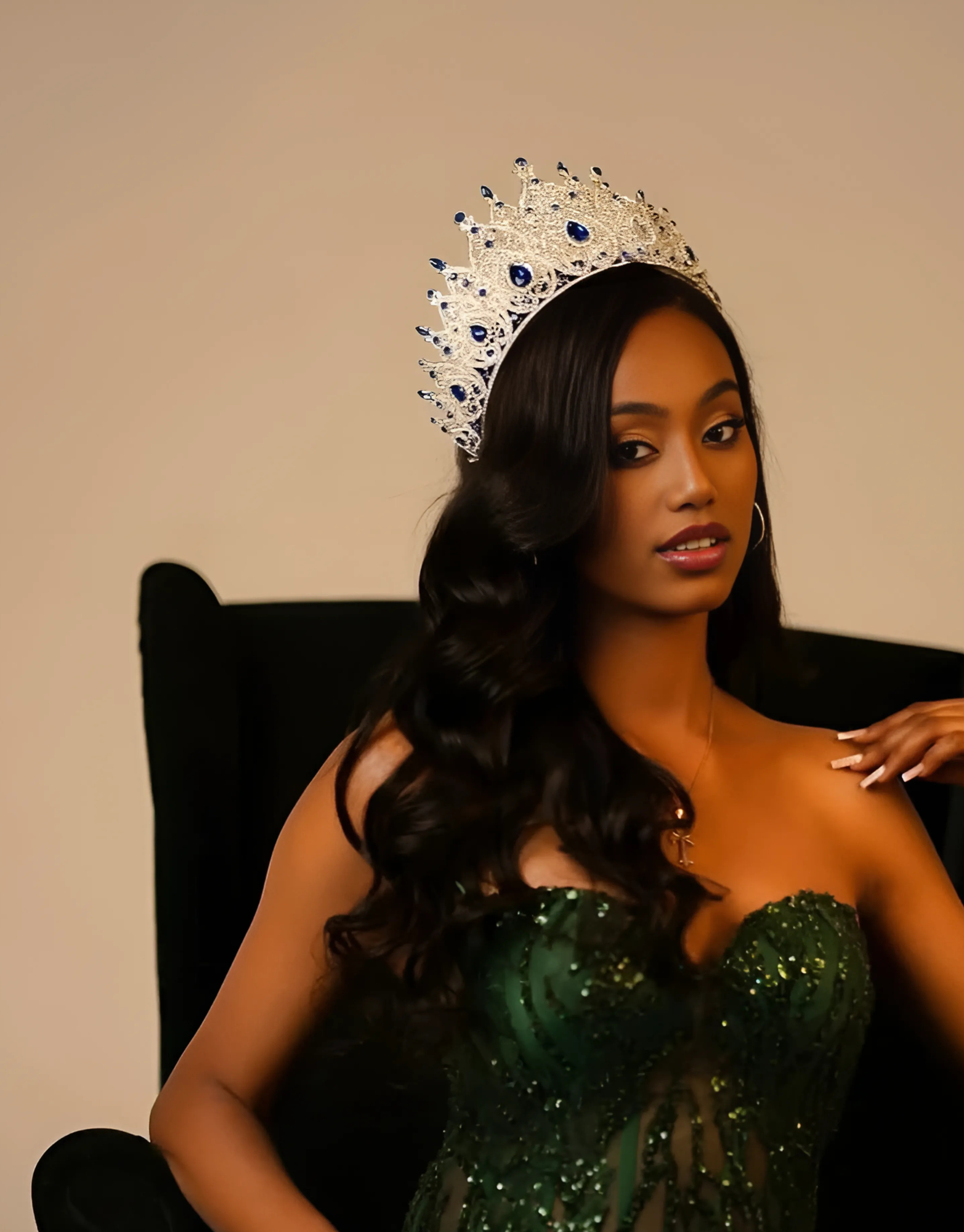
THE CROWN, THE CAUSE, AND THE COURAGE: Hasset Dereje’s Legacy In The Making

By Francisca Sinjae

There are beauty queens, and then there are history makers. At just 19, Hasset Dereje Admassu didn’t simply show up at Miss World 2025, she shook the room. She didn’t whisper her presence; she walked in as a force. When the crown of Miss World Africa was placed on her head and she was named First Runner-Up globally, she made it clear: This is not about pretty smiles and sashes, this is about power, purpose, and pride.

She Chose Disruption Over Tradition

Hasset didn’t come from a modeling agency or an elite grooming school. She came from Addis Ababa Science and Technology University, armed with equations, chemical reactions, and raw determination. She was deep in the rigorous world of chemical engineering, not fashion runways, and yet she stormed the most prestigious global beauty stage and left everyone in awe.

This wasn’t some polished publicity stunt. It was personal. She had a clear mission, to fight for maternal health and girls’ education in rural Ethiopia, and she didn’t need approval to start. Her “Beauty with a Purpose” project was already alive and active, changing lives before the world even took notice. She mobilized resources, offered mentorship to schoolgirls, and raised awareness on critical health issues affecting women in underrepresented communities. It wasn’t just a platform pitch. It was a lived commitment.

A Crown Worn with Fire

When Hasset took that global stage in Hyderabad, India, she didn’t just represent a country; she embodied a continent. Her voice cut through the noise: calm, clear, fierce. She told the story of African girls not from the safe distance of advocacy, but from lived experience.

Girls denied school. Mothers giving birth without medical care. Communities forgotten. She didn’t package their pain for applause; she told it with purpose, and people listened.

Hasset didn’t just wear the crown. She weaponized it for good. She stood tall not only as a symbol of beauty but as a bold voice for equity, access, and empowerment. In every interview, her authenticity rang louder than rehearsed answers. She didn’t come to play. She came to pave a path.

This Is What Legacy Looks Like

Hasset’s story is a blueprint for a new generation of women who are done asking for permission to shine. For girls who want to be more than pretty faces; for those who want to lead, build, question, and create. Here’s what she teaches us:

  1. Own Your Intelligence Like a Superpower

Hasset didn’t dim her academic light to fit the pageant mold. She walked in fully herself, smart, strategic, and unstoppable. For every girl who’s ever been told to choose between books and beauty, she’s the living proof: you can be brilliant and breathtaking.

2. You Don’t Need a Platform to Start, You Are the Platform

Hasset didn’t wait for the world’s approval. She built her impact from the ground up, literally, in Ethiopia’s remote areas. She proved you don’t need a mic to be heard. Start where you are. Speak anyway.

3. Purpose Will Outlive Popularity

While others chased cameras, she chased change. She wasn’t trying to impress, she was trying to improve lives. And that’s why she became unforgettable.

4. Quiet Confidence Is Louder Than Noise

She wasn’t flashy, but she was fearless. No gimmicks, no drama, just undeniable truth. She reminded us that being bold doesn’t always mean being loud. It means being real, being ready, and refusing to shrink.

Africa Didn’t Just Show Up, She Showed Off

Hasset didn’t just make Ethiopia proud. She raised the bar for what the world expects from African women. She challenged the narrow lens through which global platforms often see us. She shattered the stereotype and rebuilt it in her image, educated, elegant, relentless.

She wasn’t there for representation alone; she was there to reclaim the narrative. The one that says African women are not to be pitied or polished up for global applause, but to be respected, followed, and celebrated in their full depth and dynamism.

And for every girl watching, wondering if her story could matter, Hasset’s journey roared: “Yes. Yes, it can. Yes, it must. Yes, it will.”

What Hasset did at Miss World wasn’t just a moment of glory. It was the start of a movement. A movement that demands more from beauty. A movement that dares girls to dream past the surface. A movement that tells every African girl: You are not invisible. You are inevitable.

She didn’t just wear a crown, she wore a cause, with fire in her eyes and a map in her hands. And she’s just getting started.
Share:

Trending

Raising Women Magazine Issue 045 – June 2026

There is a difference between living and merely functioning.
Somewhere between the notifications, deadlines, responsibilities, ambitions, and endless demands of modern life, many of us have become exceptionally good at keeping going. We show up. We deliver. We carry. We cope. Yet beneath the appearance of productivity, an important question remains: are we truly well?
In this issue of Raising Women Magazine, we explore wellness not as a trend, but as a deeper conversation about humanity, health, purpose, and presence.
Our cover feature introduces Dr. Heidi Beilis, a pioneering physician helping to shape the future of healthcare through artificial intelligence. Her work reminds us that innovation is at its best when it serves people, particularly women whose lives may be transformed by earlier diagnoses and better outcomes.
Elsewhere, we explore grief, ambition, beauty, leadership, healthspan, rest, and the invisible burdens many women carry. We ask difficult questions about what it means to thrive, not simply survive.
As I wrote in this issue’s Find Her Light column, sometimes the rest we need is not sleep. Sometimes it is space. Sometimes it is perspective. Sometimes it is permission.
May these pages offer all three.

Raising Women Magazine Issue 044 – May 2026

There is something deeply revealing about the way a society treats its children. Not just in policy or parenting, but in the stories it tells them, the spaces it creates for them, and the kind of world it quietly prepares them to inherit. In this Children’s Day edition, Raising Women Magazine turns its attention to childhood itself, not as a sentimental phase of life, but as the foundation upon which identity, confidence, memory, and humanity are built.

Our cover star, Ms. Rachel, represents a refreshing reminder that gentleness still matters in an age of noise. Through patience, intentionality, and emotional safety, she has transformed songs and screen time into a global classroom for millions of children and families.

Across this issue, we explore the emotional architecture of childhood, from the girls who learn too early to shrink themselves, to the children quietly carrying adult burdens before they fully understand their own. We also interrogate modern parenting, digital culture, family, safety, and the futures young people are already shaping.

Because childhood is never just preparation for life.

In many ways, it is life itself.

The Family Tree Divide

What Women Are Given, and What They Build By Sipho Khumalo Two women walk into the same room. One is recognised before she speaks. The

Your guide to IVF and egg freezing in Korea

Empowering your family planning journey with curated fertility treatments at lower costs. Get our guide for Korea’s leading clinics, pricing and service breakdown.

Recommended News

Raising Women Magazine Issue 045 – June 2026

There is a difference between living and merely functioning.
Somewhere between the notifications, deadlines, responsibilities, ambitions, and endless demands of modern life, many of us have become exceptionally good at keeping going. We show up. We deliver. We carry. We cope. Yet beneath the appearance of productivity, an important question remains: are we truly well?
In this issue of Raising Women Magazine, we explore wellness not as a trend, but as a deeper conversation about humanity, health, purpose, and presence.
Our cover feature introduces Dr. Heidi Beilis, a pioneering physician helping to shape the future of healthcare through artificial intelligence. Her work reminds us that innovation is at its best when it serves people, particularly women whose lives may be transformed by earlier diagnoses and better outcomes.
Elsewhere, we explore grief, ambition, beauty, leadership, healthspan, rest, and the invisible burdens many women carry. We ask difficult questions about what it means to thrive, not simply survive.
As I wrote in this issue’s Find Her Light column, sometimes the rest we need is not sleep. Sometimes it is space. Sometimes it is perspective. Sometimes it is permission.
May these pages offer all three.

Raising Women Magazine Issue 044 – May 2026

There is something deeply revealing about the way a society treats its children. Not just in policy or parenting, but in the stories it tells them, the spaces it creates for them, and the kind of world it quietly prepares them to inherit. In this Children’s Day edition, Raising Women Magazine turns its attention to childhood itself, not as a sentimental phase of life, but as the foundation upon which identity, confidence, memory, and humanity are built.

Our cover star, Ms. Rachel, represents a refreshing reminder that gentleness still matters in an age of noise. Through patience, intentionality, and emotional safety, she has transformed songs and screen time into a global classroom for millions of children and families.

Across this issue, we explore the emotional architecture of childhood, from the girls who learn too early to shrink themselves, to the children quietly carrying adult burdens before they fully understand their own. We also interrogate modern parenting, digital culture, family, safety, and the futures young people are already shaping.

Because childhood is never just preparation for life.

In many ways, it is life itself.

The Family Tree Divide

What Women Are Given, and What They Build By Sipho Khumalo Two women walk into the same room. One is

First, Believe

By The Lulu They said the sky’s the limit But what if you’re still underground, still digging through the dirt