Spotlighting Remarkable Women and Girls

The female gaze, “pretty men,” and why female desire is never allowed to exist quietly online.

By Ifeoma Udu

I recently watched You, Me and Tuscany (go out and support Black love if you haven’t), and afterward I mentioned on my status that Regé-Jean Page (the Duke of Hastings) is a fine man.

Soon after, a Nigerian man entered my DMs unprovoked to inform me that Page is “gay,” and that there was no need for me to crush on him.

Firstly, I wasn’t crushing on anyone.

Second, what exactly is my business with an actor’s sexuality?

But the DM itself wasn’t the point.

What stayed with me was how quickly a neutral observation about a man’s appearance became something that needed correction.

As if women saying a man is never allowed to exist without explanation.

The Female Gaze Is Not Just Attraction

The female gaze is often reduced to “women finding men attractive,” but that misses the point.

It is not about who women like.

It is about how they are allowed to like them.

It prioritises:

•           emotional presence over detachment

•           expression over suppression

•           intention over performative toughness

•           softness without erasure

This is why certain men don’t simply stay as attractive, they become discussed.

Not because they dominate a room, but because they feel easier to read.

When Women Like Someone, the Internet Interprets It

There is a pattern that rarely changes.

When women openly find a male celebrity attractive, the conversation doesn’t stay there. It shifts into interrogation:

•           Is he masculine enough?

•           Why do women like him?

•           Is he gay?

•           Is this PR?

•           What’s really going on?

Attraction is treated as incomplete data, something that must be decoded.


We’ve seen this repeatedly.

This isn’t new. Women’s admiration has long been pathologised: from Beatlemania dismissed as “hysteria” to modern fandoms labelled “obsessive.”

Unmediated female desire threatens a cultural script that expects women to be the objects of attention, not the subjects expressing it. When that script flips, the internet defaults to correction.

With One Direction, their popularity was never allowed to exist as fandom. It became commentary on softness, beauty, and what it meant for millions of women to be emotionally invested in them.

Justin Bieber experienced the same shift. Even as he matured, discussions kept circling back to his appearance, styling, and perceived masculinity.

Female attraction is rarely left untouched.

It is analysed until it becomes something else.


With groups like BTS and Stray Kids, the pattern becomes even clearer. 

These men are not only visually curated, they are emotionally expressive in public. Their masculinity includes:

•           styling as identity

•           vulnerability without apology

•           emotional articulation

•           softness without fragility

Women respond to this directly.

But the backlash is predictable:

•           “They look gay.”

•           “They’re too feminine.”

•           “That’s not masculine.”

This says less about them and more about how rigid masculine expectations remain.

Because the issue is not sexuality.

It is discomfort with masculinity that is not built for male approval and while the pushback often comes from men, it’s rarely a gender-exclusive reflex.

Women, too, participate in the sorting, sometimes policing other women’s tastes to align with respectability politics, or distancing themselves from “too much” fandom to avoid being labelled irrational.

The pattern isn’t about who speaks. It’s about who gets to define the boundaries of acceptable desire.

When Admiration Becomes Suspicion

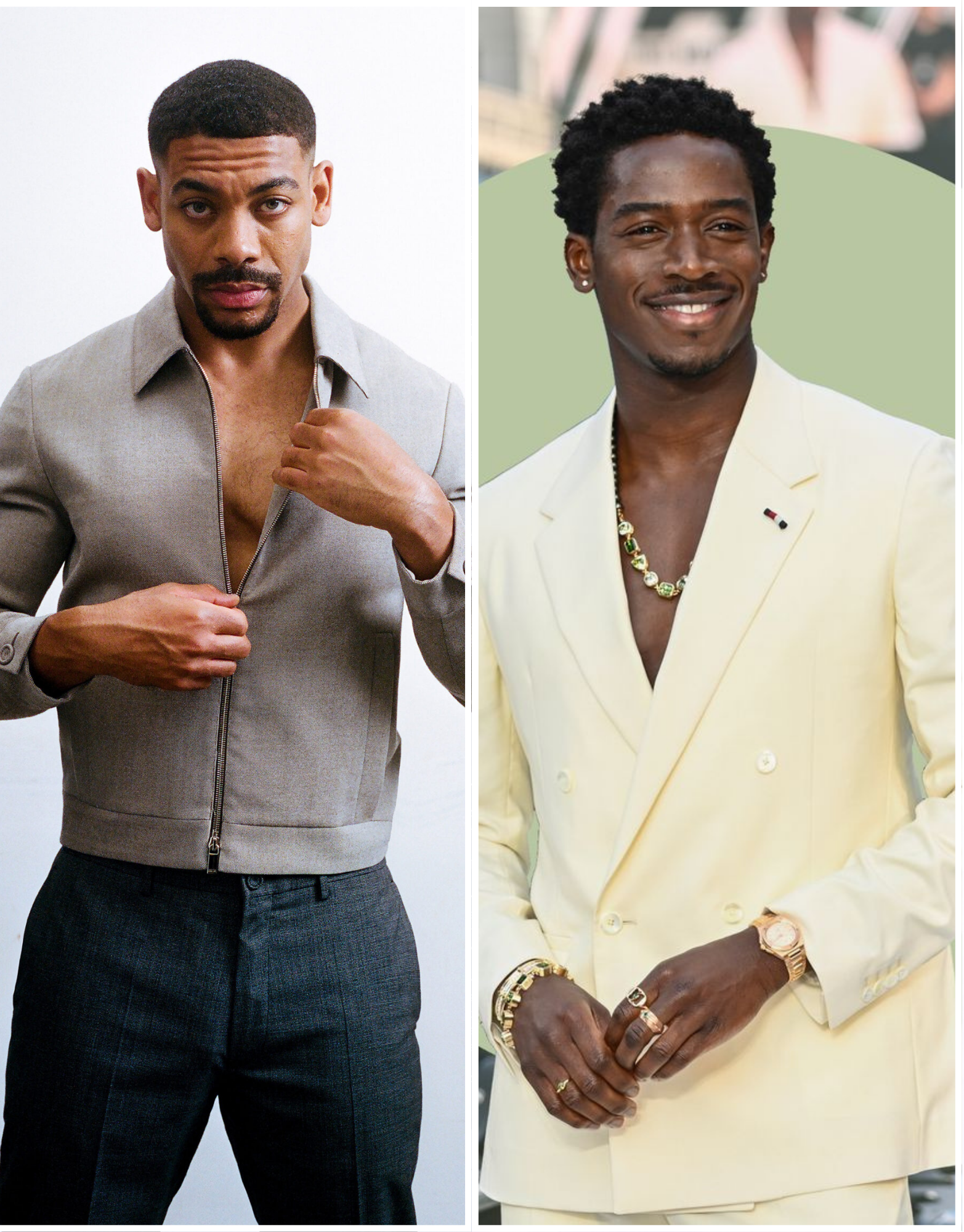
A similar pattern emerged with Aaron Pierre during the Mufasa: The Lion King wave.

As his visibility increased, especially around public moments with Teyana Taylor, admiration quickly turned into speculation:

•           “This feels staged.”

•           “This is PR.”

•           “he is gay”

Even after the narrative shifted, the discourse didn’t settle. It expanded.

As if a widely admired man cannot exist without a hidden explanation.

As if visibility must always mean something more.

Recently, there’s been discourse around Damson Idris, the British-Nigerian actor, on Obasanjo’s internet. A number of Nigerian men have been quick to say they “don’t see the appeal”, that he looks like a regular Yoruba boy, the kind you’d find in Lekki, UNILAG, or Abuja without trying.

On the surface, it reads as humour or even harmless dismissal. What’s striking isn’t the dismissal itself, but the need to downgrade him to “regular.” In a culture that rewards exceptionalism as proof of worth, calling an attractive man “just a regular Yoruba boy” functions as a quiet correction: if he’s ordinary, then women’s attraction to him must be disproportionate, irrational, or misplaced.

But it still reveals a pattern:

Attractive men are constantly sorted:

•           what kind of masculinity they represent

•           what their appearance signifies

•           what kind of man they “really” are

Even when no one asked.

The Real Pattern

This is not about the men.

It is about what happens when women express desire publicly.

It rarely remains:

“He is attractive.”

Instead, it becomes:

•           analysis

•           speculation

•           correction

•           classification

•           explanation

Which brings me back to that DM.

A casual comment turned into something that required clarification I never asked for.

That is the pattern.

Not that women like certain men, but that women’s attraction is treated as incomplete. As something that must be translated into meaning.

Maybe the men women love are not the problem.

Maybe the discomfort begins when female desire stops asking for permission to exist out loud.

Until then, we’ll keep getting unsolicited DMs, think-pieces, and quiet corrections for saying what should be allowed to just be: he’s attractive.

And that’s enough.
Share:

Trending

Raising Women Magazine Issue 56 – November 2026

The Courage to Question
We live in a world where reputation often arrives before character, popularity masquerades as goodness, and questioning authority can make you the problem. Apparently, being respected is sometimes mistaken for being beyond reproach.
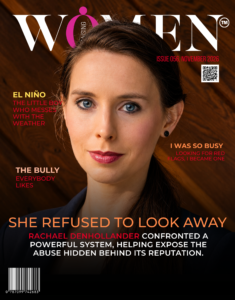
Our cover woman, Rachael Denhollander, reminds us why that distinction matters. Her courage in confronting institutional abuse challenges us to reconsider what safety, justice and accountability truly mean.

Elsewhere, we explore the judgement surrounding childbirth, the invisible labour behind successful careers, the beauty industry’s obsession with perfection, and why women can cook the same meal as men yet receive considerably less applause.

From fashion and culture to relationships and motherhood, Issue 56 invites us to examine the assumptions we have inherited, including those we unknowingly perpetuate.

Because progress is not simply about celebrating extraordinary women. It is about creating a world where ordinary women and girls are heard, valued and protected.

And sometimes, change begins with refusing to look away.

Raising Women Magazine Issue 55 – October 2026

We spend a remarkable amount of time telling girls who they should become, often before they have finished discovering who they are. Apparently, growing up comes with a job description nobody remembers applying for.

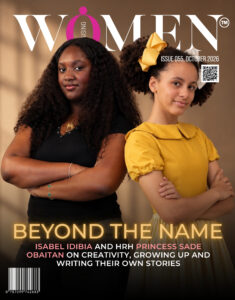
In Issue 55, our cover girls, Isabel Idibia and Princess Sade Obaitan, remind us that famous surnames and royal titles may introduce you, but they should never define you.

From girls conquering oceans and swimming pools to conversations about beauty, culture and ambition, this edition examines the expectations we inherit and the courage required to question them.

In Find Her Light, I also reflect on the careers I might have pursued and why discovering another gift does not invalidate the life we have already built.

Perhaps that is the lesson running through these pages: identity is not a finished manuscript.

Every girl deserves the freedom to write her own story. And every woman deserves another chapter.

Raising Women Magazine Issue 54 – October 2026

“Because you’re a girl.”
Four little words that have spent generations doing an extraordinary amount of damage. Apparently, ambition, intelligence and audacity were once considered rather unladylike.
Fortunately, the girls featured in our 54th edition missed that memo.
As we celebrate the International Day of the Girl Child, we spotlight twelve remarkable girls rewriting the rules, while reminding ourselves that a girl should not need extraordinary achievements to deserve ordinary opportunities.
We also explore the expectations that complicate girlhood, the childhood wounds we carry into adulthood and, in my Find Her Light reflection, why the girl I once was might have a few lessons for the woman I have become.
Perhaps our greatest responsibility is not simply raising girls to conquer the world, but ensuring they never have to shrink themselves to belong in it.
Because you’re a girl?
What a wonderful reason to dream without limits.

Raising Women Magazine Issue 53 – September 2026

Apparently, saving the planet comes with a shopping list. Solar panels, electric cars, sustainable fashion and, preferably, a bank account that understands the assignment.

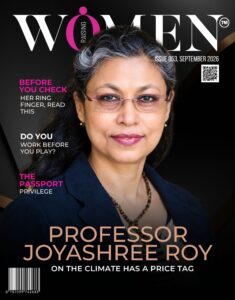
In Issue 53, our cover woman, Professor Joyashree Roy, challenges us to reconsider what sustainability really costs, who pays, and why the cheapest choices today may leave tomorrow’s generations with the bill.

But this issue is also about the invisible price tags attached to everyday life. From passport privilege and the cultural expectations of a “good woman” to motherhood, personal boundaries and the delicate art of enjoying life before finishing every task, we examine the systems shaping our choices.

We also celebrate women turning overlooked problems into extraordinary opportunities.

Perhaps progress begins when we stop asking only what things cost and start asking what they are worth.

A better world should not be a luxury reserved for those who can afford it.
Happy reading!

.

Your guide to IVF and egg freezing in Korea

Empowering your family planning journey with curated fertility treatments at lower costs. Get our guide for Korea’s leading clinics, pricing and service breakdown.

Recommended News

Raising Women Magazine Issue 56 – November 2026

The Courage to Question
We live in a world where reputation often arrives before character, popularity masquerades as goodness, and questioning authority can make you the problem. Apparently, being respected is sometimes mistaken for being beyond reproach.
Our cover woman, Rachael Denhollander, reminds us why that distinction matters. Her courage in confronting institutional abuse challenges us to reconsider what safety, justice and accountability truly mean.

Elsewhere, we explore the judgement surrounding childbirth, the invisible labour behind successful careers, the beauty industry’s obsession with perfection, and why women can cook the same meal as men yet receive considerably less applause.

From fashion and culture to relationships and motherhood, Issue 56 invites us to examine the assumptions we have inherited, including those we unknowingly perpetuate.

Because progress is not simply about celebrating extraordinary women. It is about creating a world where ordinary women and girls are heard, valued and protected.

And sometimes, change begins with refusing to look away.

Raising Women Magazine Issue 55 – October 2026

We spend a remarkable amount of time telling girls who they should become, often before they have finished discovering who they are. Apparently, growing up comes with a job description nobody remembers applying for.

In Issue 55, our cover girls, Isabel Idibia and Princess Sade Obaitan, remind us that famous surnames and royal titles may introduce you, but they should never define you.

From girls conquering oceans and swimming pools to conversations about beauty, culture and ambition, this edition examines the expectations we inherit and the courage required to question them.

In Find Her Light, I also reflect on the careers I might have pursued and why discovering another gift does not invalidate the life we have already built.

Perhaps that is the lesson running through these pages: identity is not a finished manuscript.

Every girl deserves the freedom to write her own story. And every woman deserves another chapter.

Raising Women Magazine Issue 54 – October 2026

“Because you’re a girl.”
Four little words that have spent generations doing an extraordinary amount of damage. Apparently, ambition, intelligence and audacity were once considered rather unladylike.
Fortunately, the girls featured in our 54th edition missed that memo.
As we celebrate the International Day of the Girl Child, we spotlight twelve remarkable girls rewriting the rules, while reminding ourselves that a girl should not need extraordinary achievements to deserve ordinary opportunities.
We also explore the expectations that complicate girlhood, the childhood wounds we carry into adulthood and, in my Find Her Light reflection, why the girl I once was might have a few lessons for the woman I have become.
Perhaps our greatest responsibility is not simply raising girls to conquer the world, but ensuring they never have to shrink themselves to belong in it.
Because you’re a girl?
What a wonderful reason to dream without limits.

Raising Women Magazine Issue 53 – September 2026

Apparently, saving the planet comes with a shopping list. Solar panels, electric cars, sustainable fashion and, preferably, a bank account that understands the assignment.

In Issue 53, our cover woman, Professor Joyashree Roy, challenges us to reconsider what sustainability really costs, who pays, and why the cheapest choices today may leave tomorrow’s generations with the bill.

But this issue is also about the invisible price tags attached to everyday life. From passport privilege and the cultural expectations of a “good woman” to motherhood, personal boundaries and the delicate art of enjoying life before finishing every task, we examine the systems shaping our choices.

We also celebrate women turning overlooked problems into extraordinary opportunities.

Perhaps progress begins when we stop asking only what things cost and start asking what they are worth.

A better world should not be a luxury reserved for those who can afford it.
Happy reading!

.

Raising Women Magazine Issue 52 – September 2026

This issue asks a deceptively simple question: can we save the planet without making ordinary people pay the highest price?
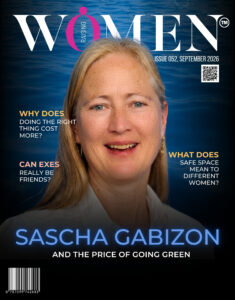
Our cover star, Sascha Gabizon, brings that question sharply into focus, challenging us to think about climate action not only through carbon, but through fairness, access and gender. Because going green sounds wonderful until sustainability becomes something only the wealthy can afford.
Across these pages, we follow climate change into unexpected places. Into our wardrobes, our food, our cultural traditions and even the price of our morning coffee. We also continue our important First Daughters conversation, explore what women really mean when they speak about safety, and look at 111 Miss World contestants whose purpose projects remind us that beauty today carries increasingly bigger expectations.
This edition is ultimately about responsibility, but responsibility shared fairly.
Because saving our planet cannot become another luxury.
And perhaps the greenest future is one everyone can actually afford.

Raising Women Magazine Issue 051 – August 2026

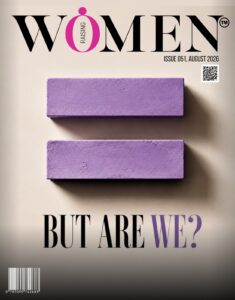
Equal. Such a small word for such a complicated idea.

In this issue, we ask a question that feels almost impolite after decades of progress: women have more rights, education, income and influence than generations before us, but are we equal? We have travelled remarkably far, yet full global gender parity remains generations away. Apparently, equality is taking the scenic route.

Issue 51 looks beyond the equal sign to what equality actually feels like in women’s lives. We follow the money, the power and, importantly, the hours women still disproportionately spend caring. We also explore women’s old financial systems, workplace design, the soft life economy and the changing meaning of opportunity
.
Progress deserves celebration. But celebration should never make us complacent.

We have opened many doors.

Now we must ask what happens after women walk through them.

We are closer.

But are we there?
.