Spotlighting Remarkable Women and Girls

The Science Behind Stockholm Syndrome Isn’t What You Think

By Tilly Boateng

When people hear the phrase Stockholm Syndrome, they often imagine dramatic movie scenes: a hostage falling in love with a captor, or a victim fiercely defending some-one who harmed them. But behind the sensational headlines and Hollywood interpretations lies a far more complex and far more human story. Did you know that Stockholm Syndrome is not an official psychological diagnosis? Yet it remains one of the most fascinating survival responses ever observed.

A Survival Strategy, Not a Disorder

In popular culture, Stockholm Syndrome is spoken about like a medical condition, but psychologists emphasise something important: it does not appear in the DSM-5 or any major psychiatric classification manual. Instead, it is understood as a survival-driven coping mechanism.

The term originated from a 1973 bank robbery in Stockholm, where hostages began displaying sympathy toward their captors. But modern research suggests that these reactions weren’t “irrational affection” they were adaptive behaviors meant to keep the victims alive.

In high-stress situations where escape feels impossible, the brain shifts into a mode focused on survival above all else. And this can create unexpected emotional responses.

How the Brain Responds Under Extreme Threat

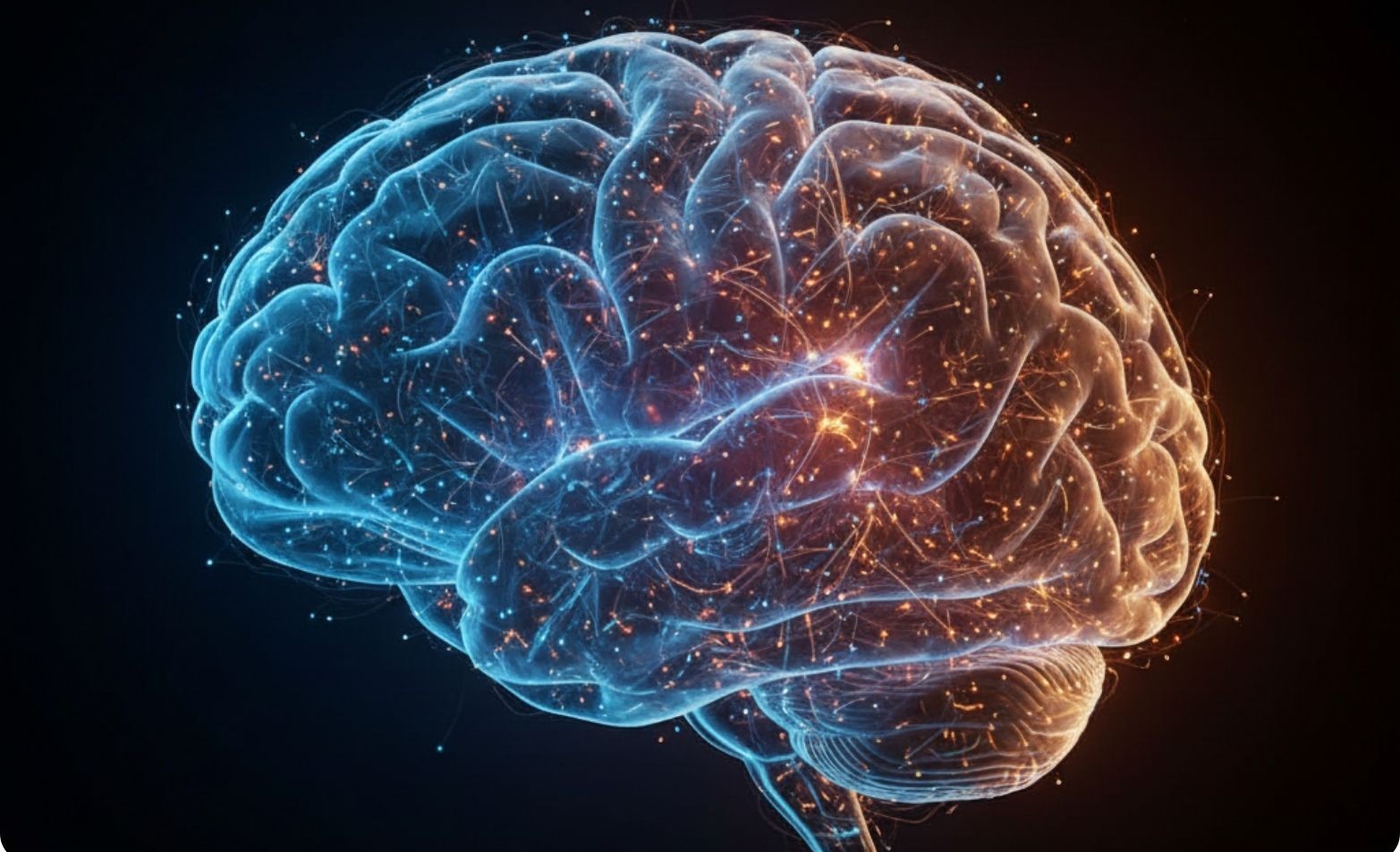
When someone is kidnapped, abused, or held against their will, the body floods with stress hormones like cortisol. The amygdala, the brain’s fear centre becomes intensely activated. In this heightened state, the mind begins searching for the safest path forward.

Here’s where it becomes interesting: victims often perceive that resisting may lead to greater harm, while cooperation increases their chances of survival. The brain unconsciously leans toward building rapport, even in dangerous circumstances.

This isn’t love.

It isn’t weakness.

It’s biology doing whatever it can to protect life.

Small Kindness, Big Impact

One of the most powerful triggers of Stockholm-like behaviour is something surprisingly simple: intermittent kindness.

Research shows that when a captor alternates between cruelty and brief moments of gentleness offering food, loosening restraints, speaking calmly, the victim’s brain interprets those small acts as huge relief. The contrast between danger and temporary safety creates an emotional “reward cycle.”

In ordinary life, a kind gesture might barely register. But in captivity, even a moment of mercy can feel life-saving. That relief can form the foundation of an emotional bond, what psychologists call trauma bonding.

When Dependence Deepens the Bond

Victims in these scenarios are often completely isolated:

  • cut off from family
  • denied outside information
  • fully dependent on their captors for basic needs

This forced dependence alters normal thinking patterns. With no alternative source of safety or human connection, the captor becomes the only available relationship. Over time, this intensifies feelings of attachment, loyalty, or even admiration.

It’s not that the victim forgets the harm.

It’s that the mind prioritises survival over judgment.

To reduce this internal conflict, the brain may rewrite the situation:

“Maybe they’re not so bad.”

“They didn’t kill me, maybe they’re trying to help.”

This mental reframing is not a choice. It’s a protective mechanism shaped by extreme fear, uncertainty, and dependence.

Why Some Experts Say It’s Misunderstood

In recent years, psychologists have debated whether the term “Stockholm Syndrome” oversimplifies a complex response. Some argue it has been used to unfairly label victims, especially women, as emotionally irrational. Others say the term has overshadowed the reality that most victims behave rationally for their survival, not out of misplaced affection.

Still, even critics agree on one thing: the behaviors associated with Stockholm Syndrome are real and overwhelmingly rooted in human resilience, not weakness.

More Common Than You Think

Although the idea started with hostage cases, similar patterns appear in:

  • domestic abuse
  • human trafficking
  • cults
  • child abuse
  • long-term emotional manipulation

Anywhere power is abused and escape feels impossible; the brain may adopt similar survival strategies.

At The End

Did you know that what we call Stockholm Syndrome is actually one of the most remarkable examples of the mind’s will to survive? Far from being a strange or inexplicable reaction, it is the brain’s way of navigating terror, preserving dignity, and staying alive in situations where options are painfully limited.

Understanding it reminds us of something profound:

Human beings will do whatever it takes to survive, even if the world misunderstands the way it looks.


Share:

Trending

Raising Women Magazine Issue 045 – June 2026

There is a difference between living and merely functioning.
Somewhere between the notifications, deadlines, responsibilities, ambitions, and endless demands of modern life, many of us have become exceptionally good at keeping going. We show up. We deliver. We carry. We cope. Yet beneath the appearance of productivity, an important question remains: are we truly well?
In this issue of Raising Women Magazine, we explore wellness not as a trend, but as a deeper conversation about humanity, health, purpose, and presence.
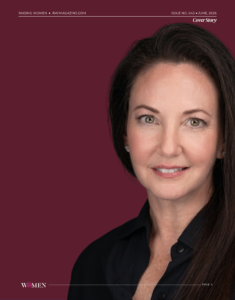
Our cover feature introduces Dr. Heidi Beilis, a pioneering physician helping to shape the future of healthcare through artificial intelligence. Her work reminds us that innovation is at its best when it serves people, particularly women whose lives may be transformed by earlier diagnoses and better outcomes.
Elsewhere, we explore grief, ambition, beauty, leadership, healthspan, rest, and the invisible burdens many women carry. We ask difficult questions about what it means to thrive, not simply survive.
As I wrote in this issue’s Find Her Light column, sometimes the rest we need is not sleep. Sometimes it is space. Sometimes it is perspective. Sometimes it is permission.
May these pages offer all three.

Raising Women Magazine Issue 044 – May 2026

There is something deeply revealing about the way a society treats its children. Not just in policy or parenting, but in the stories it tells them, the spaces it creates for them, and the kind of world it quietly prepares them to inherit. In this Children’s Day edition, Raising Women Magazine turns its attention to childhood itself, not as a sentimental phase of life, but as the foundation upon which identity, confidence, memory, and humanity are built.

Our cover star, Ms. Rachel, represents a refreshing reminder that gentleness still matters in an age of noise. Through patience, intentionality, and emotional safety, she has transformed songs and screen time into a global classroom for millions of children and families.

Across this issue, we explore the emotional architecture of childhood, from the girls who learn too early to shrink themselves, to the children quietly carrying adult burdens before they fully understand their own. We also interrogate modern parenting, digital culture, family, safety, and the futures young people are already shaping.

Because childhood is never just preparation for life.

In many ways, it is life itself.

The Family Tree Divide

What Women Are Given, and What They Build By Sipho Khumalo Two women walk into the same room. One is recognised before she speaks. The

Your guide to IVF and egg freezing in Korea

Empowering your family planning journey with curated fertility treatments at lower costs. Get our guide for Korea’s leading clinics, pricing and service breakdown.

Recommended News

Raising Women Magazine Issue 045 – June 2026

There is a difference between living and merely functioning.
Somewhere between the notifications, deadlines, responsibilities, ambitions, and endless demands of modern life, many of us have become exceptionally good at keeping going. We show up. We deliver. We carry. We cope. Yet beneath the appearance of productivity, an important question remains: are we truly well?
In this issue of Raising Women Magazine, we explore wellness not as a trend, but as a deeper conversation about humanity, health, purpose, and presence.
Our cover feature introduces Dr. Heidi Beilis, a pioneering physician helping to shape the future of healthcare through artificial intelligence. Her work reminds us that innovation is at its best when it serves people, particularly women whose lives may be transformed by earlier diagnoses and better outcomes.
Elsewhere, we explore grief, ambition, beauty, leadership, healthspan, rest, and the invisible burdens many women carry. We ask difficult questions about what it means to thrive, not simply survive.
As I wrote in this issue’s Find Her Light column, sometimes the rest we need is not sleep. Sometimes it is space. Sometimes it is perspective. Sometimes it is permission.
May these pages offer all three.

Raising Women Magazine Issue 044 – May 2026

There is something deeply revealing about the way a society treats its children. Not just in policy or parenting, but in the stories it tells them, the spaces it creates for them, and the kind of world it quietly prepares them to inherit. In this Children’s Day edition, Raising Women Magazine turns its attention to childhood itself, not as a sentimental phase of life, but as the foundation upon which identity, confidence, memory, and humanity are built.

Our cover star, Ms. Rachel, represents a refreshing reminder that gentleness still matters in an age of noise. Through patience, intentionality, and emotional safety, she has transformed songs and screen time into a global classroom for millions of children and families.

Across this issue, we explore the emotional architecture of childhood, from the girls who learn too early to shrink themselves, to the children quietly carrying adult burdens before they fully understand their own. We also interrogate modern parenting, digital culture, family, safety, and the futures young people are already shaping.

Because childhood is never just preparation for life.

In many ways, it is life itself.

The Family Tree Divide

What Women Are Given, and What They Build By Sipho Khumalo Two women walk into the same room. One is

First, Believe

By The Lulu They said the sky’s the limit But what if you’re still underground, still digging through the dirt