Spotlighting Remarkable Women and Girls

The Unspoken Rules of Borrowing Clothes from Your Bestie

By Emmanuella Abraham

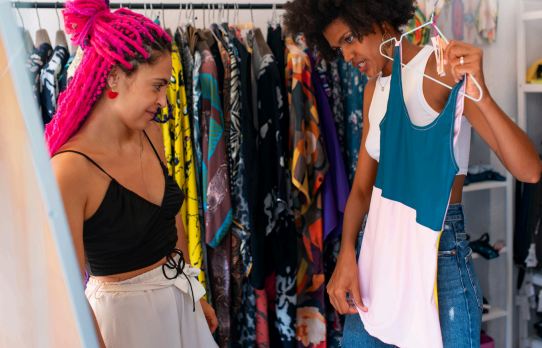
You know the feeling. You’re staring at your closet, surrounded by a sea of clothes, yet somehow, there’s nothing to wear. Panic starts to set in… tonight’s event is big, and your wardrobe just isn’t giving what it’s supposed to give. That’s when it hits you: your bestie’s closet. Her perfect top, her to-die-for jacket, her sparkly dress that
screams, “I’m the moment!” Suddenly, your crisis feels solvable.

But wait! Before you raid her wardrobe like it’s a shopping spree, let’s talk about the unspoken rules of borrowing from your best friend. Because, trust us, one misstep can turn your fashion lifesaver into full-on drama.

  1. Always Ask Before Borrowing

It might seem obvious, but the foundation of borrowing is permission. Never assume it’s okay to take an item without asking, even if you’ve borrowed things before. A simple, “Hey, can I wear your denim jacket tonight?” can prevent potential misunderstandings. As one fashion enthusiast advises, “Always ask before borrowing. Relations with neighbors may be friendly and casual, and you may have borrowed items from the same
person before with no problems. But assuming you can borrow without asking is a prescription for souring relations.”

2. Avoid New or Sentimental Items

If the clothing item still has tags on it, don’t even ask to borrow it. The first wear should be reserved for the purchaser. Similarly, steer clear of items with sentimental value or those that are irreplaceable. Your friend’s vintage band tee from her mom? Probably best to leave that one alone. As etiquette expert Sivan Ayla notes, “If the clothing item still has tags on it, don’t even ask to borrow it. The first wear should not be anyone except the purchaser of the item.”

3. Return Items Promptly and in Good Condition

After borrowing clothing, ensure it’s clean, consider dry cleaning if necessary, before returning it. Nobody likes deodorant stains or spills on their favorite dress. And remember, prompt returns are key. Don’t make your friend come to you; they’re doing you a favor, so make the effort to return their stuff.

4. Respect Size and Fit

Be mindful of the fit. Stretching out a friend’s sweater or squeezing into a delicate dress can lead to awkward situations and damaged clothing. If it doesn’t fit, it’s best to admire it from afar.

5. Balance Borrowing with Lending

A healthy borrowing relationship is reciprocal. If you’re frequently borrowing but never offering your own pieces, it might create an imbalance. Sharing is a two-way street; ensure you’re also open to lending your items when your friend is in need. As sharing advocate Earth easy suggests, “Balance the ‘take’ with the ‘give’. Ideally, everyone in a community has something to contribute to the pool of goods available to
share.

6. Communicate and Set Boundaries

Open communication is vital. If there’s an item you’re uncomfortable lending, it’s okay to set boundaries. Similarly, if you have a time frame for returning a borrowed item, discuss it upfront to avoid misunderstandings. As Vogue advises, “When you lend a friend an item of clothing, set them a time frame for when you’re expecting it back.

The Case of the Missing Scarf

Here’s A typical story of what most of us might have dealt with…

Sarah borrowed Emily’s favorite scarf for a weekend trip, promising to return it by Monday. Monday came and
went, and the scarf was nowhere to be seen. Weeks later, Emily spotted her scarf in Sarah’s Instagram post,
captioned, “Loving my new accessory!”

This is a classic case of borrowing gone wrong, which shows the importance of timely returns and clear communication.

7. Handle Accidents with Grace

Accidents happen, a spilled drink or an unexpected tear. If you damage a borrowed item, inform your friend immediately and offer to repair or replace it. Honesty and taking responsibility can preserve trust and friendship.

  1. The Golden Rule: Treat Borrowed Items with Extra Care

When you borrow something, treat it better than your own. If you’d normally toss your clothes on the floor, resist the urge with borrowed items. Your friend trusts you with their belongings; honor that trust by handling them with care.

Borrowing clothes from your bestie can be a fun and bonding experience, but it’s essential to navigate it with respect, communication, and a dash of common sense. By following these unspoken rules, you ensure that both your friendship and fashion choices remain flawless.

So, next time you’re eyeing that cute top in your friend’s closet, remember: ask nicely, wear responsibly, and return promptly. Happy sharing!


Share:

Trending

Raising Women Magazine Issue 046 – June 2026

There is something deeply revealing about the way a society treats its children. Not just in policy or parenting, but in the stories it tells them, the spaces it creates for them, and the kind of world it quietly prepares them to inherit. In this Children’s Day edition, Raising Women Magazine turns its attention to childhood itself, not as a sentimental phase of life, but as the foundation upon which identity, confidence, memory, and humanity are built.

Our cover star, Ms. Rachel, represents a refreshing reminder that gentleness still matters in an age of noise. Through patience, intentionality, and emotional safety, she has transformed songs and screen time into a global classroom for millions of children and families.

Across this issue, we explore the emotional architecture of childhood, from the girls who learn too early to shrink themselves, to the children quietly carrying adult burdens before they fully understand their own. We also interrogate modern parenting, digital culture, family, safety, and the futures young people are already shaping.

Because childhood is never just preparation for life.

In many ways, it is life itself.

Raising Women Magazine Issue 045 – June 2026

There is a difference between living and merely functioning.
Somewhere between the notifications, deadlines, responsibilities, ambitions, and endless demands of modern life, many of us have become exceptionally good at keeping going. We show up. We deliver. We carry. We cope. Yet beneath the appearance of productivity, an important question remains: are we truly well?
In this issue of Raising Women Magazine, we explore wellness not as a trend, but as a deeper conversation about humanity, health, purpose, and presence.
Our cover feature introduces Dr. Heidi Beilis, a pioneering physician helping to shape the future of healthcare through artificial intelligence. Her work reminds us that innovation is at its best when it serves people, particularly women whose lives may be transformed by earlier diagnoses and better outcomes.
Elsewhere, we explore grief, ambition, beauty, leadership, healthspan, rest, and the invisible burdens many women carry. We ask difficult questions about what it means to thrive, not simply survive.
As I wrote in this issue’s Find Her Light column, sometimes the rest we need is not sleep. Sometimes it is space. Sometimes it is perspective. Sometimes it is permission.
May these pages offer all three.

Your guide to IVF and egg freezing in Korea

Empowering your family planning journey with curated fertility treatments at lower costs. Get our guide for Korea’s leading clinics, pricing and service breakdown.

Recommended News

Raising Women Magazine Issue 046 – June 2026

There is something deeply revealing about the way a society treats its children. Not just in policy or parenting, but in the stories it tells them, the spaces it creates for them, and the kind of world it quietly prepares them to inherit. In this Children’s Day edition, Raising Women Magazine turns its attention to childhood itself, not as a sentimental phase of life, but as the foundation upon which identity, confidence, memory, and humanity are built.

Our cover star, Ms. Rachel, represents a refreshing reminder that gentleness still matters in an age of noise. Through patience, intentionality, and emotional safety, she has transformed songs and screen time into a global classroom for millions of children and families.

Across this issue, we explore the emotional architecture of childhood, from the girls who learn too early to shrink themselves, to the children quietly carrying adult burdens before they fully understand their own. We also interrogate modern parenting, digital culture, family, safety, and the futures young people are already shaping.

Because childhood is never just preparation for life.

In many ways, it is life itself.

Raising Women Magazine Issue 045 – June 2026

There is a difference between living and merely functioning.
Somewhere between the notifications, deadlines, responsibilities, ambitions, and endless demands of modern life, many of us have become exceptionally good at keeping going. We show up. We deliver. We carry. We cope. Yet beneath the appearance of productivity, an important question remains: are we truly well?
In this issue of Raising Women Magazine, we explore wellness not as a trend, but as a deeper conversation about humanity, health, purpose, and presence.
Our cover feature introduces Dr. Heidi Beilis, a pioneering physician helping to shape the future of healthcare through artificial intelligence. Her work reminds us that innovation is at its best when it serves people, particularly women whose lives may be transformed by earlier diagnoses and better outcomes.
Elsewhere, we explore grief, ambition, beauty, leadership, healthspan, rest, and the invisible burdens many women carry. We ask difficult questions about what it means to thrive, not simply survive.
As I wrote in this issue’s Find Her Light column, sometimes the rest we need is not sleep. Sometimes it is space. Sometimes it is perspective. Sometimes it is permission.
May these pages offer all three.