Spotlighting Remarkable Women and Girls

Turkey’s Elective C-Section Ban, A Step Too Far?

By Chloe Beaufoy

What’s Happening?

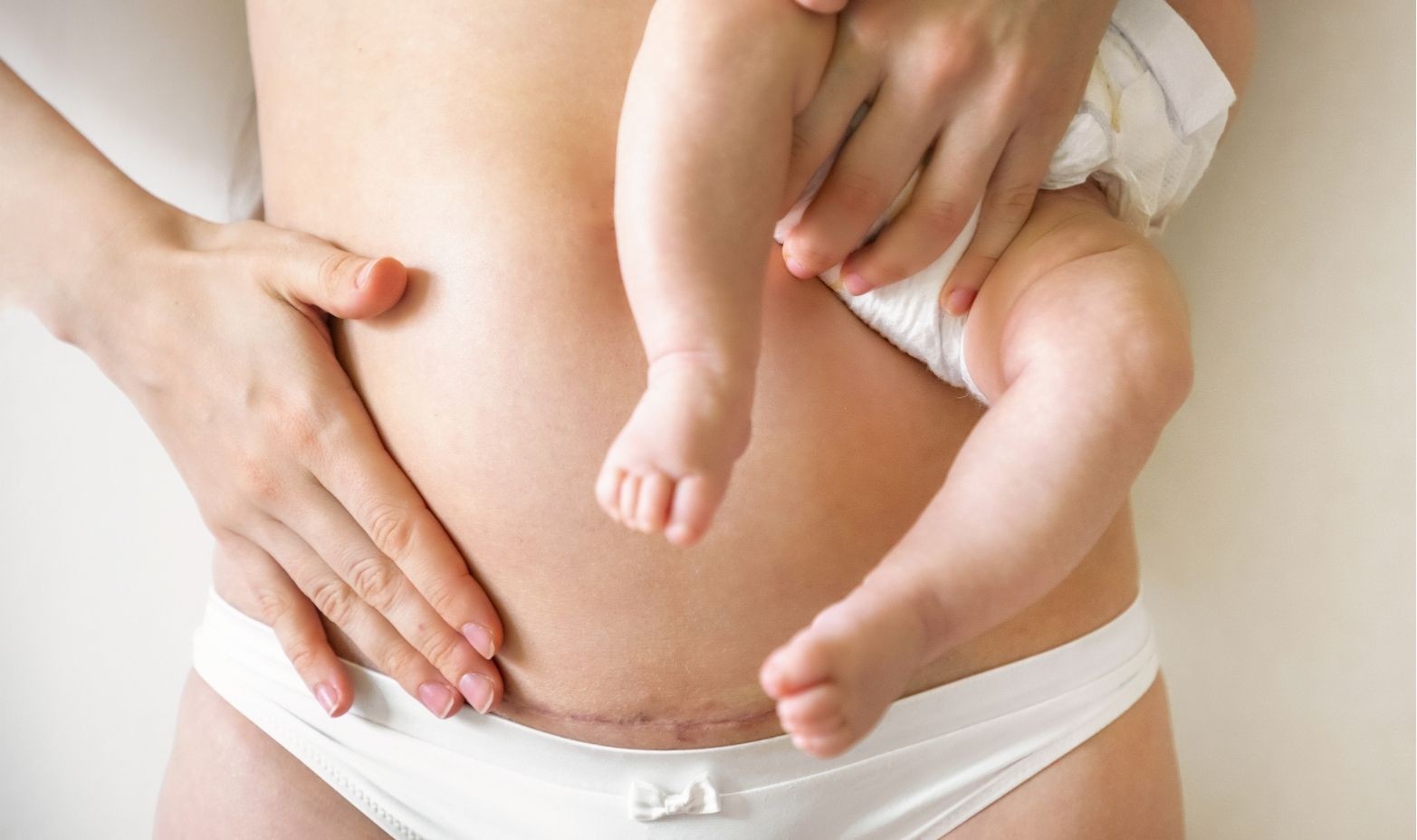
In April 2025, Turkey’s Health Ministry introduced a new regulation banning elective Caesarean sections in private hospitals and clinics. The rule applies to all non-medically necessary C-sections, meaning that unless there’s a clinical reason, women must give birth naturally.

This policy is part of President Recep Tayyip Erdoğan’s larger push to increase Turkey’s birth rate, which has been steadily declining. In 2023, the fertility rate dropped to 1.51 children per woman, well below the replacement level of 2.1. As part of this pronatalist agenda, Erdoğan declared 2025 the “Year of the Family,” urging couples to have at least three children.

The government also pointed to Turkey’s exceptionally high C-section rate as justification for the ban. In 2023, 61.5% of births were performed via C-section, the highest among all OECD countries. Health officials argue that this overreliance on surgical births poses long-term health risks to both mothers and babies. The new policy aims to shift medical practices toward prioritizing vaginal deliveries, which they claim are safer and more in line with “natural” family-building.

Public Reactions: Voices For and Against

Supporters of the Ban:

  • Health Minister Kemal Memişoğlu: defended the ban, stating that “normal birth is what’s natural,” and emphasized that C-sections should be used only when medically necessary.
  • President Erdoğan: framed the policy within his broader pro-family agenda, linking natural birth to national well-being and demographic sustainability.
  • Some medical professionals support the move, arguing that limiting elective C-sections could improve maternal and infant health outcomes.
  • Conservative media outlets have praised the ban, framing it as a return to traditional values and a rejection of what they view as excessive medical intervention.
  • Certain members of the public back the decision, believing that natural childbirth should be the norm unless complications arise.

Opponents of the Ban:

1. Gökçe Gökçen, deputy chair of the opposition CHP party, condemned the ban with a blunt message: “Keep your hands off women’s bodies.”

2. Women’s rights groups argue that the law strips women of autonomy and treats reproductive health as a political tool.

3. The Turkish Medical Association warns that the policy could endanger women, especially in rural or underserved areas, by limiting access to necessary procedures.

4. International observers see the ban as part of a growing trend of state control over women’s reproductive choices in Turkey.

5. Social media users have reacted with frustration and sarcasm. One widely shared post read: “Male football players are telling women how to give birth,” in response to a government campaign promoting natural delivery.

What I Think

Turkey’s ban on elective C-sections raises serious concerns about reproductive freedom and government overreach. Yes, the high C-section rate deserves attention.

But banning a medical option outright, regardless of personal preference or circumstance risks doing more harm than good.

This policy doesn’t just reflect a desire to reduce surgical births; it reflects a deeper pattern of the state interfering in private health decisions. The message is clear: demographic goals are being placed above individual rights. That’s a dangerous precedent.

Instead of restrictions, the government should invest in better prenatal care, evidence-based education, and access to trustworthy medical advice. These are the tools that empower women to make informed choices and not sweeping laws that limit their options.

Natural birth may be ideal in many cases, but it shouldn’t be mandated. Every pregnancy is different. Every woman deserves the right to choose what’s best for her body and her baby.
Share:

Trending

Raising Women Magazine Issue 56 – November 2026

The Courage to Question
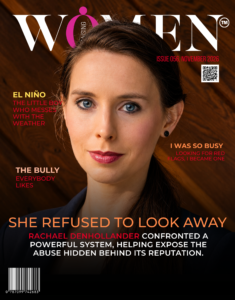
We live in a world where reputation often arrives before character, popularity masquerades as goodness, and questioning authority can make you the problem. Apparently, being respected is sometimes mistaken for being beyond reproach.
Our cover woman, Rachael Denhollander, reminds us why that distinction matters. Her courage in confronting institutional abuse challenges us to reconsider what safety, justice and accountability truly mean.

Elsewhere, we explore the judgement surrounding childbirth, the invisible labour behind successful careers, the beauty industry’s obsession with perfection, and why women can cook the same meal as men yet receive considerably less applause.

From fashion and culture to relationships and motherhood, Issue 56 invites us to examine the assumptions we have inherited, including those we unknowingly perpetuate.

Because progress is not simply about celebrating extraordinary women. It is about creating a world where ordinary women and girls are heard, valued and protected.

And sometimes, change begins with refusing to look away.

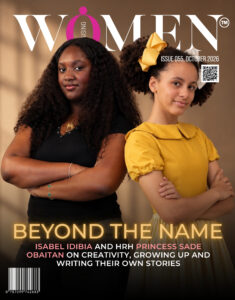
Raising Women Magazine Issue 55 – October 2026

We spend a remarkable amount of time telling girls who they should become, often before they have finished discovering who they are. Apparently, growing up comes with a job description nobody remembers applying for.

In Issue 55, our cover girls, Isabel Idibia and Princess Sade Obaitan, remind us that famous surnames and royal titles may introduce you, but they should never define you.

From girls conquering oceans and swimming pools to conversations about beauty, culture and ambition, this edition examines the expectations we inherit and the courage required to question them.

In Find Her Light, I also reflect on the careers I might have pursued and why discovering another gift does not invalidate the life we have already built.

Perhaps that is the lesson running through these pages: identity is not a finished manuscript.

Every girl deserves the freedom to write her own story. And every woman deserves another chapter.

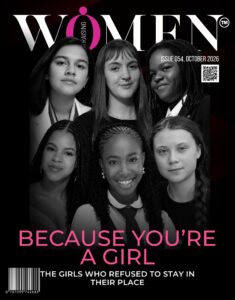
Raising Women Magazine Issue 54 – October 2026

“Because you’re a girl.”
Four little words that have spent generations doing an extraordinary amount of damage. Apparently, ambition, intelligence and audacity were once considered rather unladylike.
Fortunately, the girls featured in our 54th edition missed that memo.
As we celebrate the International Day of the Girl Child, we spotlight twelve remarkable girls rewriting the rules, while reminding ourselves that a girl should not need extraordinary achievements to deserve ordinary opportunities.
We also explore the expectations that complicate girlhood, the childhood wounds we carry into adulthood and, in my Find Her Light reflection, why the girl I once was might have a few lessons for the woman I have become.
Perhaps our greatest responsibility is not simply raising girls to conquer the world, but ensuring they never have to shrink themselves to belong in it.
Because you’re a girl?
What a wonderful reason to dream without limits.

Your guide to IVF and egg freezing in Korea

Empowering your family planning journey with curated fertility treatments at lower costs. Get our guide for Korea’s leading clinics, pricing and service breakdown.

Recommended News

Raising Women Magazine Issue 56 – November 2026

The Courage to Question
We live in a world where reputation often arrives before character, popularity masquerades as goodness, and questioning authority can make you the problem. Apparently, being respected is sometimes mistaken for being beyond reproach.
Our cover woman, Rachael Denhollander, reminds us why that distinction matters. Her courage in confronting institutional abuse challenges us to reconsider what safety, justice and accountability truly mean.

Elsewhere, we explore the judgement surrounding childbirth, the invisible labour behind successful careers, the beauty industry’s obsession with perfection, and why women can cook the same meal as men yet receive considerably less applause.

From fashion and culture to relationships and motherhood, Issue 56 invites us to examine the assumptions we have inherited, including those we unknowingly perpetuate.

Because progress is not simply about celebrating extraordinary women. It is about creating a world where ordinary women and girls are heard, valued and protected.

And sometimes, change begins with refusing to look away.

Raising Women Magazine Issue 55 – October 2026

We spend a remarkable amount of time telling girls who they should become, often before they have finished discovering who they are. Apparently, growing up comes with a job description nobody remembers applying for.

In Issue 55, our cover girls, Isabel Idibia and Princess Sade Obaitan, remind us that famous surnames and royal titles may introduce you, but they should never define you.

From girls conquering oceans and swimming pools to conversations about beauty, culture and ambition, this edition examines the expectations we inherit and the courage required to question them.

In Find Her Light, I also reflect on the careers I might have pursued and why discovering another gift does not invalidate the life we have already built.

Perhaps that is the lesson running through these pages: identity is not a finished manuscript.

Every girl deserves the freedom to write her own story. And every woman deserves another chapter.

Raising Women Magazine Issue 54 – October 2026

“Because you’re a girl.”
Four little words that have spent generations doing an extraordinary amount of damage. Apparently, ambition, intelligence and audacity were once considered rather unladylike.
Fortunately, the girls featured in our 54th edition missed that memo.
As we celebrate the International Day of the Girl Child, we spotlight twelve remarkable girls rewriting the rules, while reminding ourselves that a girl should not need extraordinary achievements to deserve ordinary opportunities.
We also explore the expectations that complicate girlhood, the childhood wounds we carry into adulthood and, in my Find Her Light reflection, why the girl I once was might have a few lessons for the woman I have become.
Perhaps our greatest responsibility is not simply raising girls to conquer the world, but ensuring they never have to shrink themselves to belong in it.
Because you’re a girl?
What a wonderful reason to dream without limits.

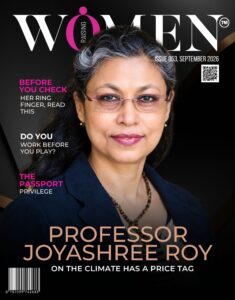
Raising Women Magazine Issue 53 – September 2026

Apparently, saving the planet comes with a shopping list. Solar panels, electric cars, sustainable fashion and, preferably, a bank account that understands the assignment.

In Issue 53, our cover woman, Professor Joyashree Roy, challenges us to reconsider what sustainability really costs, who pays, and why the cheapest choices today may leave tomorrow’s generations with the bill.

But this issue is also about the invisible price tags attached to everyday life. From passport privilege and the cultural expectations of a “good woman” to motherhood, personal boundaries and the delicate art of enjoying life before finishing every task, we examine the systems shaping our choices.

We also celebrate women turning overlooked problems into extraordinary opportunities.

Perhaps progress begins when we stop asking only what things cost and start asking what they are worth.

A better world should not be a luxury reserved for those who can afford it.
Happy reading!

.

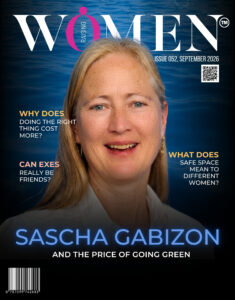
Raising Women Magazine Issue 52 – September 2026

This issue asks a deceptively simple question: can we save the planet without making ordinary people pay the highest price?
Our cover star, Sascha Gabizon, brings that question sharply into focus, challenging us to think about climate action not only through carbon, but through fairness, access and gender. Because going green sounds wonderful until sustainability becomes something only the wealthy can afford.
Across these pages, we follow climate change into unexpected places. Into our wardrobes, our food, our cultural traditions and even the price of our morning coffee. We also continue our important First Daughters conversation, explore what women really mean when they speak about safety, and look at 111 Miss World contestants whose purpose projects remind us that beauty today carries increasingly bigger expectations.
This edition is ultimately about responsibility, but responsibility shared fairly.
Because saving our planet cannot become another luxury.
And perhaps the greenest future is one everyone can actually afford.