Spotlighting Remarkable Women and Girls

Valentine’s Day: Love, Hype, and Misconceptions

valentine's Day

By Daniel Agusi

Valentine’s Day is one of the most anticipated celebrations each year, sparking conversations, expectations, and sometimes pressure. From the start of the new year, the buzz begins. Social media floods with posts about gifts, romantic getaways, and extravagant gestures. The phrase Will you be my Val? now carries an entirely different meaning from its original intent. But how did we get here? To understand this transformation, it is important to
go back to the roots of Valentine’s Day.

The Origin’s of Valentine’s Day

Valentine’s Day traces back to ancient Rome, where several legends attempt to explain its origins. The most popular one revolves around Saint Valentine, a priest who lived during the third century under Emperor Claudius II. The emperor had banned marriages for young men, believing that single soldiers made better warriors. Saint
Valentine defied this decree and secretly conducted weddings. When his actions were discovered, he was imprisoned and later executed on February 14. According to legend, before his death, he wrote a letter to a woman he cared for, signing it Your Valentine.

Over time, the day evolved into a celebration of love, becoming widely recognized in the Middle Ages. By the 18th century, exchanging handwritten notes became popular. In the 19thcentury, printed Valentine’s Day cards gained traction. Eventually, the commercialization of the holiday took over, making it a billion-dollar industry filled with chocolates, flowers, and jewelry.

The Shift: From Love to Pressure and Performance

Valentine’s Day was originally about expressing love and appreciation in personal, meaningful ways. However, the
modern world has turned it into something much more complex. Today, it is less about genuine connection and more about social validation. The pressure to show love through extravagant gifts and grand gestures has replaced the simplicity of heartfelt expressions.

Rethinking Valentine’s Day

Despite these misconceptions, Valentine’s Day does not have to lose its true essence. It can still be a time to celebrate love in all its forms, romantic, platonic, and self-love. Instead of following the pressures of society, people can choose to redefine the day in ways that are meaningful to them.


Valentine’s Day should not be about proving love through grand gestures or expensive gifts. It should be about
appreciating the people in our lives, whether through words, small acts of kindness, or simply spending quality time together. The phrase Will you be my Val? does not have to carry unnecessary weight. It can be a simple and genuine way of asking someone to share in the joy of the day, without pressure or expectation.


In the end, love is not about a single day of celebration. It is about how we treat each other every day. Whether one chooses to celebrate Valentine’s Day or not, the most important thing is to ensure that love is expressed in ways that truly matter. Now, I have a question to the RWMagazine family, WILL YOU BE MY VAL?

Social media plays a significant role in shaping this shift. Platforms are flooded with people showcasing their Valentine’s Day experiences, creating a silent competition. If a person’s Valentine’s Day does not meet a certain standard with expensive gifts, fancy dinners, or surprise trips then it can feel like a failure. Instead of focusing on love, many are caught up in performing for an audience.


The phrase Will you be my Val? now holds a completely different meaning. It has become a social status question rather than a genuine expression of affection. For some, being asked means validation, proving they are desirable. For others, the pressure to find a Valentine even if forced, has made the day more stressful than
enjoyable.

The Commercial Trap

The commercialization of Valentine’s Day has added to its transformation. Retailers push the idea that love must be measured by material things. Every year, brands introduce new ways to convince people that bigger is better. While there is nothing wrong with exchanging gifts, the expectation that love should be proven through spending has made Valentine’s Day more about consumerism than connection.


This pressure affects relationships as well. Some feel obligated to go above and beyond, while others feel inadequate if they cannot afford extravagant gifts. The holiday, which should be about celebrating love in its purest form, has instead become a financial burden for many.
Share:

Trending

Raising Women Magazine Issue 52 – September 2026

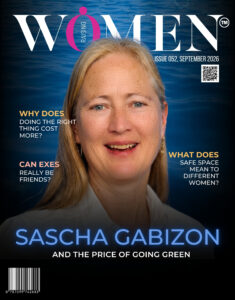
This issue asks a deceptively simple question: can we save the planet without making ordinary people pay the highest price?
Our cover star, Sascha Gabizon, brings that question sharply into focus, challenging us to think about climate action not only through carbon, but through fairness, access and gender. Because going green sounds wonderful until sustainability becomes something only the wealthy can afford.
Across these pages, we follow climate change into unexpected places. Into our wardrobes, our food, our cultural traditions and even the price of our morning coffee. We also continue our important First Daughters conversation, explore what women really mean when they speak about safety, and look at 111 Miss World contestants whose purpose projects remind us that beauty today carries increasingly bigger expectations.
This edition is ultimately about responsibility, but responsibility shared fairly.
Because saving our planet cannot become another luxury.
And perhaps the greenest future is one everyone can actually afford.

Raising Women Magazine Issue 051 – August 2026

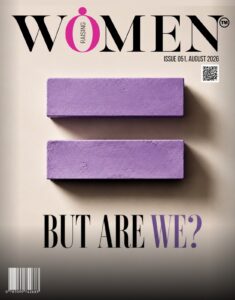
Equal. Such a small word for such a complicated idea.

In this issue, we ask a question that feels almost impolite after decades of progress: women have more rights, education, income and influence than generations before us, but are we equal? We have travelled remarkably far, yet full global gender parity remains generations away. Apparently, equality is taking the scenic route.

Issue 51 looks beyond the equal sign to what equality actually feels like in women’s lives. We follow the money, the power and, importantly, the hours women still disproportionately spend caring. We also explore women’s old financial systems, workplace design, the soft life economy and the changing meaning of opportunity
.
Progress deserves celebration. But celebration should never make us complacent.

We have opened many doors.

Now we must ask what happens after women walk through them.

We are closer.

But are we there?
.

Raising Women Magazine Issue 050 – August 2026

Fifty issues. That feels worth pausing for.
Not because fifty is simply a lovely round number, but because every issue represents another opportunity to ask better questions about women, culture and the world we are building.
And Issue 50 certainly asks questions.
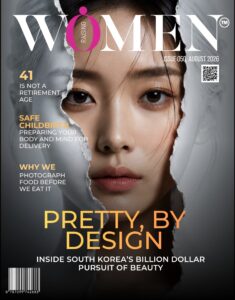
Our cover story, PRETTY, BY DESIGN, takes us to South Korea and its billion dollar pursuit of beauty, examining what happens when appearance becomes intertwined with confidence, opportunity and social capital. But before we become too fascinated by South Korea, perhaps we should check our own mirrors. The pursuit of “better” is increasingly global.
Elsewhere, we meet an Olympic champion who found gold at 41 and after motherhood, explore the AI gap reshaping women’s work, rediscover our grandmothers as archivists and ask why dinner now requires photography before eating.
Fifty editions later, Raising Women Magazine remains curious, global and committed to conversations that matter.
Here’s to 50.
And to everything we are still becoming.

Raising Women Magazine Issue 049 – August 2026

There is a quiet shift taking place in the stories women are telling.

For years, success was measured by titles, milestones, and visibility. Today, we are asking deeper questions. What does influence look like? Who is changing the world? Which friendships shape the women we become? And how do we carry our heritage into a future we are helping to build?

This edition celebrates women and girls of African descent whose ideas, courage, creativity, and leadership are reshaping global conversations. Our cover feature is a reminder that Africa is not waiting to be discovered. It is already influencing the future through remarkable women whose work is changing industries, communities, and generations.

Alongside these inspiring stories, we explore the quiet power of friendship, the economics of modern womanhood, fashion’s changing priorities, and the cultural moments defining our time.

At Raising Women Magazine, we remain committed to one belief: when women rise with purpose, they do not simply change their own stories. They expand what the world believes is possible.

Your guide to IVF and egg freezing in Korea

Empowering your family planning journey with curated fertility treatments at lower costs. Get our guide for Korea’s leading clinics, pricing and service breakdown.

Recommended News

Raising Women Magazine Issue 52 – September 2026

This issue asks a deceptively simple question: can we save the planet without making ordinary people pay the highest price?
Our cover star, Sascha Gabizon, brings that question sharply into focus, challenging us to think about climate action not only through carbon, but through fairness, access and gender. Because going green sounds wonderful until sustainability becomes something only the wealthy can afford.
Across these pages, we follow climate change into unexpected places. Into our wardrobes, our food, our cultural traditions and even the price of our morning coffee. We also continue our important First Daughters conversation, explore what women really mean when they speak about safety, and look at 111 Miss World contestants whose purpose projects remind us that beauty today carries increasingly bigger expectations.
This edition is ultimately about responsibility, but responsibility shared fairly.
Because saving our planet cannot become another luxury.
And perhaps the greenest future is one everyone can actually afford.

Raising Women Magazine Issue 051 – August 2026

Equal. Such a small word for such a complicated idea.

In this issue, we ask a question that feels almost impolite after decades of progress: women have more rights, education, income and influence than generations before us, but are we equal? We have travelled remarkably far, yet full global gender parity remains generations away. Apparently, equality is taking the scenic route.

Issue 51 looks beyond the equal sign to what equality actually feels like in women’s lives. We follow the money, the power and, importantly, the hours women still disproportionately spend caring. We also explore women’s old financial systems, workplace design, the soft life economy and the changing meaning of opportunity
.
Progress deserves celebration. But celebration should never make us complacent.

We have opened many doors.

Now we must ask what happens after women walk through them.

We are closer.

But are we there?
.

Raising Women Magazine Issue 050 – August 2026

Fifty issues. That feels worth pausing for.
Not because fifty is simply a lovely round number, but because every issue represents another opportunity to ask better questions about women, culture and the world we are building.
And Issue 50 certainly asks questions.
Our cover story, PRETTY, BY DESIGN, takes us to South Korea and its billion dollar pursuit of beauty, examining what happens when appearance becomes intertwined with confidence, opportunity and social capital. But before we become too fascinated by South Korea, perhaps we should check our own mirrors. The pursuit of “better” is increasingly global.
Elsewhere, we meet an Olympic champion who found gold at 41 and after motherhood, explore the AI gap reshaping women’s work, rediscover our grandmothers as archivists and ask why dinner now requires photography before eating.
Fifty editions later, Raising Women Magazine remains curious, global and committed to conversations that matter.
Here’s to 50.
And to everything we are still becoming.

Raising Women Magazine Issue 049 – August 2026

There is a quiet shift taking place in the stories women are telling.

For years, success was measured by titles, milestones, and visibility. Today, we are asking deeper questions. What does influence look like? Who is changing the world? Which friendships shape the women we become? And how do we carry our heritage into a future we are helping to build?

This edition celebrates women and girls of African descent whose ideas, courage, creativity, and leadership are reshaping global conversations. Our cover feature is a reminder that Africa is not waiting to be discovered. It is already influencing the future through remarkable women whose work is changing industries, communities, and generations.

Alongside these inspiring stories, we explore the quiet power of friendship, the economics of modern womanhood, fashion’s changing priorities, and the cultural moments defining our time.

At Raising Women Magazine, we remain committed to one belief: when women rise with purpose, they do not simply change their own stories. They expand what the world believes is possible.

Raising Women Magazine Issue 048 – July 2026

There is a quiet shift taking place in the stories women are telling.

For years, success was measured by titles, milestones, and visibility. Today, we are asking deeper questions. What does influence look like? Who is changing the world? Which friendships shape the women we become? And how do we carry our heritage into a future we are helping to build?

This edition celebrates women and girls of African descent whose ideas, courage, creativity, and leadership are reshaping global conversations. Our cover feature is a reminder that Africa is not waiting to be discovered. It is already influencing the future through remarkable women whose work is changing industries, communities, and generations.

Alongside these inspiring stories, we explore the quiet power of friendship, the economics of modern womanhood, fashion’s changing priorities, and the cultural moments defining our time.

At Raising Women Magazine, we remain committed to one belief: when women rise with purpose, they do not simply change their own stories. They expand what the world believes is possible.