Spotlighting Remarkable Women and Girls

Watches and Women: How Cartier changed the way women wear time

By Emmanuella Abraham

For much of the twentieth century, women’s watches were positioned as decorative objects rather than functional tools. Smaller cases, quartz movements, and gem-set designs dominated the category, reinforcing the idea that precision and engineering belonged elsewhere. In recent years, that framing has shifted, and Cartier has been central to that evolution.

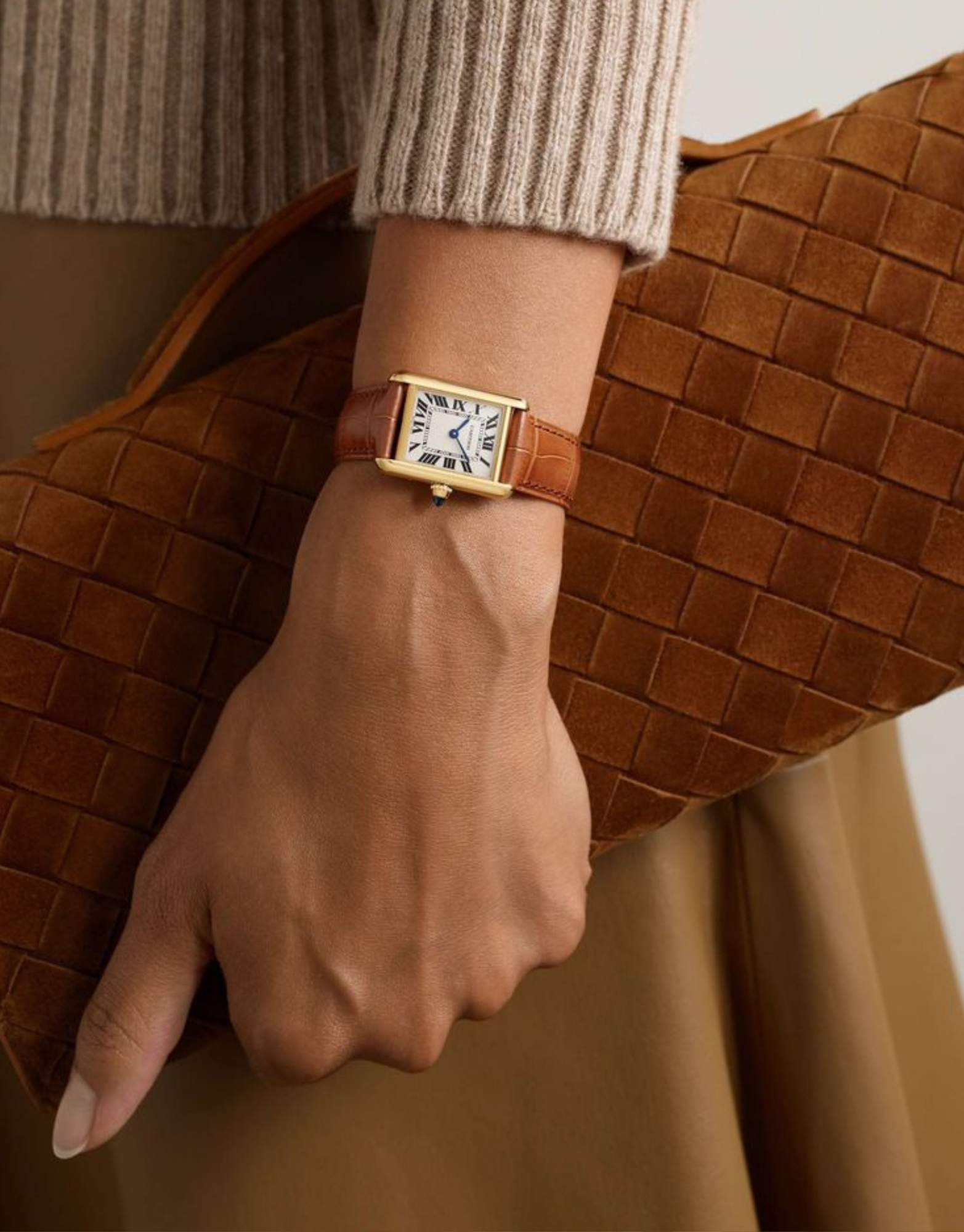
Cartier’s watchmaking history begins with utility. In 1904, the Cartier Santos was created for aviator Alberto Santos-Dumont, designed for ease of use during flight. It marked a turning point from pocket watches to wristwatches, establishing a format that would later be widely adopted by women. By 1917, the Cartier Tank introduced a rectangular case with clean, architectural lines. Its proportions were deliberate and balanced, allowing it to sit comfortably across different wrist sizes without losing clarity of design.

What distinguishes these pieces is not only how they were made, but how they have been worn. The Tank, for example, became part of the everyday wardrobe of figures such as Princess Diana. It was paired with tailoring and worn consistently, not reserved for formal occasions. This positioned the watch as a practical object integrated into daily life.

Cartier also redefined the relationship between jewellery and horology. The Cartier Panthère, introduced in the 1980s, combined the flexibility of a bracelet with the structure of a timepiece. It demonstrated that a watch could be visually expressive without sacrificing function. Designs such as the Cartier Baignoire further show how form can evolve while remaining precise and legible.

Industry data reflects a broader shift in consumer behaviour. According to the Federation of the Swiss Watch Industry, women’s watches now represent a growing share of luxury sales, with increased demand for mechanical movements and enduring design. Buyers are engaging more deeply with craftsmanship, materials, and heritage, rather than viewing watches solely as accessories.

Cartier’s relevance today lies in its consistency. Its watches are recognisable, adaptable, and designed to move between contexts without losing purpose. This aligns with how women approach style, prioritising pieces that integrate into daily life rather than stand apart from it.

A watch, in this context, is no longer just about telling time. It is about how time is worn, structured, and understood.
Share:

Trending

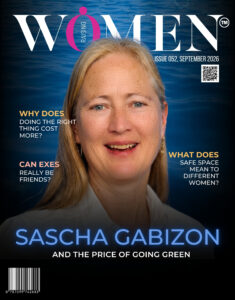
Raising Women Magazine Issue 52 – September 2026

This issue asks a deceptively simple question: can we save the planet without making ordinary people pay the highest price?
Our cover star, Sascha Gabizon, brings that question sharply into focus, challenging us to think about climate action not only through carbon, but through fairness, access and gender. Because going green sounds wonderful until sustainability becomes something only the wealthy can afford.
Across these pages, we follow climate change into unexpected places. Into our wardrobes, our food, our cultural traditions and even the price of our morning coffee. We also continue our important First Daughters conversation, explore what women really mean when they speak about safety, and look at 111 Miss World contestants whose purpose projects remind us that beauty today carries increasingly bigger expectations.
This edition is ultimately about responsibility, but responsibility shared fairly.
Because saving our planet cannot become another luxury.
And perhaps the greenest future is one everyone can actually afford.

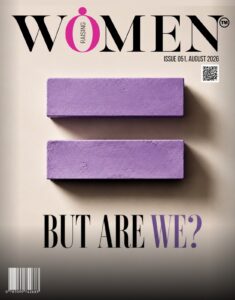
Raising Women Magazine Issue 051 – August 2026

Equal. Such a small word for such a complicated idea.

In this issue, we ask a question that feels almost impolite after decades of progress: women have more rights, education, income and influence than generations before us, but are we equal? We have travelled remarkably far, yet full global gender parity remains generations away. Apparently, equality is taking the scenic route.

Issue 51 looks beyond the equal sign to what equality actually feels like in women’s lives. We follow the money, the power and, importantly, the hours women still disproportionately spend caring. We also explore women’s old financial systems, workplace design, the soft life economy and the changing meaning of opportunity
.
Progress deserves celebration. But celebration should never make us complacent.

We have opened many doors.

Now we must ask what happens after women walk through them.

We are closer.

But are we there?
.

Raising Women Magazine Issue 050 – August 2026

Fifty issues. That feels worth pausing for.
Not because fifty is simply a lovely round number, but because every issue represents another opportunity to ask better questions about women, culture and the world we are building.
And Issue 50 certainly asks questions.
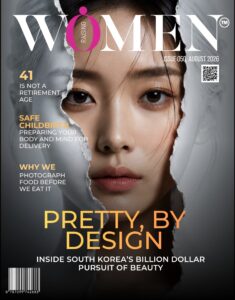
Our cover story, PRETTY, BY DESIGN, takes us to South Korea and its billion dollar pursuit of beauty, examining what happens when appearance becomes intertwined with confidence, opportunity and social capital. But before we become too fascinated by South Korea, perhaps we should check our own mirrors. The pursuit of “better” is increasingly global.
Elsewhere, we meet an Olympic champion who found gold at 41 and after motherhood, explore the AI gap reshaping women’s work, rediscover our grandmothers as archivists and ask why dinner now requires photography before eating.
Fifty editions later, Raising Women Magazine remains curious, global and committed to conversations that matter.
Here’s to 50.
And to everything we are still becoming.

Raising Women Magazine Issue 049 – August 2026

There is a quiet shift taking place in the stories women are telling.

For years, success was measured by titles, milestones, and visibility. Today, we are asking deeper questions. What does influence look like? Who is changing the world? Which friendships shape the women we become? And how do we carry our heritage into a future we are helping to build?

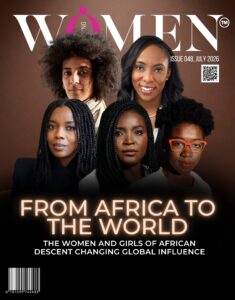
This edition celebrates women and girls of African descent whose ideas, courage, creativity, and leadership are reshaping global conversations. Our cover feature is a reminder that Africa is not waiting to be discovered. It is already influencing the future through remarkable women whose work is changing industries, communities, and generations.

Alongside these inspiring stories, we explore the quiet power of friendship, the economics of modern womanhood, fashion’s changing priorities, and the cultural moments defining our time.

At Raising Women Magazine, we remain committed to one belief: when women rise with purpose, they do not simply change their own stories. They expand what the world believes is possible.

Your guide to IVF and egg freezing in Korea

Empowering your family planning journey with curated fertility treatments at lower costs. Get our guide for Korea’s leading clinics, pricing and service breakdown.

Recommended News

Raising Women Magazine Issue 52 – September 2026

This issue asks a deceptively simple question: can we save the planet without making ordinary people pay the highest price?
Our cover star, Sascha Gabizon, brings that question sharply into focus, challenging us to think about climate action not only through carbon, but through fairness, access and gender. Because going green sounds wonderful until sustainability becomes something only the wealthy can afford.
Across these pages, we follow climate change into unexpected places. Into our wardrobes, our food, our cultural traditions and even the price of our morning coffee. We also continue our important First Daughters conversation, explore what women really mean when they speak about safety, and look at 111 Miss World contestants whose purpose projects remind us that beauty today carries increasingly bigger expectations.
This edition is ultimately about responsibility, but responsibility shared fairly.
Because saving our planet cannot become another luxury.
And perhaps the greenest future is one everyone can actually afford.

Raising Women Magazine Issue 051 – August 2026

Equal. Such a small word for such a complicated idea.

In this issue, we ask a question that feels almost impolite after decades of progress: women have more rights, education, income and influence than generations before us, but are we equal? We have travelled remarkably far, yet full global gender parity remains generations away. Apparently, equality is taking the scenic route.

Issue 51 looks beyond the equal sign to what equality actually feels like in women’s lives. We follow the money, the power and, importantly, the hours women still disproportionately spend caring. We also explore women’s old financial systems, workplace design, the soft life economy and the changing meaning of opportunity
.
Progress deserves celebration. But celebration should never make us complacent.

We have opened many doors.

Now we must ask what happens after women walk through them.

We are closer.

But are we there?
.

Raising Women Magazine Issue 050 – August 2026

Fifty issues. That feels worth pausing for.
Not because fifty is simply a lovely round number, but because every issue represents another opportunity to ask better questions about women, culture and the world we are building.
And Issue 50 certainly asks questions.
Our cover story, PRETTY, BY DESIGN, takes us to South Korea and its billion dollar pursuit of beauty, examining what happens when appearance becomes intertwined with confidence, opportunity and social capital. But before we become too fascinated by South Korea, perhaps we should check our own mirrors. The pursuit of “better” is increasingly global.
Elsewhere, we meet an Olympic champion who found gold at 41 and after motherhood, explore the AI gap reshaping women’s work, rediscover our grandmothers as archivists and ask why dinner now requires photography before eating.
Fifty editions later, Raising Women Magazine remains curious, global and committed to conversations that matter.
Here’s to 50.
And to everything we are still becoming.

Raising Women Magazine Issue 049 – August 2026

There is a quiet shift taking place in the stories women are telling.

For years, success was measured by titles, milestones, and visibility. Today, we are asking deeper questions. What does influence look like? Who is changing the world? Which friendships shape the women we become? And how do we carry our heritage into a future we are helping to build?

This edition celebrates women and girls of African descent whose ideas, courage, creativity, and leadership are reshaping global conversations. Our cover feature is a reminder that Africa is not waiting to be discovered. It is already influencing the future through remarkable women whose work is changing industries, communities, and generations.

Alongside these inspiring stories, we explore the quiet power of friendship, the economics of modern womanhood, fashion’s changing priorities, and the cultural moments defining our time.

At Raising Women Magazine, we remain committed to one belief: when women rise with purpose, they do not simply change their own stories. They expand what the world believes is possible.

Raising Women Magazine Issue 048 – July 2026

There is a quiet shift taking place in the stories women are telling.

For years, success was measured by titles, milestones, and visibility. Today, we are asking deeper questions. What does influence look like? Who is changing the world? Which friendships shape the women we become? And how do we carry our heritage into a future we are helping to build?

This edition celebrates women and girls of African descent whose ideas, courage, creativity, and leadership are reshaping global conversations. Our cover feature is a reminder that Africa is not waiting to be discovered. It is already influencing the future through remarkable women whose work is changing industries, communities, and generations.

Alongside these inspiring stories, we explore the quiet power of friendship, the economics of modern womanhood, fashion’s changing priorities, and the cultural moments defining our time.

At Raising Women Magazine, we remain committed to one belief: when women rise with purpose, they do not simply change their own stories. They expand what the world believes is possible.