Spotlighting Remarkable Women and Girls

When Governments Respond to Violence: Why India’s Toronto Helpline Is Bigger Than One Case

By Ifeanyi’s Daughter

Violence against women rarely prompts immediate action. Too often, it is absorbed into statistics, court filings, or quiet family grief. That is why India’s decision to open a One Stop Centre for Women in Toronto, just days after the murder of a young Indian woman in Canada, feels significant not only as a response, but as a signal.

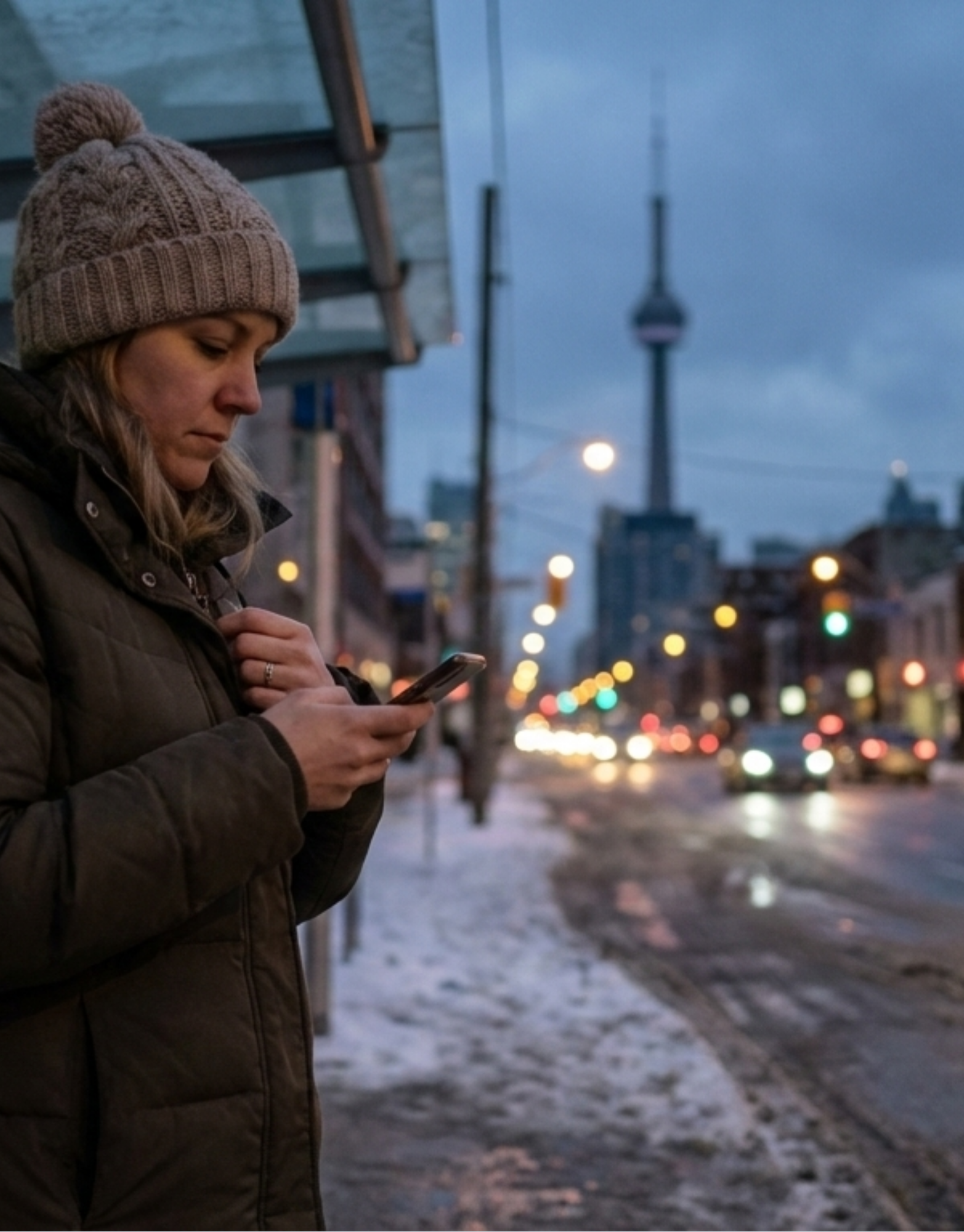
At first glance, the development looks like a diplomatic move: a consular service offering a 24-hour helpline, counselling, legal guidance, and referrals for Indian women in distress abroad. But beneath the headlines, this moment reflects something deeper, a shift in how governments are beginning to understand responsibility, migration, and the global nature of gender-based violence.

This is not just about one case. It is about what happens when private violence becomes public pressure.

A Tragedy That Crossed Borders

The centre was launched in the aftermath of the killing of a 30-year-old Indian woman in Toronto, allegedly by her intimate partner.

As details of the case surfaced, they echoed a painfully familiar pattern: domestic violence, isolation, and a woman navigating danger far from home.

For migrant women, this vulnerability is often heightened. Distance from family, unfamiliar legal systems, immigration status tied to partners, cultural stigma, and fear of authorities can keep women trapped in abusive situations far longer than they should ever have to endure.

What made this tragedy different was not only its brutality, but the speed with which it provoked a formal response. Within days, the Indian Consulate in Toronto announced a dedicated support centre for women, complete with a round-the-clock helpline and access to counselling, legal aid, and community services.

The underlying message was unmistakable: your safety does not end at the border.

Why This Moment Matters

For decades, violence against women, especially within intimate relationships has been framed as a private issue. Governments intervene late, if at all. Migrant women, in particular, often exist in a grey area, belonging fully to no system.

This initiative disrupts that pattern in several important ways.

First, it acknowledges that diaspora women remain the responsibility of their home countries, even when they live abroad. This is a notable shift in diplomatic thinking, recognising that migration can amplify vulnerability rather than erase it.

Second, it reflects the growing power of public accountability. In the age of instant news and social media, stories of violence travel fast and so does pressure. Governments are increasingly aware that silence is no longer invisible, and inaction now carries reputational cost.

Third, it places gender-based violence squarely within policy and foreign-service conversations, not as an afterthought but as a core concern. That alone signals a broader cultural change.

A Growing Global Pattern

India is not alone in this approach. Across the world, governments are quietly expanding gender-focused consular services: emergency hotlines, legal aid partnerships, women’s desks within embassies, and crisis response units for citizens abroad.

What we are witnessing is a wider trend, the recognition that women’s safety is a transnational issue.

Migration has reshaped families, relationships, and risks. Abuse does not disappear because a woman relocates; in many cases, it intensifies. Institutions are being forced to adapt to a world where violence travels with people, crossing borders as easily as passports do.

The Toronto centre may be one physical location, but its implications ripple far beyond Canada.

The Limits of a Helpline

Still, difficult questions remain.

Will women trust the system enough to use it?

Will cultural stigma and fear of exposure keep many silent?

And perhaps most importantly, will this initiative be sustained long after public attention fades?

A helpline is a beginning, not a solution. Real protection requires long-term funding, community outreach, confidentiality, and collaboration with local organisations that understand the realities women face on the ground.

It also requires listening to women not only when tragedy strikes, but long before it does.

A Trend Rooted in Urgency

This development sits at the intersection of feminism, migration, policy, and accountability. It reflects a growing global truth: violence against women can no longer be contained within private walls or national borders.

For migrant women everywhere, the opening of this centre sends a quiet but powerful signal that their lives matter enough to demand systems of care, even far from home.

And for governments watching closely, it sets a precedent.

In a world where women are still asked to endure too much in silence, moments like this remind us that response itself can become a trend and one that, if taken seriously, just might save lives.

Share:

Trending

Raising Women Magazine Issue 52 – September 2026

This issue asks a deceptively simple question: can we save the planet without making ordinary people pay the highest price?
Our cover star, Sascha Gabizon, brings that question sharply into focus, challenging us to think about climate action not only through carbon, but through fairness, access and gender. Because going green sounds wonderful until sustainability becomes something only the wealthy can afford.
Across these pages, we follow climate change into unexpected places. Into our wardrobes, our food, our cultural traditions and even the price of our morning coffee. We also continue our important First Daughters conversation, explore what women really mean when they speak about safety, and look at 111 Miss World contestants whose purpose projects remind us that beauty today carries increasingly bigger expectations.
This edition is ultimately about responsibility, but responsibility shared fairly.
Because saving our planet cannot become another luxury.
And perhaps the greenest future is one everyone can actually afford.

Raising Women Magazine Issue 051 – August 2026

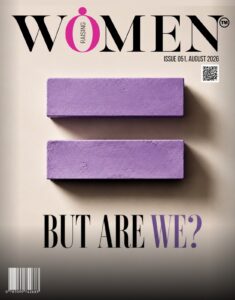
Equal. Such a small word for such a complicated idea.

In this issue, we ask a question that feels almost impolite after decades of progress: women have more rights, education, income and influence than generations before us, but are we equal? We have travelled remarkably far, yet full global gender parity remains generations away. Apparently, equality is taking the scenic route.

Issue 51 looks beyond the equal sign to what equality actually feels like in women’s lives. We follow the money, the power and, importantly, the hours women still disproportionately spend caring. We also explore women’s old financial systems, workplace design, the soft life economy and the changing meaning of opportunity
.
Progress deserves celebration. But celebration should never make us complacent.

We have opened many doors.

Now we must ask what happens after women walk through them.

We are closer.

But are we there?
.

Raising Women Magazine Issue 050 – August 2026

Fifty issues. That feels worth pausing for.
Not because fifty is simply a lovely round number, but because every issue represents another opportunity to ask better questions about women, culture and the world we are building.
And Issue 50 certainly asks questions.
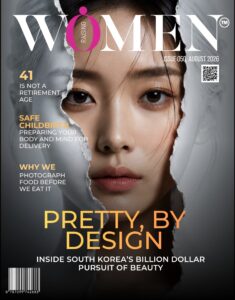
Our cover story, PRETTY, BY DESIGN, takes us to South Korea and its billion dollar pursuit of beauty, examining what happens when appearance becomes intertwined with confidence, opportunity and social capital. But before we become too fascinated by South Korea, perhaps we should check our own mirrors. The pursuit of “better” is increasingly global.
Elsewhere, we meet an Olympic champion who found gold at 41 and after motherhood, explore the AI gap reshaping women’s work, rediscover our grandmothers as archivists and ask why dinner now requires photography before eating.
Fifty editions later, Raising Women Magazine remains curious, global and committed to conversations that matter.
Here’s to 50.
And to everything we are still becoming.

Raising Women Magazine Issue 049 – August 2026

There is a quiet shift taking place in the stories women are telling.

For years, success was measured by titles, milestones, and visibility. Today, we are asking deeper questions. What does influence look like? Who is changing the world? Which friendships shape the women we become? And how do we carry our heritage into a future we are helping to build?

This edition celebrates women and girls of African descent whose ideas, courage, creativity, and leadership are reshaping global conversations. Our cover feature is a reminder that Africa is not waiting to be discovered. It is already influencing the future through remarkable women whose work is changing industries, communities, and generations.

Alongside these inspiring stories, we explore the quiet power of friendship, the economics of modern womanhood, fashion’s changing priorities, and the cultural moments defining our time.

At Raising Women Magazine, we remain committed to one belief: when women rise with purpose, they do not simply change their own stories. They expand what the world believes is possible.

Your guide to IVF and egg freezing in Korea

Empowering your family planning journey with curated fertility treatments at lower costs. Get our guide for Korea’s leading clinics, pricing and service breakdown.

Recommended News

Raising Women Magazine Issue 52 – September 2026

This issue asks a deceptively simple question: can we save the planet without making ordinary people pay the highest price?
Our cover star, Sascha Gabizon, brings that question sharply into focus, challenging us to think about climate action not only through carbon, but through fairness, access and gender. Because going green sounds wonderful until sustainability becomes something only the wealthy can afford.
Across these pages, we follow climate change into unexpected places. Into our wardrobes, our food, our cultural traditions and even the price of our morning coffee. We also continue our important First Daughters conversation, explore what women really mean when they speak about safety, and look at 111 Miss World contestants whose purpose projects remind us that beauty today carries increasingly bigger expectations.
This edition is ultimately about responsibility, but responsibility shared fairly.
Because saving our planet cannot become another luxury.
And perhaps the greenest future is one everyone can actually afford.

Raising Women Magazine Issue 051 – August 2026

Equal. Such a small word for such a complicated idea.

In this issue, we ask a question that feels almost impolite after decades of progress: women have more rights, education, income and influence than generations before us, but are we equal? We have travelled remarkably far, yet full global gender parity remains generations away. Apparently, equality is taking the scenic route.

Issue 51 looks beyond the equal sign to what equality actually feels like in women’s lives. We follow the money, the power and, importantly, the hours women still disproportionately spend caring. We also explore women’s old financial systems, workplace design, the soft life economy and the changing meaning of opportunity
.
Progress deserves celebration. But celebration should never make us complacent.

We have opened many doors.

Now we must ask what happens after women walk through them.

We are closer.

But are we there?
.

Raising Women Magazine Issue 050 – August 2026

Fifty issues. That feels worth pausing for.
Not because fifty is simply a lovely round number, but because every issue represents another opportunity to ask better questions about women, culture and the world we are building.
And Issue 50 certainly asks questions.
Our cover story, PRETTY, BY DESIGN, takes us to South Korea and its billion dollar pursuit of beauty, examining what happens when appearance becomes intertwined with confidence, opportunity and social capital. But before we become too fascinated by South Korea, perhaps we should check our own mirrors. The pursuit of “better” is increasingly global.
Elsewhere, we meet an Olympic champion who found gold at 41 and after motherhood, explore the AI gap reshaping women’s work, rediscover our grandmothers as archivists and ask why dinner now requires photography before eating.
Fifty editions later, Raising Women Magazine remains curious, global and committed to conversations that matter.
Here’s to 50.
And to everything we are still becoming.

Raising Women Magazine Issue 049 – August 2026

There is a quiet shift taking place in the stories women are telling.

For years, success was measured by titles, milestones, and visibility. Today, we are asking deeper questions. What does influence look like? Who is changing the world? Which friendships shape the women we become? And how do we carry our heritage into a future we are helping to build?

This edition celebrates women and girls of African descent whose ideas, courage, creativity, and leadership are reshaping global conversations. Our cover feature is a reminder that Africa is not waiting to be discovered. It is already influencing the future through remarkable women whose work is changing industries, communities, and generations.

Alongside these inspiring stories, we explore the quiet power of friendship, the economics of modern womanhood, fashion’s changing priorities, and the cultural moments defining our time.

At Raising Women Magazine, we remain committed to one belief: when women rise with purpose, they do not simply change their own stories. They expand what the world believes is possible.

Raising Women Magazine Issue 048 – July 2026

There is a quiet shift taking place in the stories women are telling.

For years, success was measured by titles, milestones, and visibility. Today, we are asking deeper questions. What does influence look like? Who is changing the world? Which friendships shape the women we become? And how do we carry our heritage into a future we are helping to build?

This edition celebrates women and girls of African descent whose ideas, courage, creativity, and leadership are reshaping global conversations. Our cover feature is a reminder that Africa is not waiting to be discovered. It is already influencing the future through remarkable women whose work is changing industries, communities, and generations.

Alongside these inspiring stories, we explore the quiet power of friendship, the economics of modern womanhood, fashion’s changing priorities, and the cultural moments defining our time.

At Raising Women Magazine, we remain committed to one belief: when women rise with purpose, they do not simply change their own stories. They expand what the world believes is possible.