Spotlighting Remarkable Women and Girls

Why Everyone is Obsessed with This Creepy Little Cutie

By Chris Wede

I used to think I was immune to the weird toy trend. I survived fidget spinners. I dodged Squishmallows. I even looked Beanie Babies in the eye and said, “Not today.”

But then… Labubu happened.

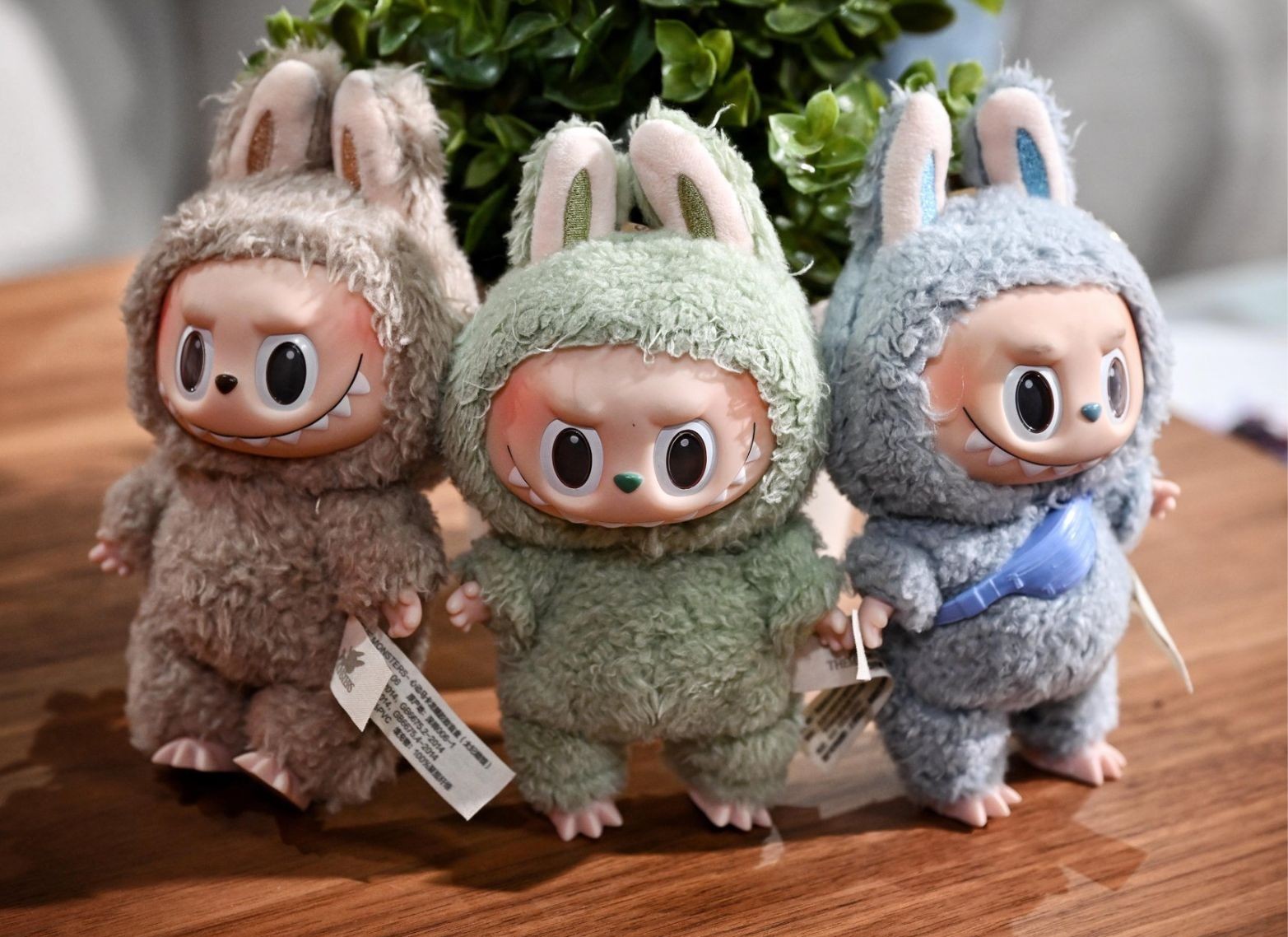
If you haven’t seen Labubu yet, allow me to introduce you to the scrappy little goblin who’s quietly stealing the hearts of Gen Z, toy collectors, and emotionally complex girlies everywhere. Labubu is a small vinyl figure with a permanently toothy grin, bug eyes, messy hair, and the kind of aesthetic that screams “I bite, but I’m lovable.” Created by Hong Kong-based artist Kasing Lung and popularized through the mega-brand Pop Mart, Labubu is part of the Monster series, but let’s be real: Labubu is the main character now.

Think of him as the lovechild of a gremlin, a Tim Burton sketch, and a chaotic best friend who always knows where the drama is. He’s creepy-cute. Ugly-adorable. Nightmarishly precious. And somehow, everyone wants one.

But why?

Monsters, But Make It Marketable

Labubu isn’t just a toy. It’s a vibe. A personality. A lifestyle, even. Pop Mart’s Labubu drops sell out faster than hot gossip in a girls’ group chat. Blind boxes (you don’t know which figure you’re getting until you open it) create a thrill that’s part surprise, part serotonin rush. And when you finally get that rare Halloween edition or limited pastel bunny Labubu? Chef’s kiss. Peak collector bliss.

There are entire TikToks dedicated to Labubu unboxings, Labubu room tours, Labubu makeup transformations, and yes, even Labubu ASMR. If that last part confused you, welcome to the internet in 2025.

But underneath the viral frenzy is something deeper. This isn’t just about toys anymore. Labubu has become a cultural statement.

The Rise of the “Creepy Cute” Aesthetic

Let’s talk about the elephant in the room. Or rather, the goblin on the shelf.

Labubu is… not conventionally cute. And that’s the point.

In a world obsessed with polish, perfection, and pretty filters, Labubu is a rebellion. He’s not your pastel Kawaii bear or glossy Barbie. He’s the gremlin energy we all secretly carry, the one that’s tired, messy, a little unpredictable, but still trying their best to be lovable.

This is the era of “relatable ugliness.” And Labubu? He’s the poster child.

From fashion to filters, the internet is shifting from glossy perfection to glorified chaos. Think about the rise of “clean girl” vs. “feral girl” aesthetics. Or the fact that goblin mode literally won Oxford’s Word of the Year. We’re no longer pretending to have it all together. We’re embracing the mess emotionally, stylistically, and yes, even in our collectibles.

Labubu is us when we cry at 2 a.m. over a playlist, but also know we’ll rise like a phoenix by morning. He’s our inner child and our inner chaos gremlin rolled into one. He says, “I may look unhinged, but I’m also incredibly rare and highly valued.” Iconic.

Capitalism, But Make It Adorable

Let’s not pretend this isn’t also a well-oiled machine of brilliant marketing.

Pop Mart didn’t just create a toy. They created an economy. The scarcity model of blind boxes + limited editions = addictive purchasing. It’s like sneaker culture met anime fandom and had a beautifully toxic baby. People are hunting Labubus the way fashion girlies hunt Birkins. There are resale markets, Facebook groups, and even low-key black market trades (you didn’t hear it from me).

And yet, people aren’t mad about it. Because Labubu gives them something. Comfort. Nostalgia. Identity. The feeling of being part of a weird, whimsical world where the monsters are endearing and the chaos is collectible.

Is it escapism? Sure. Is it genius? Absolutely.

More Than A Toy: The Inner Girl Theory

Here’s my theory: Labubu is therapy in disguise.

You know that childhood version of you who felt too loud, too weird, too emotional, too much? The one who didn’t fit into neat little boxes or match the “good girl” aesthetic? Labubu is her. Or maybe, he’s the friend she always needed.

In a world that demands emotional control, perfect routines, and corporate slay, Labubu lets us tap into a softer rebellion. A sillier identity. One that embraces our flaws and says, “I’m a little off, and that’s what makes me magic.”

There’s a reason more girls than guys are collecting Labubu. We’ve spent years being told to clean up our act emotionally, physically, socially. And suddenly, there’s this little troll with unbrushed hair, a crooked grin, and chaotic outfits who’s thriving. He’s not fixing himself. He’s being adored as is. That’s aspirational, baby.

So… Should You Get One?

Honestly? Maybe.

Not because everyone else is doing it, but because it’s a reminder. That you’re allowed to love things that are imperfect. That you can be precious and peculiar at the same time. That collecting joy in all its weird forms is still a form of resistance.

Labubu may be small, but the message is big: You don’t have to be cute to be loved. You don’t have to be polished to be worthy. You don’t have to be normal to be seen.

Sometimes, you just need to be a little monster with big feelings and that’s more than enough.

Labubu isn’t just a trend. It’s a mirror. A tiny vinyl revolution that tells the truth we’re all a little weird, a little worn, and a little wonderful.

And maybe, just maybe, that’s what makes us collectible, too.
Share:

Trending

Raising Women Magazine Issue 56 – November 2026

The Courage to Question
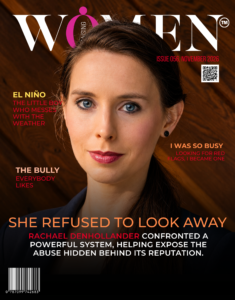
We live in a world where reputation often arrives before character, popularity masquerades as goodness, and questioning authority can make you the problem. Apparently, being respected is sometimes mistaken for being beyond reproach.
Our cover woman, Rachael Denhollander, reminds us why that distinction matters. Her courage in confronting institutional abuse challenges us to reconsider what safety, justice and accountability truly mean.

Elsewhere, we explore the judgement surrounding childbirth, the invisible labour behind successful careers, the beauty industry’s obsession with perfection, and why women can cook the same meal as men yet receive considerably less applause.

From fashion and culture to relationships and motherhood, Issue 56 invites us to examine the assumptions we have inherited, including those we unknowingly perpetuate.

Because progress is not simply about celebrating extraordinary women. It is about creating a world where ordinary women and girls are heard, valued and protected.

And sometimes, change begins with refusing to look away.

Raising Women Magazine Issue 55 – October 2026

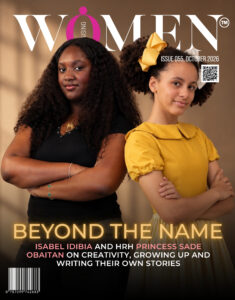
We spend a remarkable amount of time telling girls who they should become, often before they have finished discovering who they are. Apparently, growing up comes with a job description nobody remembers applying for.

In Issue 55, our cover girls, Isabel Idibia and Princess Sade Obaitan, remind us that famous surnames and royal titles may introduce you, but they should never define you.

From girls conquering oceans and swimming pools to conversations about beauty, culture and ambition, this edition examines the expectations we inherit and the courage required to question them.

In Find Her Light, I also reflect on the careers I might have pursued and why discovering another gift does not invalidate the life we have already built.

Perhaps that is the lesson running through these pages: identity is not a finished manuscript.

Every girl deserves the freedom to write her own story. And every woman deserves another chapter.

Raising Women Magazine Issue 54 – October 2026

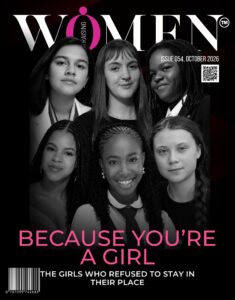
“Because you’re a girl.”
Four little words that have spent generations doing an extraordinary amount of damage. Apparently, ambition, intelligence and audacity were once considered rather unladylike.
Fortunately, the girls featured in our 54th edition missed that memo.
As we celebrate the International Day of the Girl Child, we spotlight twelve remarkable girls rewriting the rules, while reminding ourselves that a girl should not need extraordinary achievements to deserve ordinary opportunities.
We also explore the expectations that complicate girlhood, the childhood wounds we carry into adulthood and, in my Find Her Light reflection, why the girl I once was might have a few lessons for the woman I have become.
Perhaps our greatest responsibility is not simply raising girls to conquer the world, but ensuring they never have to shrink themselves to belong in it.
Because you’re a girl?
What a wonderful reason to dream without limits.

Your guide to IVF and egg freezing in Korea

Empowering your family planning journey with curated fertility treatments at lower costs. Get our guide for Korea’s leading clinics, pricing and service breakdown.

Recommended News

Raising Women Magazine Issue 56 – November 2026

The Courage to Question
We live in a world where reputation often arrives before character, popularity masquerades as goodness, and questioning authority can make you the problem. Apparently, being respected is sometimes mistaken for being beyond reproach.
Our cover woman, Rachael Denhollander, reminds us why that distinction matters. Her courage in confronting institutional abuse challenges us to reconsider what safety, justice and accountability truly mean.

Elsewhere, we explore the judgement surrounding childbirth, the invisible labour behind successful careers, the beauty industry’s obsession with perfection, and why women can cook the same meal as men yet receive considerably less applause.

From fashion and culture to relationships and motherhood, Issue 56 invites us to examine the assumptions we have inherited, including those we unknowingly perpetuate.

Because progress is not simply about celebrating extraordinary women. It is about creating a world where ordinary women and girls are heard, valued and protected.

And sometimes, change begins with refusing to look away.

Raising Women Magazine Issue 55 – October 2026

We spend a remarkable amount of time telling girls who they should become, often before they have finished discovering who they are. Apparently, growing up comes with a job description nobody remembers applying for.

In Issue 55, our cover girls, Isabel Idibia and Princess Sade Obaitan, remind us that famous surnames and royal titles may introduce you, but they should never define you.

From girls conquering oceans and swimming pools to conversations about beauty, culture and ambition, this edition examines the expectations we inherit and the courage required to question them.

In Find Her Light, I also reflect on the careers I might have pursued and why discovering another gift does not invalidate the life we have already built.

Perhaps that is the lesson running through these pages: identity is not a finished manuscript.

Every girl deserves the freedom to write her own story. And every woman deserves another chapter.

Raising Women Magazine Issue 54 – October 2026

“Because you’re a girl.”
Four little words that have spent generations doing an extraordinary amount of damage. Apparently, ambition, intelligence and audacity were once considered rather unladylike.
Fortunately, the girls featured in our 54th edition missed that memo.
As we celebrate the International Day of the Girl Child, we spotlight twelve remarkable girls rewriting the rules, while reminding ourselves that a girl should not need extraordinary achievements to deserve ordinary opportunities.
We also explore the expectations that complicate girlhood, the childhood wounds we carry into adulthood and, in my Find Her Light reflection, why the girl I once was might have a few lessons for the woman I have become.
Perhaps our greatest responsibility is not simply raising girls to conquer the world, but ensuring they never have to shrink themselves to belong in it.
Because you’re a girl?
What a wonderful reason to dream without limits.

Raising Women Magazine Issue 53 – September 2026

Apparently, saving the planet comes with a shopping list. Solar panels, electric cars, sustainable fashion and, preferably, a bank account that understands the assignment.

In Issue 53, our cover woman, Professor Joyashree Roy, challenges us to reconsider what sustainability really costs, who pays, and why the cheapest choices today may leave tomorrow’s generations with the bill.

But this issue is also about the invisible price tags attached to everyday life. From passport privilege and the cultural expectations of a “good woman” to motherhood, personal boundaries and the delicate art of enjoying life before finishing every task, we examine the systems shaping our choices.

We also celebrate women turning overlooked problems into extraordinary opportunities.

Perhaps progress begins when we stop asking only what things cost and start asking what they are worth.

A better world should not be a luxury reserved for those who can afford it.
Happy reading!

.

Raising Women Magazine Issue 52 – September 2026

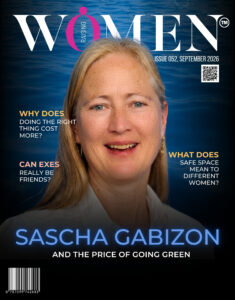
This issue asks a deceptively simple question: can we save the planet without making ordinary people pay the highest price?
Our cover star, Sascha Gabizon, brings that question sharply into focus, challenging us to think about climate action not only through carbon, but through fairness, access and gender. Because going green sounds wonderful until sustainability becomes something only the wealthy can afford.
Across these pages, we follow climate change into unexpected places. Into our wardrobes, our food, our cultural traditions and even the price of our morning coffee. We also continue our important First Daughters conversation, explore what women really mean when they speak about safety, and look at 111 Miss World contestants whose purpose projects remind us that beauty today carries increasingly bigger expectations.
This edition is ultimately about responsibility, but responsibility shared fairly.
Because saving our planet cannot become another luxury.
And perhaps the greenest future is one everyone can actually afford.