Spotlighting Remarkable Women and Girls

Digital FemTech vs. Personal Privacy

When Empowerment Becomes Exposure

By Tom Connolly

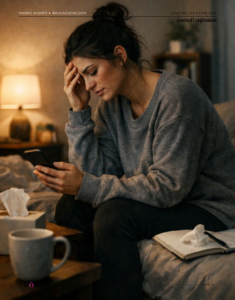
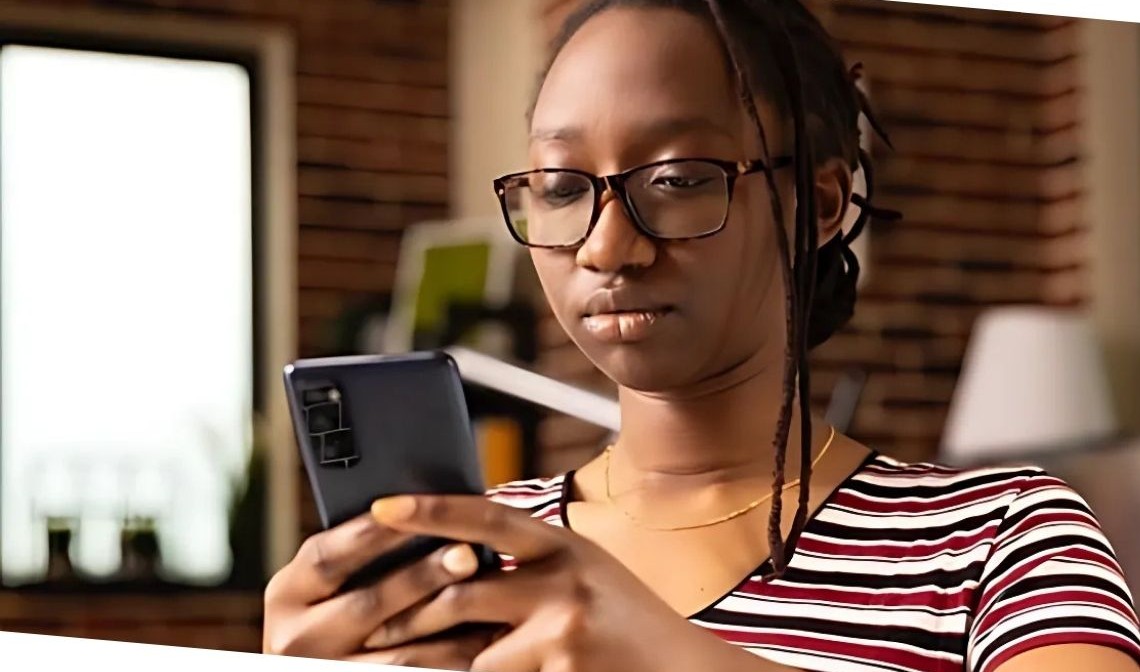
Menstrual and fertility-tracking apps promise control, insight, and convenience. But behind those colorful icons and friendly reminders is a thriving surveillance economy. Your cycle data when your period starts and ends, your moods, your sex life, even your contraception choices can be more valuable than your location or age. A University of Cambridge report revealed how this kind of information is regularly harvested and sold, putting women at risk of job discrimination, insurance issues, cyberstalking, and even legal threats.

What the Experts Are Finding

Security audits of more than 40 period and fertility apps found dangerous permissions, hidden trackers, and weak code that could easily be hacked. Many of these apps aren’t bound by strong data privacy laws. In countries like the U.S., unless an app is covered by specific health data regulations, your information can legally be handed over, sold, or subpoenaed. That means your cycle logs could end up in the hands of advertisers or worse, law enforcement.

What Real People Are Saying

Women are talking, and they’re not holding back. Reddit, a popular space for real user feedback, offers raw insight into what people are thinking and doing about this issue.

optimusdan: “The most private period tracker is a pen and a calendar. I wouldn’t trust any period app in this day and age.”

SwallowYourDreams: “My wife used Periodical from F-Droid. It’s free, open-source, and works completely offline. We block its internet access with a firewall app.”

RabbitLuvr: “It doesn’t matter how many features an app has if there’s no privacy. Law enforcement can subpoena your data, or a dev can sell it. Hard pass.”

JupiterInTheSky: “Private companies can absolutely hand over your fertility or cycle data if asked. They won’t say no to the government.”

Snugglor: “Clue says it won’t sell your data and can’t be compelled to turn it over even by court order. It’s the only one I use.”

fuckyourcanoes: “I’d never use one in the current political climate.”

EdgeCityRed: “I use a regular calendar and just set a phone alarm labeled ‘movie night’ to track ovulation.”

PainInMyBack: “I write it in a notebook. My handwriting is basically its own encryption.”

These are not isolated fears. They reflect a growing distrust of the tech industry and rising awareness of how quickly personal data can be misused.

Legal Blind Spots and Slow Progress

Some places, like New York and Michigan, are pushing for laws that protect reproductive health data. Others are lagging behind. At the federal level, the U.S. has no uniform data privacy law that clearly covers fertility-tracking apps. Even Europe’s GDPR, which is among the strictest, may not apply if the company is based elsewhere or the app operates globally.

And even when an app claims not to share data, the fine print often tells a different story. Many reserve the right to share “anonymized” data, but experts have shown that it’s easy to re-identify people from supposedly anonymous data sets.

Safer Alternatives That Women Are Choosing

Many users are shifting to open-source apps like Periodical, Drip, and Euki. These apps work offline, don’t store your data in the cloud, and usually don’t even ask you to create an account. You control your information from start to finish.

Others are going fully analog using notebooks, paper calendars, or spreadsheets stored locally on their devices. Some even create their own code systems so only they know what the entries mean.

Apps like Clue, which is based in Germany, promise not to sell user data or comply with court orders outside the EU. While that’s reassuring, it still depends on your trust in the company and your location.

Why This Matters More Than Ever

Since Roe v. Wade was overturned in the U.S., and as reproductive rights face attacks in other parts of the world, digital footprints are no longer innocent. Fertility apps, once considered helpful, are now being weaponized against women. In some U.S. states, data from phones and apps has already been used in court cases related to abortion.

So, the question isn’t whether period-tracking apps are useful. They are. The question is, who controls your data? Who sees it? And what can they do with it?

What You Can Do

If you want to track your cycle without exposing yourself, here are practical options:

  • Use an offline, open-source app that doesn’t store data in the cloud.
  • If you stick to commercial apps, check their privacy policies in detail and see if they’re bound by GDPR or other protective laws.
  • Turn off backups, block internet access for the app, and avoid entering identifiable info.
  • Consider going back to basics with pen and paper.
  • Stay informed about changing laws in your country or state.

Your body, your data. That should be the standard, but right now, it isn’t. Until laws catch up, protecting yourself is your responsibility. Being careful with your cycle tracking isn’t paranoia. It’s smart.

Share:

Trending

Raising Women Magazine Issue 045 – June 2026

There is a difference between living and merely functioning.
Somewhere between the notifications, deadlines, responsibilities, ambitions, and endless demands of modern life, many of us have become exceptionally good at keeping going. We show up. We deliver. We carry. We cope. Yet beneath the appearance of productivity, an important question remains: are we truly well?
In this issue of Raising Women Magazine, we explore wellness not as a trend, but as a deeper conversation about humanity, health, purpose, and presence.
Our cover feature introduces Dr. Heidi Beilis, a pioneering physician helping to shape the future of healthcare through artificial intelligence. Her work reminds us that innovation is at its best when it serves people, particularly women whose lives may be transformed by earlier diagnoses and better outcomes.
Elsewhere, we explore grief, ambition, beauty, leadership, healthspan, rest, and the invisible burdens many women carry. We ask difficult questions about what it means to thrive, not simply survive.
As I wrote in this issue’s Find Her Light column, sometimes the rest we need is not sleep. Sometimes it is space. Sometimes it is perspective. Sometimes it is permission.
May these pages offer all three.

Raising Women Magazine Issue 044 – May 2026

There is something deeply revealing about the way a society treats its children. Not just in policy or parenting, but in the stories it tells them, the spaces it creates for them, and the kind of world it quietly prepares them to inherit. In this Children’s Day edition, Raising Women Magazine turns its attention to childhood itself, not as a sentimental phase of life, but as the foundation upon which identity, confidence, memory, and humanity are built.

Our cover star, Ms. Rachel, represents a refreshing reminder that gentleness still matters in an age of noise. Through patience, intentionality, and emotional safety, she has transformed songs and screen time into a global classroom for millions of children and families.

Across this issue, we explore the emotional architecture of childhood, from the girls who learn too early to shrink themselves, to the children quietly carrying adult burdens before they fully understand their own. We also interrogate modern parenting, digital culture, family, safety, and the futures young people are already shaping.

Because childhood is never just preparation for life.

In many ways, it is life itself.

The Family Tree Divide

What Women Are Given, and What They Build By Sipho Khumalo Two women walk into the same room. One is recognised before she speaks. The

Your guide to IVF and egg freezing in Korea

Empowering your family planning journey with curated fertility treatments at lower costs. Get our guide for Korea’s leading clinics, pricing and service breakdown.

Recommended News

Raising Women Magazine Issue 045 – June 2026

There is a difference between living and merely functioning.
Somewhere between the notifications, deadlines, responsibilities, ambitions, and endless demands of modern life, many of us have become exceptionally good at keeping going. We show up. We deliver. We carry. We cope. Yet beneath the appearance of productivity, an important question remains: are we truly well?
In this issue of Raising Women Magazine, we explore wellness not as a trend, but as a deeper conversation about humanity, health, purpose, and presence.
Our cover feature introduces Dr. Heidi Beilis, a pioneering physician helping to shape the future of healthcare through artificial intelligence. Her work reminds us that innovation is at its best when it serves people, particularly women whose lives may be transformed by earlier diagnoses and better outcomes.
Elsewhere, we explore grief, ambition, beauty, leadership, healthspan, rest, and the invisible burdens many women carry. We ask difficult questions about what it means to thrive, not simply survive.
As I wrote in this issue’s Find Her Light column, sometimes the rest we need is not sleep. Sometimes it is space. Sometimes it is perspective. Sometimes it is permission.
May these pages offer all three.

Raising Women Magazine Issue 044 – May 2026

There is something deeply revealing about the way a society treats its children. Not just in policy or parenting, but in the stories it tells them, the spaces it creates for them, and the kind of world it quietly prepares them to inherit. In this Children’s Day edition, Raising Women Magazine turns its attention to childhood itself, not as a sentimental phase of life, but as the foundation upon which identity, confidence, memory, and humanity are built.

Our cover star, Ms. Rachel, represents a refreshing reminder that gentleness still matters in an age of noise. Through patience, intentionality, and emotional safety, she has transformed songs and screen time into a global classroom for millions of children and families.

Across this issue, we explore the emotional architecture of childhood, from the girls who learn too early to shrink themselves, to the children quietly carrying adult burdens before they fully understand their own. We also interrogate modern parenting, digital culture, family, safety, and the futures young people are already shaping.

Because childhood is never just preparation for life.

In many ways, it is life itself.

The Family Tree Divide

What Women Are Given, and What They Build By Sipho Khumalo Two women walk into the same room. One is

First, Believe

By The Lulu They said the sky’s the limit But what if you’re still underground, still digging through the dirt