What Women Are Given, and What They Build
By Sipho Khumalo
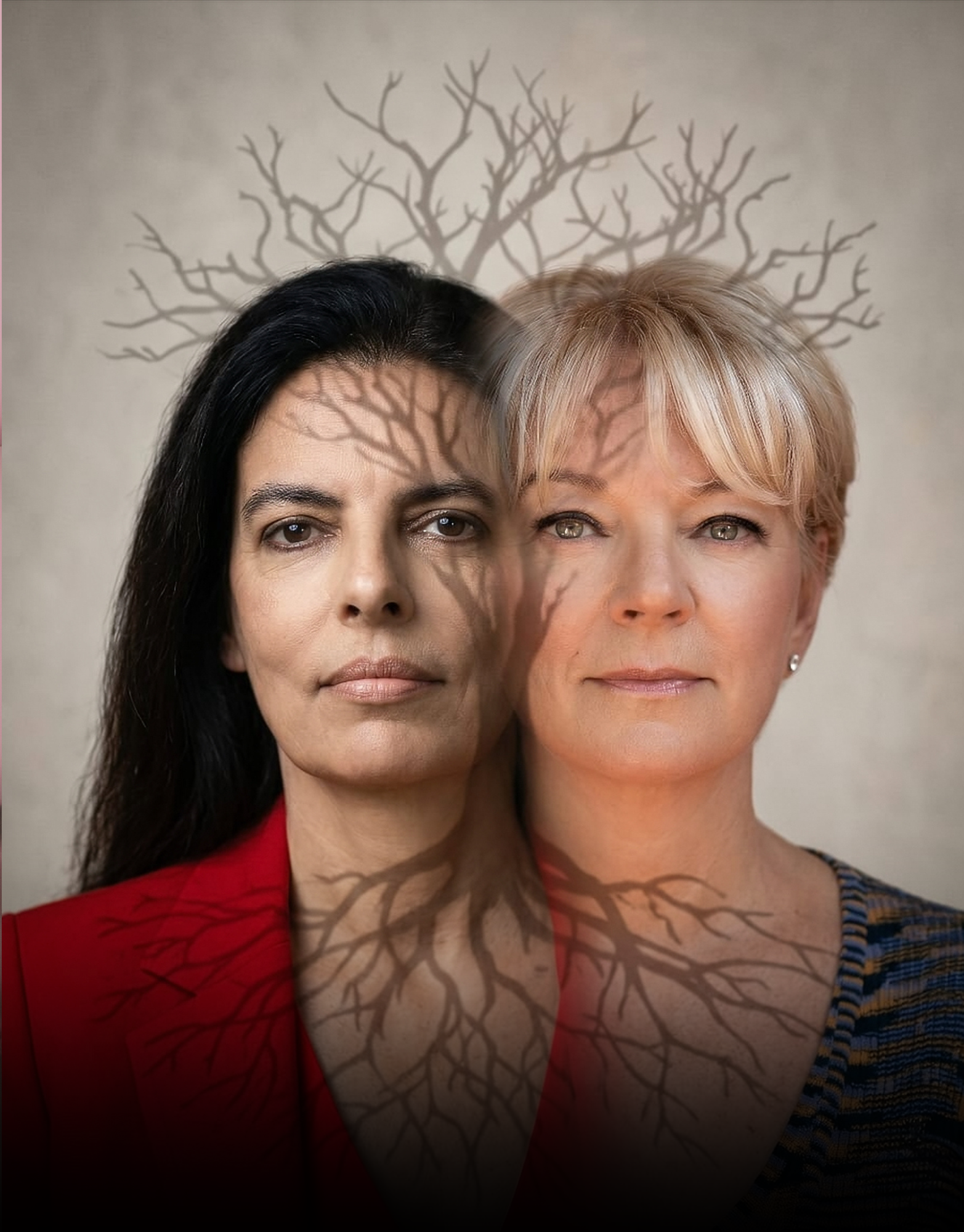
Two women walk into the same room.
One is recognised before she speaks.
The other is assessed before she is heard.
The difference is not talent. It is not intelligence. It is not even ambition. It is where they come from.
We like to believe that inequality begins outside the home, in institutions, in markets, in systems that can be named and challenged. That belief is convenient. It is also incomplete. The first architecture of advantage is not built in the boardroom. It is built at the dining table, in the distribution of attention, expectation, opportunity, and permission. Family is not just a social unit. It is an economic and psychological starting point.
Globally, a significant share of wealth is not earned but transferred. Data from the OECD and the World Inequality Database suggests that as much as 60 to 70 percent of wealth in advanced economies is inherited. This is not a marginal detail. It reframes the story we tell about merit. Many people are not starting from zero. They are starting from accumulated advantage.
For women, this reality is layered with contradiction.
Some women inherit access to systems that already exist. Others inherit limitations. Others inherit absolutely nothing except the pressure to create what did not previously exist for their families.
Few comparisons illustrate this better than Françoise Bettencourt Meyers and Jo Malone.
One inherited one of the most recognisable beauty empires in modern history. The other built a globally recognised fragrance name from the ground up.
Yet reducing either woman to simplistic categories would miss the point entirely.
Françoise Bettencourt Meyers is the granddaughter of Eugène Schueller, founder of L’Oréal. Today, she remains one of the wealthiest women in the world through the continuation of a family-controlled empire that has lasted for generations.
At first glance, her story appears straightforward. Inherited wealth. Old money. Established power.
But inheritance at that scale is not passive ownership. Maintaining generational wealth requires governance, strategic continuity, institutional stability, and the ability to navigate scrutiny that intensifies with visibility. Wealth can be inherited. Relevance cannot.
Family empires collapse all the time. History is crowded with surnames that once dominated industries before vanishing into irrelevance through poor leadership, fragmentation, scandal, or mismanagement. Inheriting wealth may remove the difficulty of starting from zero, but it introduces a different challenge altogether. Preservation.
That distinction matters because conversations around privilege often flatten complexity into caricature. The assumption is that inherited wealth guarantees effortless permanence. It does not. The mechanics of maintaining large-scale enterprise across generations involve legal structures, governance systems, investment strategy, succession planning, and reputational management that most individuals never have to confront.
This does not erase inherited advantage. It contextualises it.
Françoise Bettencourt Meyers inherited a system already functioning at global scale. That alone represents an extraordinary head start. But sustaining that scale across decades requires a level of stewardship that goes beyond simply possessing a famous surname.
Then there is Jo Malone.
Unlike Bettencourt Meyers, Jo Malone did not inherit an industrial dynasty or internationally recognised family infrastructure. She left school young, struggled with dyslexia, and began her professional life giving facials from her home before experimenting with fragrances almost accidentally.
What followed became one of the most recognisable names in luxury fragrance.
Jo Malone London grew through branding precision, product identity, and business instinct rather than generational transfer. Eventually, the brand was acquired by Estée Lauder, cementing Malone’s position as one of the most influential figures in modern fragrance retail.
More importantly, she transformed her own name into economic infrastructure. “Jo Malone” stopped being merely a person and became a commercial identity with global recognition.
That distinction is central to understanding modern wealth creation. Some people inherit systems. Others become the system future generations inherit from.
The contrast between these two women reveals something larger about family and power.
Inheritance is often discussed only in financial terms, but families transfer far more than money. They transfer access. Exposure. Networks. Psychological confidence. Social legitimacy. Even the expectation that success is normal rather than exceptional.
These invisible inheritances are frequently more decisive than cash itself.
Research from the World Bank and the OECD shows that it can take four to five generations for low-income families to reach average income levels. Social mobility is not a motivational slogan. It is a long statistical process heavily influenced by starting conditions.
This is where family becomes both support system and sorting mechanism.
Two women may possess equal intelligence and equal ambition while operating from entirely different foundations. One grows up around investment conversations, professional networks, and financial literacy. Another grows up navigating instability, obligation, or cultural restrictions around gender and aspiration.
By adulthood, the gap already exists.
For women specifically, these dynamics are intensified by unequal domestic expectations. According to UN Women, women continue to perform more than seventy five percent of unpaid care work globally. Childcare, domestic labour, and emotional management still disproportionately fall on women regardless of professional ambition.
Time itself becomes inherited inequality.
One sibling inherits freedom to experiment. Another inherits responsibility. One inherits permission to pursue risk. Another inherits the duty to maintain stability. The differences rarely announce themselves loudly, but over decades they compound into entirely different outcomes.
Family also functions as performance.
Publicly, families often project unity, success, and cohesion. Privately, they negotiate expectation, silence, hierarchy, and pressure. Women frequently sit at the centre of this contradiction. A woman may inherit wealth while simultaneously inheriting restrictive expectations about behaviour, leadership, motherhood, or visibility.
In some societies, women still struggle to inherit property at all. The World Bank continues to document legal and customary systems that restrict women’s economic participation and inheritance rights across multiple regions. In other words, while some women inherit multinational corporations, others are excluded from inheriting land their own mothers worked on.
The same institution, family, can produce radically different outcomes depending on geography, culture, class, and gender.
This is why the inherited versus self-made debate often misses the point. It treats wealth as though it exists in two neat categories when reality is far more layered.
Self-made success rarely emerges in a vacuum. Even resilience requires some form of support structure, whether educational, emotional, or institutional. Likewise, inherited wealth does not eliminate the necessity of competence, adaptation, and stewardship.
The more useful question is not whether success is inherited or earned. It is how much of each is involved.
Jo Malone built a globally recognised brand without inheriting industrial infrastructure. Françoise Bettencourt Meyers inherited one of the most powerful beauty infrastructures in the world and carries the responsibility of sustaining it across generations. Both realities involve labour. The nature of the labour is simply different.
One challenge is construction. The other is continuity.
And then there are the women positioned somewhere in between. Women who inherit little financially but inherit discipline, education, sacrifice, or expectation from parents who had limited resources themselves. Women who become the first in their lineage to access wealth, influence, or visibility.
These women quietly alter the trajectory of entire family trees.
Their children begin from a different baseline. Their surnames begin carrying different meanings. Their families enter rooms they previously could not access. This is how lineage changes. Not only through inheritance, but through interruption.
Over time, those interruptions become new systems.
The broader lesson here is uncomfortable but necessary. Inequality does not begin in the workplace. It begins much earlier, in the uneven distribution of resources, expectation, exposure, and opportunity within families themselves.
The home is where advantage first becomes visible, even when nobody calls it advantage yet.
Some women inherit platforms. Some inherit barriers. Some inherit neither and spend their lives constructing both the platform and the ladder simultaneously.
That distinction shapes more than individual stories. It shapes economies, industries, and generations.
And for many women, the most consequential act is not inheriting a powerful name.
It is becoming one.