Spotlighting Remarkable Women and Girls

Did You Know? The Curious Origins Behind Everyday Things

By Tom Boyd

Ever wonder why we do some of the things we do or where certain habits came from? From fashion choices to funny sayings, so much of what we call “normal” has roots that are anything but ordinary.

1. Why Women Wear High Heels

Long before heels strutted down runways, Persian horsemen wore them to keep their feet steady in stirrups. European aristocrats later picked up the trend to show off status. Eventually, it slipped into women’s fashion, trading battlefield grit for glamour.

2. Why the Barber’s Pole Is Red, White, and Blue

Those spinning stripes have a bloody past. Medieval barbers doubled as surgeons and performed bloodletting. The red stands for blood, white for bandages, and blue was added in America as a patriotic touch.

3. Why Pencils Are Yellow

Back in the 1800s, a Czech company painted its best pencils yellow to show they contained top-quality graphite from China. Since yellow symbolized royalty in Chinese culture, the color hinted at luxury and excellence.

4. Why We Say “Bless You” After a Sneeze

During the Bubonic plague, sneezing could mean sickness was coming, so people said “God bless you” as a quick prayer. Earlier cultures believed sneezing might let the soul slip out, and the blessing was meant to call it back.

5. Why We Clink Glasses When Toasting

In medieval times, clinking glasses wasn’t just tradition, it was trust. A little splash from one cup to another proved no one was trying to poison anyone. Today it’s simply a cheerful gesture of unity.

6. Why Brides Wear White

Before Queen Victoria, brides wore any color they liked. Her white gown in 1840 changed everything. At first, white showed wealth, since it was hard to keep clean, but later became a symbol of purity and romance.

7. Why the Wedding Ring Goes on the Fourth Finger

Ancient Romans believed a “vein of love” ran straight from that finger to the heart. Science has since disagreed, but the tradition stayed, keeping love close to where it’s felt most.

8. Why Socks Go Missing in the Laundry

Turns out, it’s not just bad luck. Modern studies show small items like socks often slip into washing machine seals or hoses. The mystery “sock monster” might just be your appliance.

9. Why Traffic Lights Are Red, Amber, and Green

When cars came along, engineers borrowed color codes from railways. Red meant danger, green meant safety, and amber was the warning in between. The colors stuck, keeping us all in line.

10. Why Some People Are Called Night Owls

Owls are naturally active at night, and humans with similar habits earned the nickname. The phrase dates back to the 16th century and still perfectly describes anyone who thrives after sunset.

11. Why People Tap a Glass Before Drinking

That little tap isn’t random. In many cultures, it’s a small gesture of acknowledgment or thanks to the host. In old times, it was also a quick way to check if the glass was clean and safe.

12. Why We Say “Raining Cats and Dogs”

Old English streets had poor drainage, and during heavy rains, dead animals sometimes floated through the floods. The chaos inspired the phrase, exaggerating how wild the weather felt.

13. Why No. 2 Pencils Are the Standard

The “2” marks the ideal graphite hardness, dark enough to read clearly but light enough not to smudge. That’s why schools and scan machines made it the default.

14. Why We Say “Turn a Blind Eye”

The phrase comes from Admiral Horatio Nelson, who lifted a telescope to his blind eye during battle so he could “miss” the signal to retreat. Ignoring the obvious has never sounded braver.

15. Why Clocks Chime on the Hour

Before wristwatches and phones, clock towers helped townspeople track time by sound. The hourly chimes kept everyone, from merchants to churchgoers running on the same schedule.

Curious yet?

Stay tuned for the next “Did You Know?” feature, where we’ll dig into more of history’s small wonders hiding in plain sight.
Share:

Trending

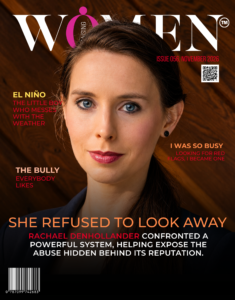
Raising Women Magazine Issue 56 – November 2026

The Courage to Question
We live in a world where reputation often arrives before character, popularity masquerades as goodness, and questioning authority can make you the problem. Apparently, being respected is sometimes mistaken for being beyond reproach.
Our cover woman, Rachael Denhollander, reminds us why that distinction matters. Her courage in confronting institutional abuse challenges us to reconsider what safety, justice and accountability truly mean.

Elsewhere, we explore the judgement surrounding childbirth, the invisible labour behind successful careers, the beauty industry’s obsession with perfection, and why women can cook the same meal as men yet receive considerably less applause.

From fashion and culture to relationships and motherhood, Issue 56 invites us to examine the assumptions we have inherited, including those we unknowingly perpetuate.

Because progress is not simply about celebrating extraordinary women. It is about creating a world where ordinary women and girls are heard, valued and protected.

And sometimes, change begins with refusing to look away.

Raising Women Magazine Issue 55 – October 2026

We spend a remarkable amount of time telling girls who they should become, often before they have finished discovering who they are. Apparently, growing up comes with a job description nobody remembers applying for.

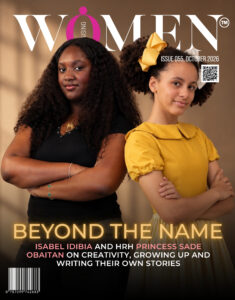
In Issue 55, our cover girls, Isabel Idibia and Princess Sade Obaitan, remind us that famous surnames and royal titles may introduce you, but they should never define you.

From girls conquering oceans and swimming pools to conversations about beauty, culture and ambition, this edition examines the expectations we inherit and the courage required to question them.

In Find Her Light, I also reflect on the careers I might have pursued and why discovering another gift does not invalidate the life we have already built.

Perhaps that is the lesson running through these pages: identity is not a finished manuscript.

Every girl deserves the freedom to write her own story. And every woman deserves another chapter.

Raising Women Magazine Issue 54 – October 2026

“Because you’re a girl.”
Four little words that have spent generations doing an extraordinary amount of damage. Apparently, ambition, intelligence and audacity were once considered rather unladylike.
Fortunately, the girls featured in our 54th edition missed that memo.
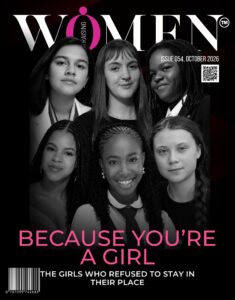
As we celebrate the International Day of the Girl Child, we spotlight twelve remarkable girls rewriting the rules, while reminding ourselves that a girl should not need extraordinary achievements to deserve ordinary opportunities.
We also explore the expectations that complicate girlhood, the childhood wounds we carry into adulthood and, in my Find Her Light reflection, why the girl I once was might have a few lessons for the woman I have become.
Perhaps our greatest responsibility is not simply raising girls to conquer the world, but ensuring they never have to shrink themselves to belong in it.
Because you’re a girl?
What a wonderful reason to dream without limits.

Your guide to IVF and egg freezing in Korea

Empowering your family planning journey with curated fertility treatments at lower costs. Get our guide for Korea’s leading clinics, pricing and service breakdown.

Recommended News

Raising Women Magazine Issue 56 – November 2026

The Courage to Question
We live in a world where reputation often arrives before character, popularity masquerades as goodness, and questioning authority can make you the problem. Apparently, being respected is sometimes mistaken for being beyond reproach.
Our cover woman, Rachael Denhollander, reminds us why that distinction matters. Her courage in confronting institutional abuse challenges us to reconsider what safety, justice and accountability truly mean.

Elsewhere, we explore the judgement surrounding childbirth, the invisible labour behind successful careers, the beauty industry’s obsession with perfection, and why women can cook the same meal as men yet receive considerably less applause.

From fashion and culture to relationships and motherhood, Issue 56 invites us to examine the assumptions we have inherited, including those we unknowingly perpetuate.

Because progress is not simply about celebrating extraordinary women. It is about creating a world where ordinary women and girls are heard, valued and protected.

And sometimes, change begins with refusing to look away.

Raising Women Magazine Issue 55 – October 2026

We spend a remarkable amount of time telling girls who they should become, often before they have finished discovering who they are. Apparently, growing up comes with a job description nobody remembers applying for.

In Issue 55, our cover girls, Isabel Idibia and Princess Sade Obaitan, remind us that famous surnames and royal titles may introduce you, but they should never define you.

From girls conquering oceans and swimming pools to conversations about beauty, culture and ambition, this edition examines the expectations we inherit and the courage required to question them.

In Find Her Light, I also reflect on the careers I might have pursued and why discovering another gift does not invalidate the life we have already built.

Perhaps that is the lesson running through these pages: identity is not a finished manuscript.

Every girl deserves the freedom to write her own story. And every woman deserves another chapter.

Raising Women Magazine Issue 54 – October 2026

“Because you’re a girl.”
Four little words that have spent generations doing an extraordinary amount of damage. Apparently, ambition, intelligence and audacity were once considered rather unladylike.
Fortunately, the girls featured in our 54th edition missed that memo.
As we celebrate the International Day of the Girl Child, we spotlight twelve remarkable girls rewriting the rules, while reminding ourselves that a girl should not need extraordinary achievements to deserve ordinary opportunities.
We also explore the expectations that complicate girlhood, the childhood wounds we carry into adulthood and, in my Find Her Light reflection, why the girl I once was might have a few lessons for the woman I have become.
Perhaps our greatest responsibility is not simply raising girls to conquer the world, but ensuring they never have to shrink themselves to belong in it.
Because you’re a girl?
What a wonderful reason to dream without limits.

Raising Women Magazine Issue 53 – September 2026

Apparently, saving the planet comes with a shopping list. Solar panels, electric cars, sustainable fashion and, preferably, a bank account that understands the assignment.

In Issue 53, our cover woman, Professor Joyashree Roy, challenges us to reconsider what sustainability really costs, who pays, and why the cheapest choices today may leave tomorrow’s generations with the bill.

But this issue is also about the invisible price tags attached to everyday life. From passport privilege and the cultural expectations of a “good woman” to motherhood, personal boundaries and the delicate art of enjoying life before finishing every task, we examine the systems shaping our choices.

We also celebrate women turning overlooked problems into extraordinary opportunities.

Perhaps progress begins when we stop asking only what things cost and start asking what they are worth.

A better world should not be a luxury reserved for those who can afford it.
Happy reading!

.

Raising Women Magazine Issue 52 – September 2026

This issue asks a deceptively simple question: can we save the planet without making ordinary people pay the highest price?
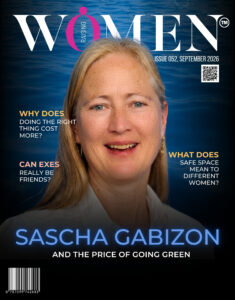
Our cover star, Sascha Gabizon, brings that question sharply into focus, challenging us to think about climate action not only through carbon, but through fairness, access and gender. Because going green sounds wonderful until sustainability becomes something only the wealthy can afford.
Across these pages, we follow climate change into unexpected places. Into our wardrobes, our food, our cultural traditions and even the price of our morning coffee. We also continue our important First Daughters conversation, explore what women really mean when they speak about safety, and look at 111 Miss World contestants whose purpose projects remind us that beauty today carries increasingly bigger expectations.
This edition is ultimately about responsibility, but responsibility shared fairly.
Because saving our planet cannot become another luxury.
And perhaps the greenest future is one everyone can actually afford.