By Ifeanyi’s Daughter
Every year, International Women’s Day arrives with a theme. Some are bold. Some are urgent. Some are aspirational. This year’s theme, “Give to Gain,” may sound simple at first glance. But like many powerful ideas, its strength lies in what sits beneath it.
So, what does “Give to Gain” actually mean? Where did it come from? And why is it relevant now? To understand it properly, we need to start with the foundation of International Women’s Day itself.
International Women’s Day, marked every year on 8 March, dates back to the early twentieth century. It emerged from labour movements in North America and Europe, where women were demanding fair wages, safer working conditions and voting rights. Over time, it evolved into a global moment recognised by the United Nations, focusing on gender equality, economic empowerment, political participation and social justice.
Each year, organisations, advocacy groups and global institutions shape themes that reflect current realities. These themes are not random. They respond to economic trends, political shifts and social gaps.
“Give to Gain” sits squarely within that tradition.
At its core, the phrase suggests reciprocity. It implies that what we invest into women and girls returns multiplied. But the theme is not simply about generosity in a personal sense. It is about systems.
The first word, Give, is intentional. It asks institutions, governments, corporations and communities to give tangible things. Give opportunity. Give access. Give funding. Give policy protection. Give space at decision-making tables. Give mentorship. Give safety. Give education.
The second word, Gain, speaks to outcome. When women are given equal access to resources and opportunity, societies gain economically, socially and politically. This is not rhetorical optimism. There is data behind it.
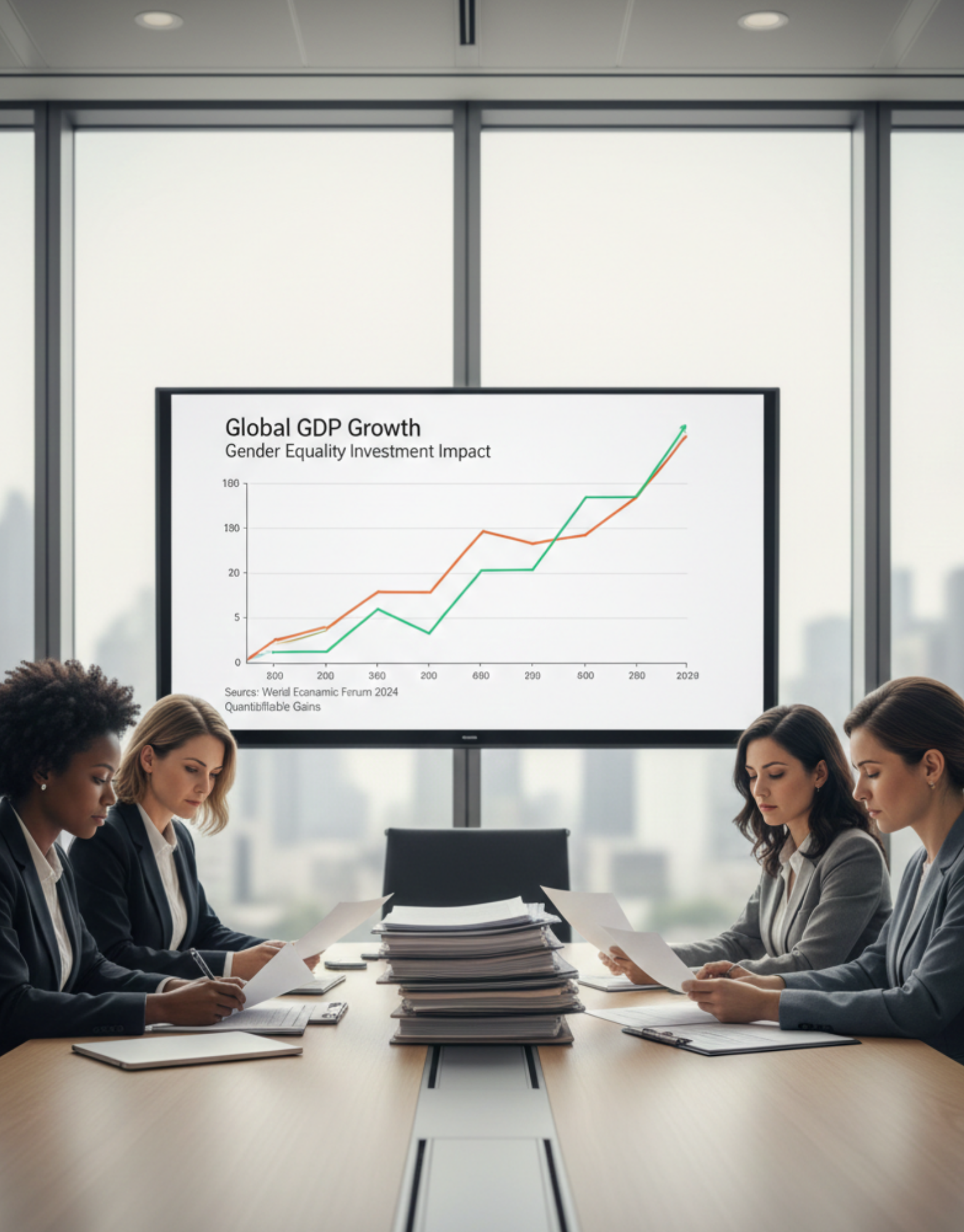
According to the World Bank, closing gender gaps in employment could significantly increase global GDP. McKinsey research has estimated that advancing women’s equality could add trillions of dollars to global economic output. When women participate fully in labour markets, they increase household income, improve child welfare outcomes and strengthen national economies.
So “Give to Gain” is not charity language. It is economic strategy.
The theme also responds to a present reality. Despite decades of advocacy, gender gaps persist across multiple areas. Women remain underrepresented in political leadership. They are more likely to work in informal or vulnerable employment. Globally, women perform a disproportionate share of unpaid care work. Access to capital for women-owned businesses remains significantly lower than for male-owned enterprises.
In that context, “Give to Gain” becomes a call to rebalance.
It challenges decision-makers to move beyond symbolic celebration and towards structural action. It asks a practical question. If societies want economic growth, social stability and sustainable development, are they investing adequately in half the population?
The phrase can also be misunderstood if taken too narrowly. It is not a demand that women give more of themselves. Historically, women have given extensively through unpaid labour, caregiving and emotional support. This theme does not celebrate sacrifice. Instead, it redirects responsibility towards systems that must give more to women.
There is also a collective dimension embedded in the theme. “Give to Gain” encourages collaboration. When women support women through mentorship, networking and resource-sharing, they create multiplier effects. When businesses commit to inclusive supply chains, they expand market access. When communities prioritise girls’ education, they raise future earning potential.
It is a reminder that equality benefits everyone.
Importantly, the theme also recognises that progress requires intentional action. Gains do not happen automatically. They follow investment. They follow policy change. They follow accountability. For contributors, businesses and advocates engaging with this theme, the key is clarity. “Give to Gain” is not about vague goodwill. It is about measurable shifts. What are we giving? Who is giving it? How is it structured? What gain are we expecting? Who benefits?
When broken down this way, the theme becomes less abstract and more actionable.
It asks governments to give stronger protections and inclusive policies. It asks corporations to give fair wages, leadership pathways and procurement opportunities. It asks investors to give capital to women-led enterprises. It asks communities to give support structures that reduce the burden of unpaid labour.
And in return, societies gain productivity, innovation, stability and resilience.
International Women’s Day has always been about more than celebration. It has been about progress. “Give to Gain” continues that legacy by connecting generosity with strategy, inclusion with growth and equality with long-term prosperity.
Did you know that investing in women is not just a moral imperative but an economic one? That is the essence of this year’s theme.
When we understand it fully, “Give to Gain” stops being a slogan. It becomes a blueprint.