By Chris Wede
There is something magical about the moment a fast ends or a holy celebration begins. After weeks of reflection, restraint or prayer, kitchens around the world suddenly come alive. Pots simmer. Ovens Ovens warm. Tables stretch longer than usual to welcome family, neighbours and friends.
Across religions and cultures, some of the most joyful meals of the year arrive immediately after moments of spiritual devotion. Ramadan gives way to Eid feasts. Lent leads to Easter brunches. Passover evenings unfold around carefully prepared ceremonial meals. And while the rituals may differ, one thing remains universal: food is how people celebrate faith together.
Holy festivals are not only spiritual milestones. They are also some of the most delicious moments on the global calendar.
Eid: Sweet Beginnings After the Fast
After a month of fasting during Ramadan, Eid al-Fitr arrives like a culinary celebration. The name itself translates to “the festival of breaking the fast”, and across Muslim communities worldwide, the morning often begins with something sweet.
Dates, which traditionally break the daily fast during Ramadan, frequently appear again during Eid celebrations. But the real stars of the table are the pastries.
In many Middle Eastern homes, maamoul, delicate semolina cookies filled with dates, pistachios or walnuts, are prepared in the days leading up to Eid. These buttery treats are often dusted with powdered sugar and shaped using carved wooden moulds that imprint beautiful patterns on the dough.
Then there is baklava, that irresistible combination of flaky pastry, chopped nuts and syrup. Sticky, crunchy and unapologetically rich, baklava embodies the festive spirit of Eid. It is not a dessert you eat quietly. It is a dessert meant to be shared generously.
In South Asia, the celebration may feature sheer khurma, a luxurious vermicelli pudding cooked with milk, dates, nuts and cardamom. The dish is traditionally served to guests throughout the day, reinforcing one of the central ideas of Eid: hospitality.
Easter: Comfort, Colour and Chocolate
If Eid celebrates the joy of breaking a fast, Easter is a festival that embraces abundance after the reflective season of Lent.
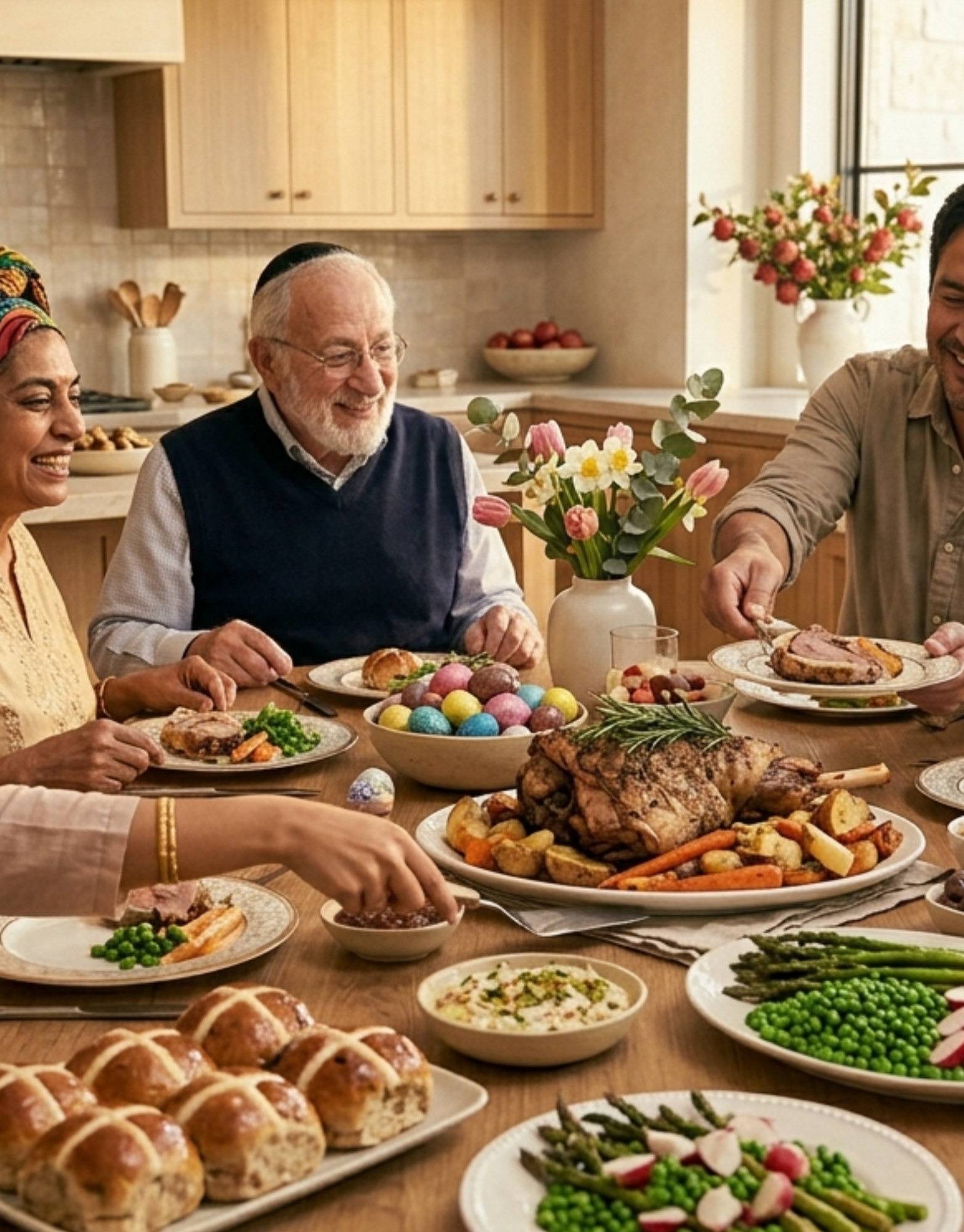
In many Christian communities, Easter Sunday begins with one of the most beloved meals of the year: brunch. Tables fill with comforting dishes that signal the arrival of spring and renewal.
One iconic Easter favourite is the hot cross bun. Soft, lightly spiced and dotted with raisins, these small buns are marked with a cross on top and traditionally eaten on Good Friday or Easter weekend. Their warm aroma has become synonymous with the season.
Another Easter staple in many countries is roast lamb, a dish deeply tied to both religious symbolism and seasonal agriculture. Served with vegetables, herbs and sometimes mint sauce, it anchors many celebratory Easter meals.
But of course, no Easter feast is complete without the festival’s most playful element: chocolate eggs. These colourful treats, originally inspired by ancient symbols of fertility and new life, have evolved into elaborate confectionery creations that delight children and adults alike.
From small foil-wrapped eggs to towering chocolate sculptures, Easter desserts are unapologetically joyful.
Passover: A Table Rich With Meaning
While Eid and Easter often celebrate abundance, Passover combines food with storytelling.
The Jewish festival commemorates the ancient story of liberation from slavery in Egypt, and its ceremonial meal, the Seder, is filled with symbolic foods that represent different aspects of that history.
At the centre of the table is matzo, an unleavened bread that reflects the haste with which the Israelites left Egypt, leaving no time for dough to rise.
Another key dish is charoset, a sweet mixture typically made from apples, nuts, cinnamon and wine. Its texture symbolises the mortar used by enslaved Israelites while building structures in Egypt, yet its sweetness also reminds participants that hope can exist even in difficult times.
Each element on the Seder plate carries meaning, transforming the meal into an experience that blends food, history and faith.
A Shared Language of Celebration
Although these festivals emerge from different religious traditions, their culinary celebrations share a common spirit. They remind us that food is more than nourishment. It is a language of joy, gratitude and connection.
The dishes served during Eid, Easter and Passover are rarely prepared casually. They are recipes passed down through generations, tied to memories of family gatherings and festive laughter.
In many homes, preparing these meals becomes a ritual in itself. Grandparents guide younger family members through recipes. Kitchens fill with stories as much as with aromas.
And once the food reaches the table, the true celebration begins.
Because no matter where in the world these festivals are observed, the message is the same. After faith comes fellowship. After reflection comes joy.
And after prayer, there is always a feast waiting to be shared.