By Emmanuella Abraham
For much of the twentieth century, women’s watches were positioned as decorative objects rather than functional tools. Smaller cases, quartz movements, and gem-set designs dominated the category, reinforcing the idea that precision and engineering belonged elsewhere. In recent years, that framing has shifted, and Cartier has been central to that evolution.
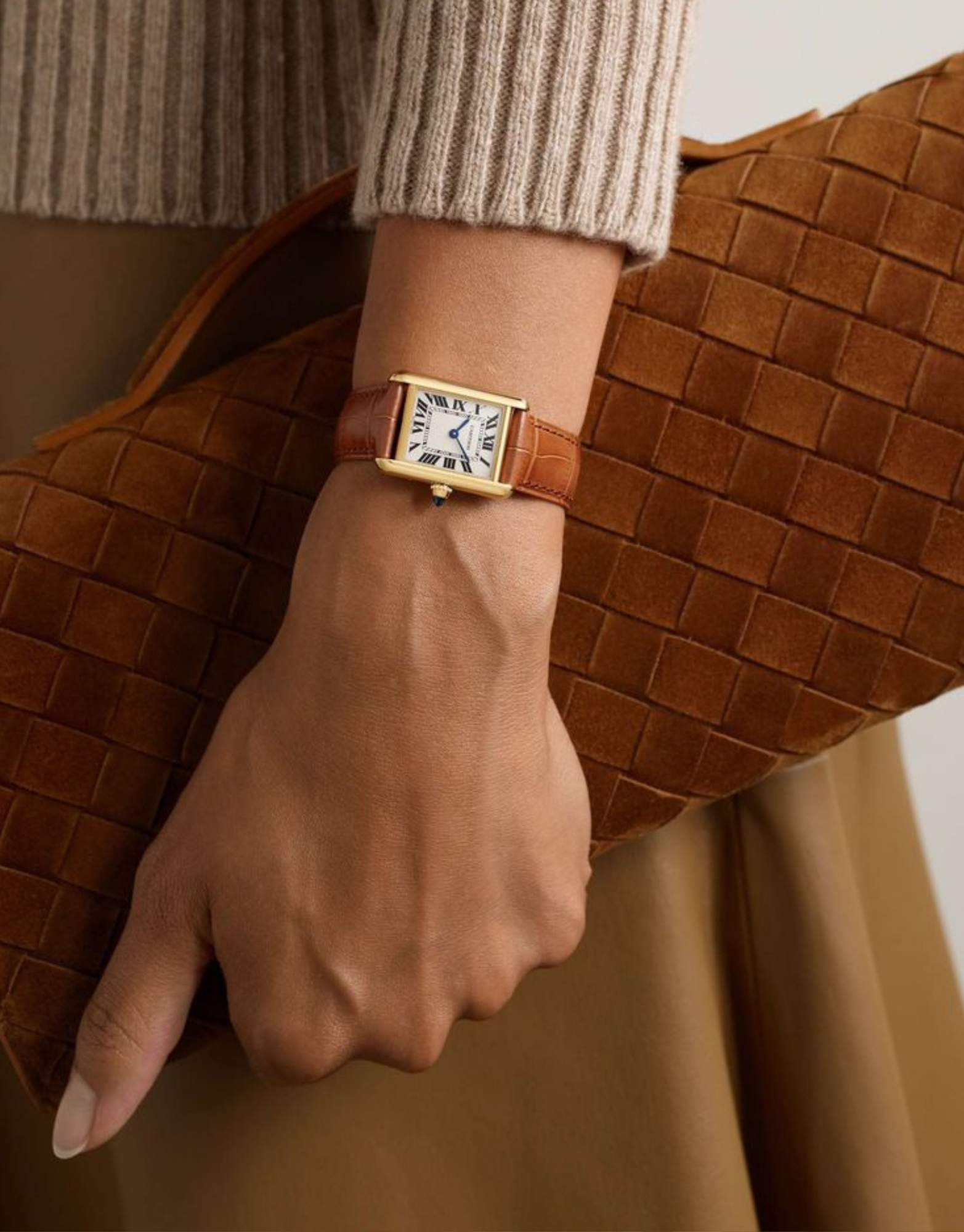
Cartier’s watchmaking history begins with utility. In 1904, the Cartier Santos was created for aviator Alberto Santos-Dumont, designed for ease of use during flight. It marked a turning point from pocket watches to wristwatches, establishing a format that would later be widely adopted by women. By 1917, the Cartier Tank introduced a rectangular case with clean, architectural lines. Its proportions were deliberate and balanced, allowing it to sit comfortably across different wrist sizes without losing clarity of design.
What distinguishes these pieces is not only how they were made, but how they have been worn. The Tank, for example, became part of the everyday wardrobe of figures such as Princess Diana. It was paired with tailoring and worn consistently, not reserved for formal occasions. This positioned the watch as a practical object integrated into daily life.
Cartier also redefined the relationship between jewellery and horology. The Cartier Panthère, introduced in the 1980s, combined the flexibility of a bracelet with the structure of a timepiece. It demonstrated that a watch could be visually expressive without sacrificing function. Designs such as the Cartier Baignoire further show how form can evolve while remaining precise and legible.
Industry data reflects a broader shift in consumer behaviour. According to the Federation of the Swiss Watch Industry, women’s watches now represent a growing share of luxury sales, with increased demand for mechanical movements and enduring design. Buyers are engaging more deeply with craftsmanship, materials, and heritage, rather than viewing watches solely as accessories.
Cartier’s relevance today lies in its consistency. Its watches are recognisable, adaptable, and designed to move between contexts without losing purpose. This aligns with how women approach style, prioritising pieces that integrate into daily life rather than stand apart from it.
A watch, in this context, is no longer just about telling time. It is about how time is worn, structured, and understood.