Spotlighting Remarkable Women and Girls

Easter Unwrapped: Faith, Media, and Why We Choose What We Watch

By Ifeoma Udu

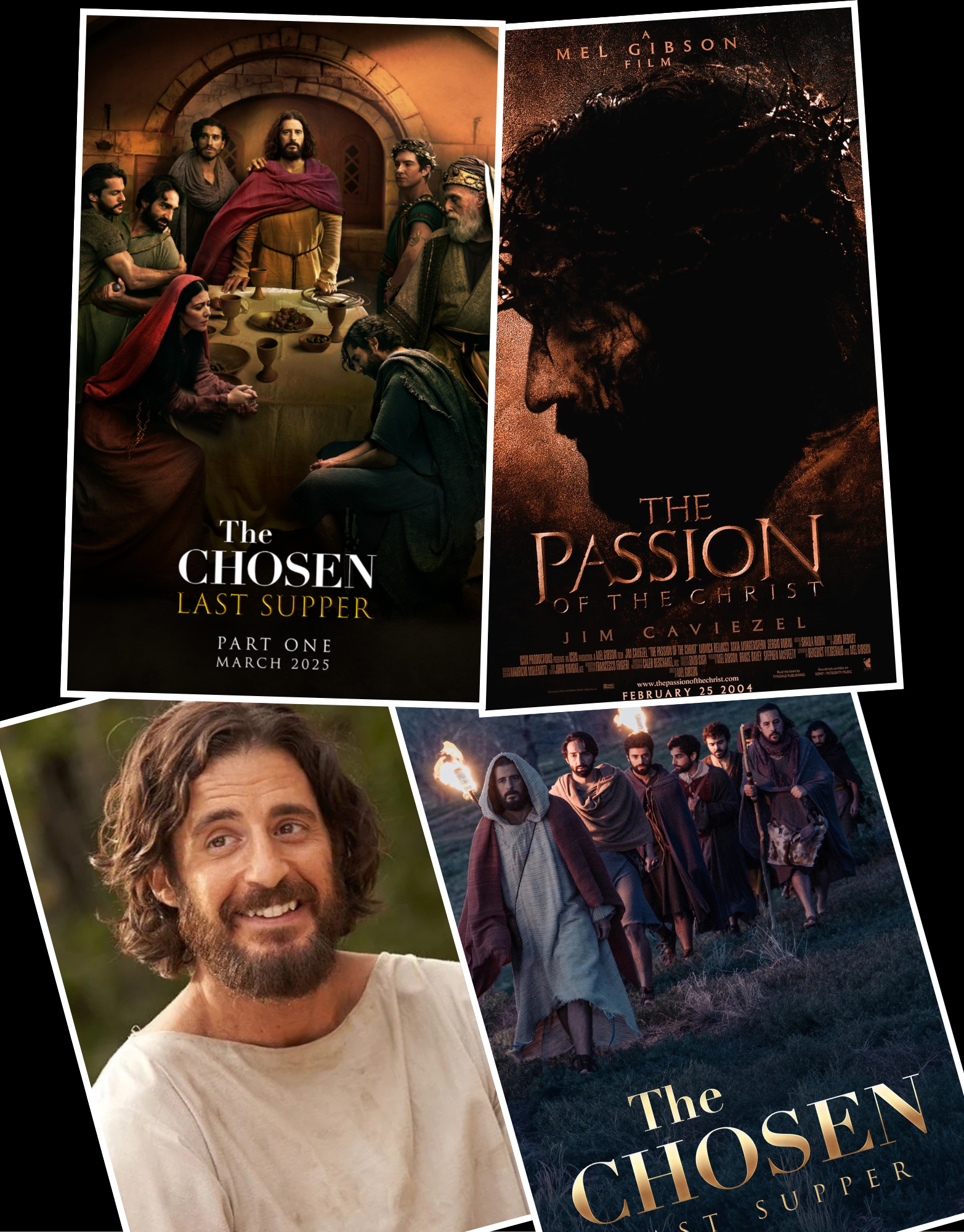
Hey guys! So I don’t know if this was just my feed, but this Easter felt very… specific. Out of nowhere, my timeline was filled with The Chosen. Clips, edits, emotional scenes, especially around the crucifixion storyline. And alongside it, the usual resurfacing of The Passion of the Christ.

But this time, it felt more intense. More present.

And what made it interesting for me personally is that I had actually stopped watching The Chosen at season 3. I wasn’t even thinking about it. Then suddenly, my feed kept pushing it so much that I found myself going back to it.

Not because I planned to. Just… because it was everywhere.

Which made me pause a bit.

Because before now, we didn’t really have this version of Easter content dominance.

The Chosen didn’t always sit at the center of pop culture conversations like this, especially since the death and resurrection storyline hadn’t fully played out on the show before.

But now, with Jonathan Roumie’s portrayal of Jesus becoming more widely recognized, it feels like there’s been a shift. Not just in what exists, but in what gets seen.

It made me think about how much of what we “choose” to watch is actually influenced by timing, release cycles, and what platforms decide to push at certain moments.

Because yes, Easter creates the mood. But the algorithm… kind of shapes the experience.

So what you end up with is this interesting mix of intention and influence.

You’re already in a reflective space because of the season, and then the content that meets you there is highly specific, highly emotional, and very aligned with that mood.

And before you know it, everyone is watching the same thing. Or at least, it feels that way.

What’s interesting is that this isn’t entirely new, The Passion of the Christ has filled this role for years. But the way it reaches people now is different.

A film you had to intentionally seek out has been replaced, or at least supplemented, by a series that quietly finds you.

And that difference isn’t just cultural. It’s economic.

The Chosen was built outside the traditional studio system, funded directly by its audience through crowd-funding and sustained by community sharing.

It didn’t need a distributor to greenlight it or a cinema chain to carry it.

Its viewers became its market infrastructure. So when Easter arrives and the algorithm surfaces it, what’s actually happening is that a faith community’s investment, financial and emotional is paying out in real time. Sacred seasons have always shaped consumer behaviour, driving spikes in travel, food, and retail. But now they also activate entire content ecosystems that were built on, and continue to run on, collective belief. The intersection of faith and market forces isn’t new. What’s new is how directly one funds and distributes the other.

And that shift matters.

Because it suggests that moments like Easter are no longer shaped by tradition alone, but also by distribution. By what is available, what is circulating, and what is being pushed to the surface at just the right time.

I don’t think it’s accidental.

I think platforms are getting very good at meeting people in emotionally specific moments and feeding them content that fits. Not in a manipulative, heavy-handed way, but in a way that feels almost seamless. Natural, even.

And maybe that’s the interesting part.

That something as personal as a spiritual or reflective mood can now be quietly curated. Not forced, not chosen entirely on your own, but shaped somewhere in between.

For me, it turned into going back to a show I had forgotten about.

And I’m pretty sure I wasn’t the only one.
Share:

Trending

Raising Women Magazine Issue 045 – June 2026

There is a difference between living and merely functioning.
Somewhere between the notifications, deadlines, responsibilities, ambitions, and endless demands of modern life, many of us have become exceptionally good at keeping going. We show up. We deliver. We carry. We cope. Yet beneath the appearance of productivity, an important question remains: are we truly well?
In this issue of Raising Women Magazine, we explore wellness not as a trend, but as a deeper conversation about humanity, health, purpose, and presence.
Our cover feature introduces Dr. Heidi Beilis, a pioneering physician helping to shape the future of healthcare through artificial intelligence. Her work reminds us that innovation is at its best when it serves people, particularly women whose lives may be transformed by earlier diagnoses and better outcomes.
Elsewhere, we explore grief, ambition, beauty, leadership, healthspan, rest, and the invisible burdens many women carry. We ask difficult questions about what it means to thrive, not simply survive.
As I wrote in this issue’s Find Her Light column, sometimes the rest we need is not sleep. Sometimes it is space. Sometimes it is perspective. Sometimes it is permission.
May these pages offer all three.

Raising Women Magazine Issue 044 – May 2026

There is something deeply revealing about the way a society treats its children. Not just in policy or parenting, but in the stories it tells them, the spaces it creates for them, and the kind of world it quietly prepares them to inherit. In this Children’s Day edition, Raising Women Magazine turns its attention to childhood itself, not as a sentimental phase of life, but as the foundation upon which identity, confidence, memory, and humanity are built.

Our cover star, Ms. Rachel, represents a refreshing reminder that gentleness still matters in an age of noise. Through patience, intentionality, and emotional safety, she has transformed songs and screen time into a global classroom for millions of children and families.

Across this issue, we explore the emotional architecture of childhood, from the girls who learn too early to shrink themselves, to the children quietly carrying adult burdens before they fully understand their own. We also interrogate modern parenting, digital culture, family, safety, and the futures young people are already shaping.

Because childhood is never just preparation for life.

In many ways, it is life itself.

The Family Tree Divide

What Women Are Given, and What They Build By Sipho Khumalo Two women walk into the same room. One is recognised before she speaks. The

Your guide to IVF and egg freezing in Korea

Empowering your family planning journey with curated fertility treatments at lower costs. Get our guide for Korea’s leading clinics, pricing and service breakdown.

Recommended News

Raising Women Magazine Issue 045 – June 2026

There is a difference between living and merely functioning.
Somewhere between the notifications, deadlines, responsibilities, ambitions, and endless demands of modern life, many of us have become exceptionally good at keeping going. We show up. We deliver. We carry. We cope. Yet beneath the appearance of productivity, an important question remains: are we truly well?
In this issue of Raising Women Magazine, we explore wellness not as a trend, but as a deeper conversation about humanity, health, purpose, and presence.
Our cover feature introduces Dr. Heidi Beilis, a pioneering physician helping to shape the future of healthcare through artificial intelligence. Her work reminds us that innovation is at its best when it serves people, particularly women whose lives may be transformed by earlier diagnoses and better outcomes.
Elsewhere, we explore grief, ambition, beauty, leadership, healthspan, rest, and the invisible burdens many women carry. We ask difficult questions about what it means to thrive, not simply survive.
As I wrote in this issue’s Find Her Light column, sometimes the rest we need is not sleep. Sometimes it is space. Sometimes it is perspective. Sometimes it is permission.
May these pages offer all three.

Raising Women Magazine Issue 044 – May 2026

There is something deeply revealing about the way a society treats its children. Not just in policy or parenting, but in the stories it tells them, the spaces it creates for them, and the kind of world it quietly prepares them to inherit. In this Children’s Day edition, Raising Women Magazine turns its attention to childhood itself, not as a sentimental phase of life, but as the foundation upon which identity, confidence, memory, and humanity are built.

Our cover star, Ms. Rachel, represents a refreshing reminder that gentleness still matters in an age of noise. Through patience, intentionality, and emotional safety, she has transformed songs and screen time into a global classroom for millions of children and families.

Across this issue, we explore the emotional architecture of childhood, from the girls who learn too early to shrink themselves, to the children quietly carrying adult burdens before they fully understand their own. We also interrogate modern parenting, digital culture, family, safety, and the futures young people are already shaping.

Because childhood is never just preparation for life.

In many ways, it is life itself.

The Family Tree Divide

What Women Are Given, and What They Build By Sipho Khumalo Two women walk into the same room. One is

First, Believe

By The Lulu They said the sky’s the limit But what if you’re still underground, still digging through the dirt