Autumn Durald Arkapaw and the Oscar That Defied a Century
By Francisca Sinjae
On Hollywood’s biggest night, when the world’s most recognisable golden statue changes hands once again, the applause usually follows a familiar rhythm. Actors rise, directors celebrate, and the long tradition of the Academy Awards carries on.
But at the 98th Academy Awards, history paused.
For nearly a century, since the very first Oscars ceremony in 1929 the award for Best Cinematography had never been placed in the hands of a woman.
Not once.
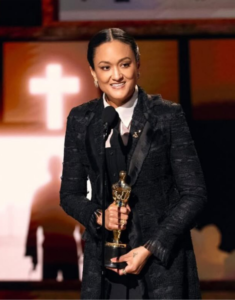
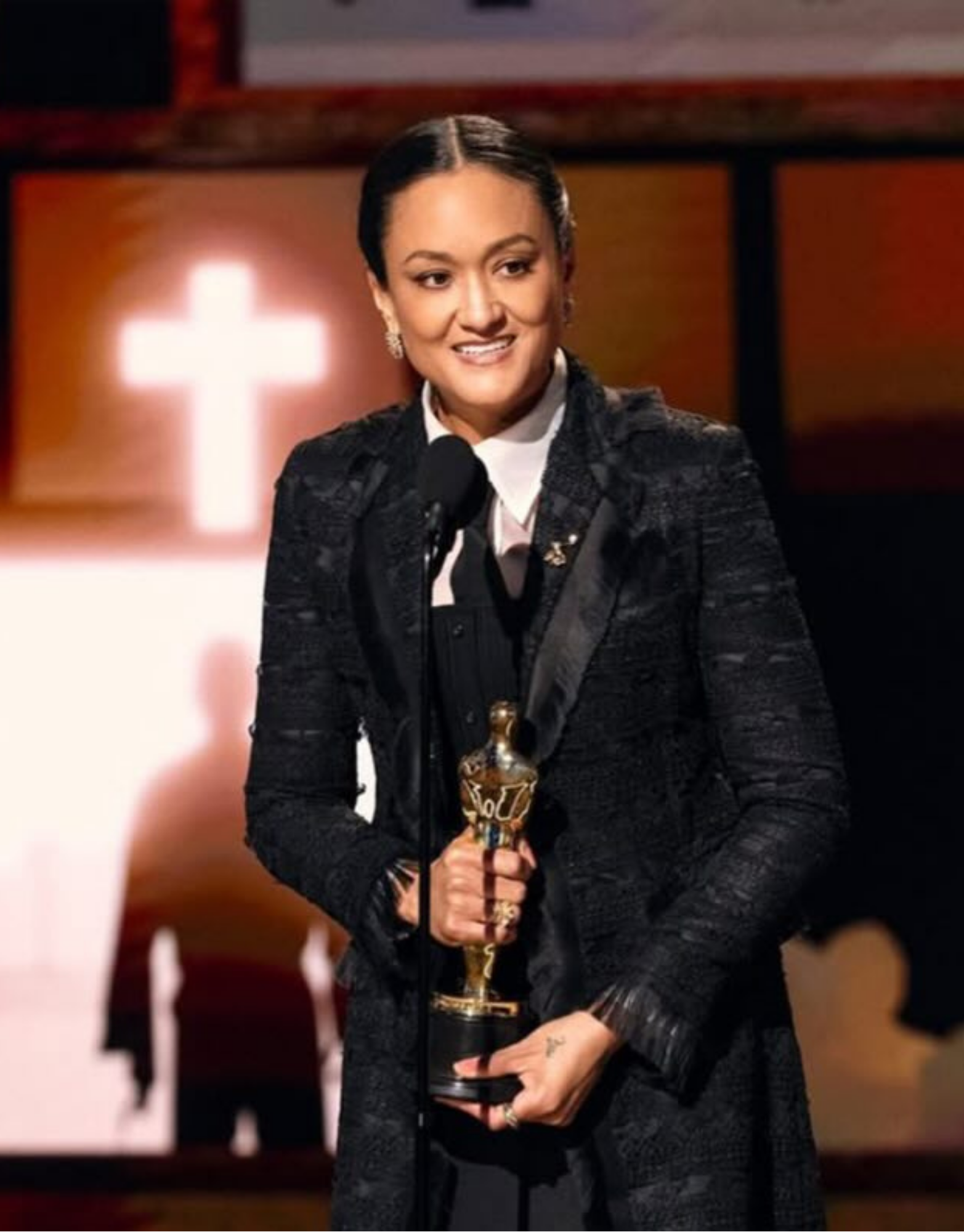
Then Autumn Durald Arkapaw walked onto the stage. In that moment, the room erupted not just in applause but in recognition. After ninety-eight years of male winners, a woman had finally claimed one of cinema’s most technically revered honours. And as she stood there holding the statuette for her work on Ryan Coogler’s film Sinners, the significance of the moment was impossible to ignore.
Yet the most powerful part of her victory came not from the award itself, but from what she did next.
“I really want all the women in the room to stand up,” she said from the stage.
And one by one, they did. To understand the magnitude of Autumn Durald Arkapaw’s achievement, one must first understand what cinematography truly represents.
Cinematographers, often called directors of photography do not simply operate cameras. They decide how stories are seen. They sculpt light, frame emotion, design visual language and determine the atmosphere that audiences absorb without even realising it.
Every unforgettable cinematic moment the golden glow of a sunset, the tension of shadows across a character’s face, the sweeping movement of a camera through space is the work of the cinematographer.
It is, quite literally, the art of vision.
For decades, however, the industry quietly assumed that this role belonged primarily to men. Cinematography was often framed as physically demanding and technically complex, myths that subtly discouraged women from entering the field.
The Oscars reflected that imbalance. Until Autumn Durald Arkapaw.
The Girl Who Learned to See Differently
Long before she was holding an Oscar, Autumn Durald Arkapaw was simply a young woman fascinated by images.
Raised in Northern California, she was drawn to photography and visual storytelling from an early age. Where others might have watched films for the actors or the story, she noticed something different, the colours, the lighting, the mood created by the camera itself.
She began studying photography seriously, eventually enrolling at the American Film Institute Conservatory, one of the world’s most respected training grounds for filmmakers.
There, she refined what would become her signature style: rich textures, striking colour palettes and emotional visual storytelling.
It was not an easy path.
The film industry’s technical departments, camera crews, lighting teams and cinematography units have historically been dominated by men. Breaking into that world required persistence, skill and resilience.
Arkapaw brought all three.
Her early work quickly gained attention in independent cinema, where directors recognised her ability to craft visually expressive worlds. She developed a reputation for cinematography that was both technically precise and emotionally evocative.
Soon, Hollywood began to notice.
From Independent Vision to Hollywood Scale
Arkapaw’s career expanded rapidly as she collaborated with directors who valued bold visual storytelling.
She worked across independent films, television and major studio productions, building a portfolio that demonstrated unusual range.
One of her most widely recognised projects was Marvel’s Black Panther: Wakanda Forever, where her cinematography contributed to the film’s powerful visual language balancing epic spectacle with deeply emotional moments.
Her work stood out for its atmospheric depth and careful attention to colour and light.
But it was her collaboration with acclaimed director Ryan Coogler on the film Sinners that ultimately changed cinema history.
The Film That Changed the Frame
Sinners demanded technical ambition.

The film was shot using large-format cameras, equipment that can weigh over sixty pounds and requires exceptional physical endurance and technical precision. For decades, one of the excuses used to justify the absence of women cinematographers in major productions was the supposed physical challenge of handling such equipment.
Arkapaw dismantled that argument quietly, by doing the work herself.
Her cinematography in Sinners was praised for its rich visual textures, dramatic lighting and immersive atmosphere. Critics highlighted how the film’s visual storytelling elevated its emotional depth, creating images that lingered long after the screen went dark.
By the time awards season arrived, it was clear that the film’s visual achievements were impossible to ignore.
And when the envelope was opened at the Oscars, history followed.
A Moment Bigger Than One Woman
Standing on the stage with her Oscar in hand, Autumn Durald Arkapaw chose not to centre herself. Instead, she turned the spotlight outward.
“I really want all the women in the room to stand up,” she said.
The gesture was simple, yet deeply symbolic. Around the theatre, women began rising from their seats, actors, producers, filmmakers, editors, writers, technicians.
It became a collective moment. “I feel like I didn’t get here without you,” she continued.
Arkapaw also honoured Rachel Morrison, the first woman ever nominated for the Oscar in cinematography for the 2017 film Mudbound.
“She opened the door,” Arkapaw acknowledged, reminding the audience that progress rarely belongs to a single person.
Because history, as she made clear, is rarely made alone.
A Victory That Echoes Beyond Hollywood
Backstage after the ceremony, Arkapaw reflected on what the moment might mean beyond the theatre walls.
“A lot of little girls who look like me will sleep really well tonight,” she said.
It was a quiet but powerful observation. For generations, aspiring filmmakers rarely saw women behind the camera. Representation matters not simply for symbolism but because it expands the realm of possibility.
When people see themselves in positions of creative power, the idea of pursuing those paths becomes real. Arkapaw’s victory does exactly that.
Cinema has always been about perspective. Who tells the story.
Who holds the camera. Who decides what the audience sees.
For nearly a century, the answer to that last question in Hollywood’s most prestigious cinematography award had remained unchanged.
Until one woman stepped forward and reframed the narrative. Autumn Durald Arkapaw did not just win an Oscar. She changed what the future of filmmaking looks like.
And somewhere, tonight, a young girl watching the Oscars may be picking up a camera for the very first time, imagining the images she might create. Because now she knows something that history once suggested was impossible.
The lens belongs to her too.