By Antoine Pepper
There is a particular kind of silence that does not come from ignorance. It is calculated, institutional, and maintained by people who have too much to lose. The Jeffrey Epstein case has, across more than two decades, been the most visible demonstration of that silence in modern American history. And now, with millions of documents finally made public, the world is left grappling with a question that goes far beyond one man’s crimes: what does it mean when the powerful are not just shielded, but shielded systematically?
Jeffrey Epstein was an American financier and convicted sex offender who for decades used his vast wealth and elite social network to sexually exploit and traffic young girls. He was first criminally investigated by the FBI as far back as July 2006, and agents had expected him to face federal indictment by May 2007. A prosecutor had written up a proposed indictment after multiple underage girls told police and the FBI that they had been paid to give Epstein sexualized massages. Instead, a sweetheart deal was negotiated. Alexander Acosta, the U.S. attorney in Miami at the time, signed off on a non-prosecution agreement that allowed Epstein to avoid federal charges entirely, pleading to state charges and serving a remarkably lenient sentence. He died in federal custody in August 2019 while awaiting trial on new sex trafficking charges, in circumstances that remain contested.
For years, calls for full transparency over what the government knew — and when — went unanswered.
Then, in November 2025, the U.S. House of Representatives passed the Epstein Files Transparency Act, which the Senate unanimously approved and President Donald Trump signed into law. The act required the Justice Department to release Epstein-related files by December 19, 2025. The following month, in January 2026, an additional three million pages were released, including 2,000 videos and 180,000 images. It was, on paper, a historic moment of government transparency. In practice, it was anything but.
The Theatre of Transparency
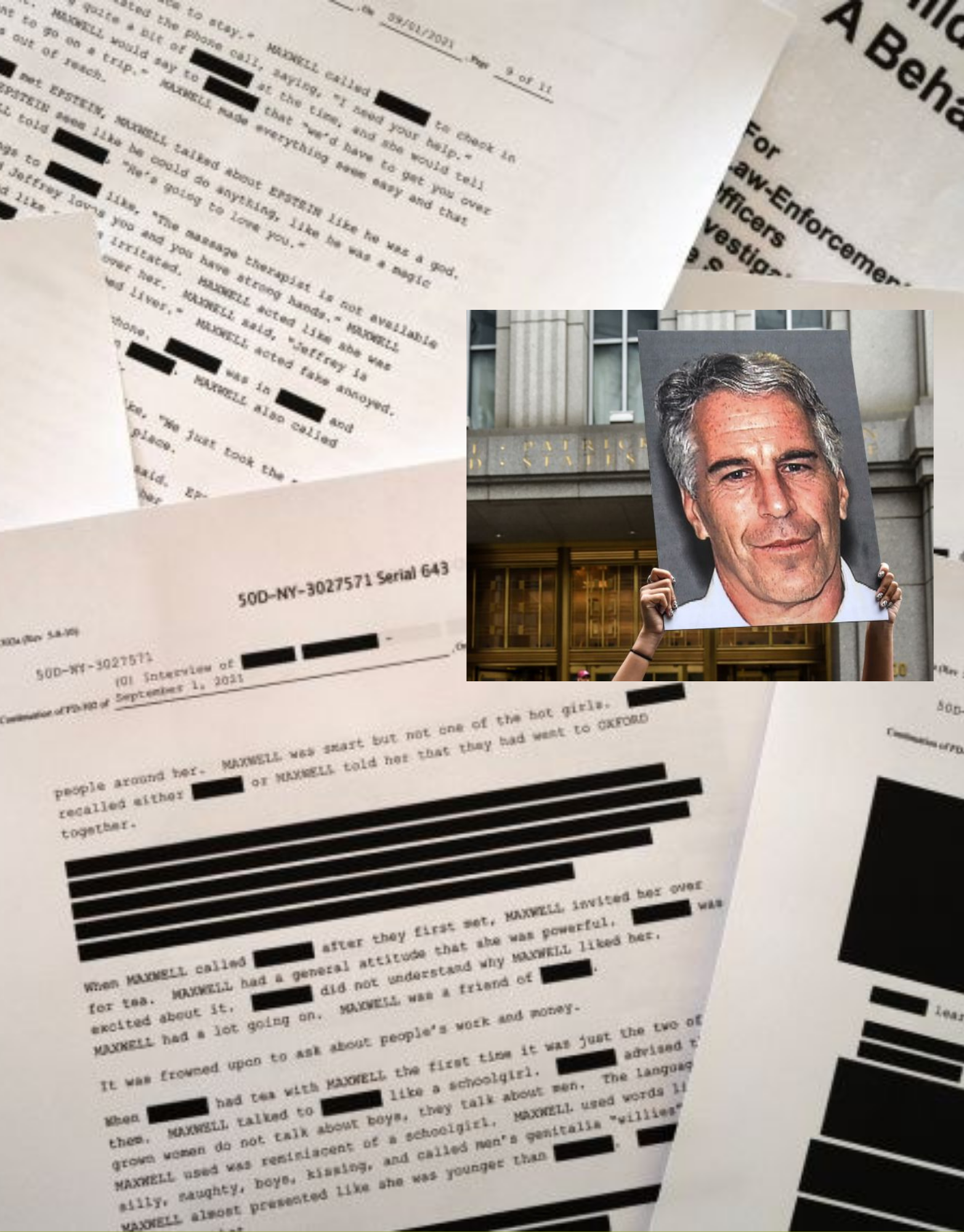
The release of the Epstein files has been, at its core, a performance. The initial December 2025 release drew bipartisan criticism for failing to meet the law’s requirements, with over 500 pages being entirely blacked out. Less than a day after those files were posted online, sixteen of them disappeared from the public webpage without explanation. Members of Congress threatened contempt proceedings. A bipartisan group of senators called for an audit of the Justice Department’s handling of the process. Congressional lawmakers accused the DOJ of withholding files, releasing documents already publicly available, and applying redactions so extensively that serious questions arose about whether the department was properly following the law.
What makes this particularly troubling is not the bureaucratic fumbling alone, but the pattern behind it. Three in four Americans say they believe it is definitely or probably true that the federal government is hiding information about Epstein’s alleged clients. That level of public distrust is not born of conspiracy theories. It is born of decades of watching institutions protect their own.
The Architecture of Power
The files that have emerged paint a portrait of a man who moved freely through the highest circles of global power. Earlier releases contained images showing prominent individuals including tech billionaire Bill Gates, former Trump adviser Steve Bannon, director Woody Allen, and former U.S. President Bill Clinton socializing with Epstein, sometimes on his private island. The January 2026 release included email exchanges with billionaire Elon Musk, communications with British royals, and documentation of Epstein’s friendships spanning politics, business, and philanthropy across multiple continents.
Key revelations from the combined releases included the scope of Epstein’s network involving more than 150 named individuals, previously unknown intelligence connections, and evidence of institutional failures across multiple law enforcement agencies. None of the individuals named or depicted, outside of Epstein’s longtime associate Ghislaine Maxwell, have faced criminal charges. Maxwell was convicted in 2021 and is currently serving a 20-year prison sentence for sex trafficking.
This is the architecture of power in practice. Proximity to influence does not merely open doors; it closes courtrooms. It delays investigations. It buries files for decades and then, when public pressure can no longer be ignored, releases those files in a torrent so large that proper scrutiny becomes almost impossible. When accountability is buried under three million pages, it is still buried.
The Women the World Forgot
In the national and international conversation about the Epstein files, there is a troubling tendency to center the powerful men whose names appear in the documents, rather than the girls and women whose lives were destroyed. Virginia Roberts Giuffre, one of Epstein’s most vocal survivors, spent years being publicly doubted, legally threatened, and dismissed. She died in April 2025. The question of whether she ever truly received justice remains unanswered.
The Justice Department’s handling of the files has retraumatized survivors in ways that are almost incomprehensible. Attorneys for a group of survivors say the Justice Department failed to redact the identities of at least 31 people who were victimized as children. Skye Roberts, the brother of Virginia Giuffre, said the department was unredacting the names of victims while protecting the names of perpetrators — the opposite of what the Epstein Files Transparency Act was intended to do.
This is not a minor procedural error. It is a continuation of the same institutional indifference that allowed Epstein to operate for decades. The women in these files were minors when they were abused. They were groomed, trafficked, and silenced. And now, in the name of public transparency, they are being exposed all over again while the men who exploited them remain shielded behind redaction blocks. Public opinion on this has been, rightly, outraged. A majority of Americans, 53%, say the Epstein files have lowered their trust in the country’s political and business leaders. The survivors deserved better than to become footnotes in a political saga.
What the Public Made of All This
The public reaction to the Epstein files has been a study in contra-dictions. On one side, there is genuine and warranted demand for accountability. On the other, the story has been colonized by conspiracy theories that often distract from the documented reality of what occurred. Both supporters and opponents of the president have criticized the rollout of documents as often heavily redacted and shared without any clear organization or context. When the December 2025 release revealed that faulty digital redactions allowed blacked-out text to be recovered by copying and pasting it into another application, social media users uncovered content officials had intended to suppress — some of it verifiable, much of it not.
A 2025 survey found that only 19% of Americans consider the Epstein files controversy a critical issue, while 34% describe it as one among many pressing concerns and 45% say it is not particularly important to them. This is a remarkable statistic. It suggests that while many people are aware of the scandal, they have been so overwhelmed by the volume of information, the political noise surrounding it, and the lack of tangible accountability that they have begun to disengage. That disengagement is precisely what allows power to persist unchallenged.
What We Do With This
The danger of the Epstein files is not that the truth will never come out. It is that the truth will come out in a form so fragmented, so politically weaponized, and so thoroughly overwhelming that it produces nothing beyond outrage cycles. Only 6% of Americans say they are satisfied with the disclosures made so far, while 49% say they are dissatisfied. And just one in five say it is time to move on. The public, to its credit, has not moved on. But moving on is different from moving forward.
Moving forward means demanding that the survivors of Epstein’s abuse be treated as the central figures in this story, not its footnotes. It means acknowledging that the 2008 non-prosecution agreement — which allowed a man with documented evidence against him to avoid federal charges — was not a bureaucratic accident but a product of the same network of influence the files have now exposed. It means understanding that Ghislaine Maxwell did not act alone, and that a 20-year sentence for the convicted facilitator of a trafficking network, while her associates continue their public lives untouched, is not justice.
It also means being honest about what the media has done with this story. Too often, coverage has centered the famous names in the flight logs rather than the stories of the girls on those planes. Too often, the question asked has been what a revelation means for a powerful person’s reputation, rather than what happened to the children involved. That framing is not neutral. It is a choice, and it reflects the same hierarchy of importance that allowed the abuse to continue for as long as it did.
The Epstein files are not primarily a political document. They are a record of systemic failure — of law enforcement that looked the other way, of institutions that protected the powerful at the expense of the vulnerable, and of a culture that, for too long, assigned more value to the comfort of the connected than to the safety of young girls. The world has been watching. The real question is whether, this time, it will also act.