Spotlighting Remarkable Women and Girls

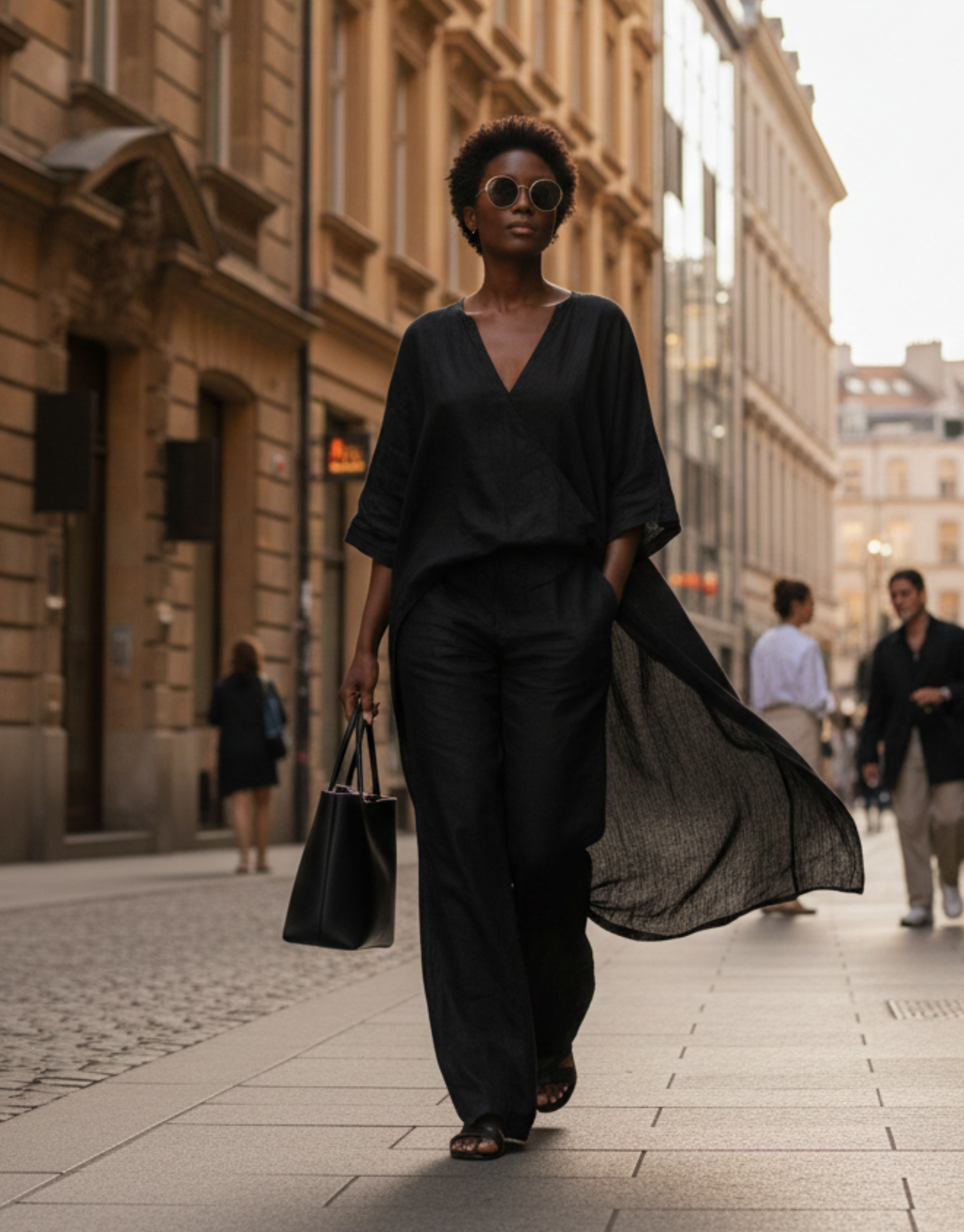
Wearing Black in the Sun Is Not the Villain You Think It Is

By Daniel Agusi

We have all heard it before.

Why are you wearing black in this heat?”

“You will sweat more.”

“The sun will double the heat on you.”

For many of us, wearing black outdoors feels like breaking an unspoken rule. Black is blamed for discomfort, sweat, and instant regret the moment the sun comes out. But here is the surprising truth. That belief is only half correct.

Yes, black absorbs more sunlight than white or lighter colours. That part is real science. If you place a black fabric and a white fabric under direct sunlight, the black one will heat up faster. No argument there.

But here is where the myth starts to fall apart.

Feeling hot as a human being is not the same thing as a piece of cloth getting hot.

Your body does not experience heat in isolation. It responds to airflow, sweat, fabric, and fit. In fact, what you wear matters far more than what colour it is.

This is why a loose black cotton dress can feel cooler than a tight white synthetic top. Breathable fabrics allow air to circulate around your skin. That airflow helps sweat evaporate, and evaporation is one of the main ways the body cools itself. When sweat evaporates, heat leaves your body with it.
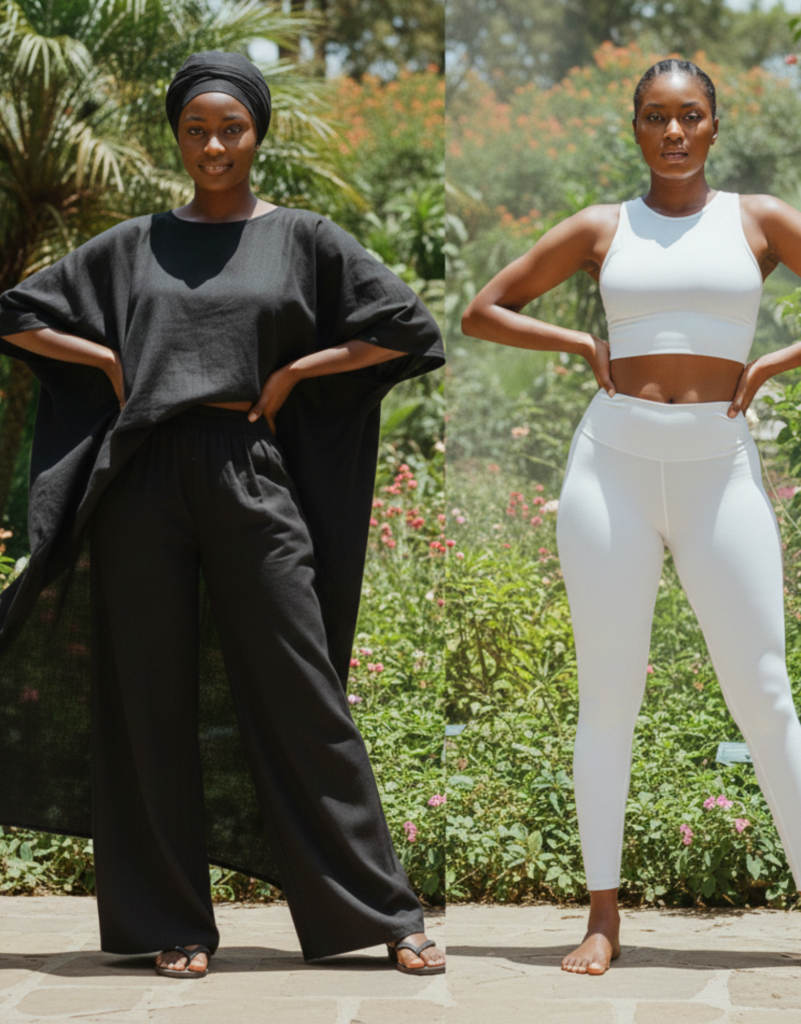
Now consider the opposite. Tight clothing traps heat against your skin. Non-breathable fabrics hold on to sweat instead of letting it evaporate. This creates that sticky, uncomfortable feeling many people blame on colour, when the real culprit is ventilation.

Interestingly, this explains why people in some of the hottest desert regions of the world often wear loose, dark-coloured clothing. The outer layer absorbs heat, but the loose fit allows air to move between the fabric and the skin. That airflow reduces how much heat actually reaches the body.

So, does wearing black automatically make you sweat more?

Not necessarily.

Sweating is your body’s natural cooling system. You sweat more when heat is trapped and evaporation is blocked. Colour alone does not determine that. Fabric choice and fit play a much bigger role.

The idea that the sun “doubles” the heat for anyone wearing black is an exaggeration. Real life is more complex than that. Heat transfer depends on how thick the fabric is, how much air moves around it, and how well moisture can escape.

The practical takeaway is simple.

In hot weather, prioritise loose-fitting clothes and breathable fabrics like cotton or linen. If you love black, you do not have to abandon it. Wear it wisely. Let your clothes work with your body, not against it.

So, the next time someone looks at your black outfit and shakes their head, you can smile. Because the real secret to staying cool has less to do with colour and much more to do with comfort, airflow, and understanding how your body actually works.

And that is a fashion lesson worth keeping.
Share:

Trending

Raising Women Magazine Issue 38 – March 2026

As we approach International Women’s Day, we lean into this year’s agenda: Give to Gain. It is a simple phrase, yet profoundly strategic. Progress for women has never been sustained by visibility alone. It has been built through investment, mentorship, solidarity, and the deliberate transfer of opportunity.

On our cover, Ambassador Keisha McGuire represents this principle in motion. Her leadership in global diplomacy reminds us that when women give knowledge, courage, and access, they do not diminish their power. They multiply it.

This edition examines what it truly means to give: time, resources, platforms, protection, policy influence. And what we gain in return: stronger institutions, fairer systems, and a generation of women who enter rooms already prepared.

International Women’s Day is not a performance. It is a responsibility.

When women give intentionally, we all gain collectively.

The question is not whether we will celebrate. The question is how we will contribute.

RW MAGAZINE Issue 36 – FEB 2026

February arrives wrapped in expectation. Red roses, grand gestures, and a narrow definition of love that often leaves women carrying far more than they receive.

Issue 035 – January 2026

Our spotlight on Emma Grede reminds us that the most powerful empires are not built alone. Through intentional partnerships, shared vision, and a deep commitment to lifting other women as she climbs, Emma embodies what collaboration looks like when it is rooted in purpose rather than performance

Your guide to IVF and egg freezing in Korea

Empowering your family planning journey with curated fertility treatments at lower costs. Get our guide for Korea’s leading clinics, pricing and service breakdown.

Recommended News

Raising Women Magazine Issue 38 – March 2026

As we approach International Women’s Day, we lean into this year’s agenda: Give to Gain. It is a simple phrase, yet profoundly strategic. Progress for women has never been sustained by visibility alone. It has been built through investment, mentorship, solidarity, and the deliberate transfer of opportunity.

On our cover, Ambassador Keisha McGuire represents this principle in motion. Her leadership in global diplomacy reminds us that when women give knowledge, courage, and access, they do not diminish their power. They multiply it.

This edition examines what it truly means to give: time, resources, platforms, protection, policy influence. And what we gain in return: stronger institutions, fairer systems, and a generation of women who enter rooms already prepared.

International Women’s Day is not a performance. It is a responsibility.

When women give intentionally, we all gain collectively.

The question is not whether we will celebrate. The question is how we will contribute.

Issue 035 – January 2026

Our spotlight on Emma Grede reminds us that the most powerful empires are not built alone. Through intentional partnerships, shared vision, and a deep commitment to lifting other women as she climbs, Emma embodies what collaboration looks like when it is rooted in purpose rather than performance