by Francisca Sinjae
In badminton, the shuttle does not linger. It arcs, dips, and disappears into velocity. Points are decided in seconds. History, occasionally, is decided just as quickly.
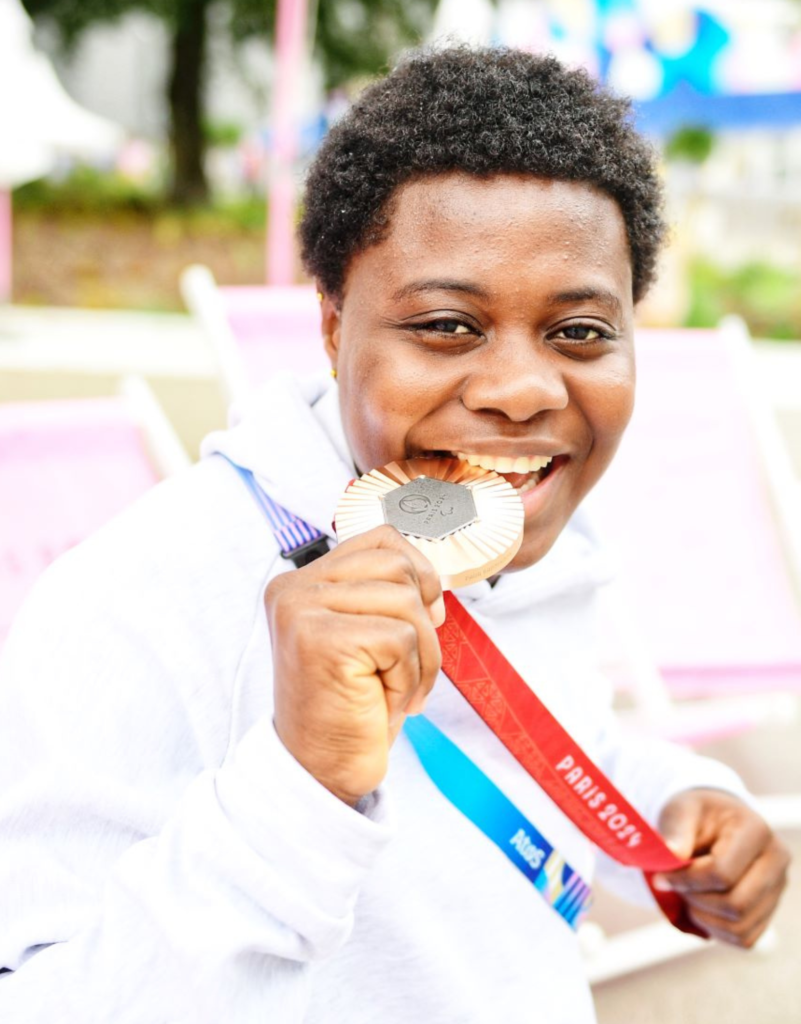
In Paris, at the 2024 Summer Paralympics, one rally altered the geography of a sport. The bronze medal match in women’s SL3 was tense but controlled. Across the net stood an athlete from a nation with deep badminton pedigree. On the other side stood a young Nigerian woman representing a continent that had never won a Paralympic badminton medal.
When the final point landed, it did more than conclude a match. It closed an absence.
Mariam Eniola Bolaji became the first African athlete ever to win a Paralympic medal in badminton.
But history, it turns out, was not finished with her.
In 2026, the Badminton World Federation updated its global rankings. The women’s SL3 category, a field long dominated by athletes from Asia and Europe had a new occupant at the summit.
Mariam Eniola Bolaji. World No. 1.
The first African woman in para-badminton history to reach that position.
The shuttle had travelled further than anyone expected.
Understanding the Category: What SL3 Really Means
To appreciate the scale of this achievement, one must first understand the category in which she competes.
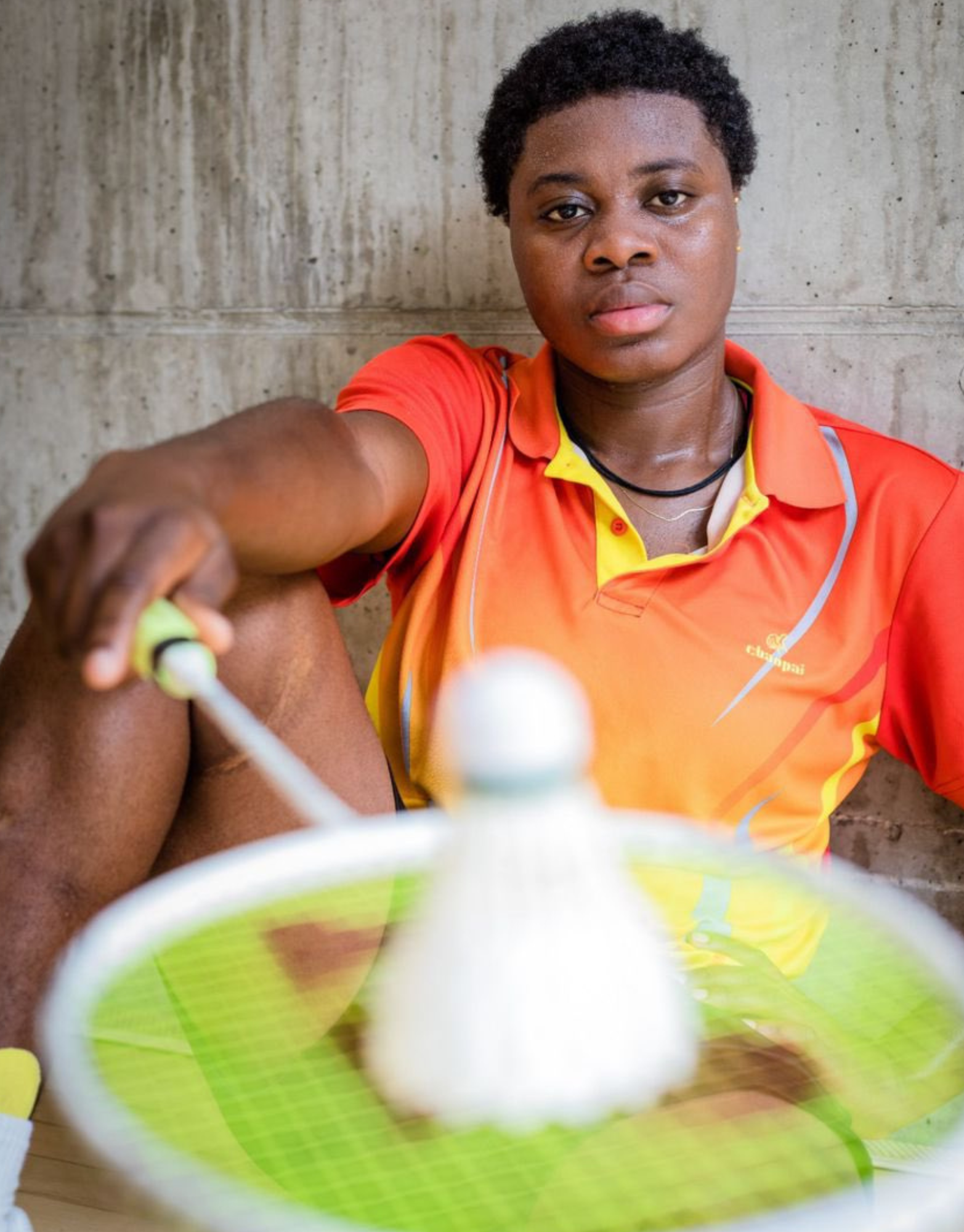
SL3 stands for Standing Lower Limb Impairment, Class 3. Athletes in this classification compete standing but have significant impairment in one or both lower limbs. Balance, speed, and range of movement are affected. Unlike wheelchair categories, SL3 athletes cover a full singles court, measuring 13.4 metres in length.
That distance does not shrink simply because mobility does.
Elite able bodied badminton is often defined by explosive lateral movement. SL3 badminton, by contrast, is a study in calibrated precision. Movement must be intentional. Energy must be rationed. Recovery after lunges takes longer. Every unnecessary step carries cost.
Victory in SL3 is not about frantic pace. It is about reading the shuttle early, constructing points carefully, and placing shots where the opponent must expend more energy than you do.
Mariam’s style reflects this discipline. She is not erratic. She is methodical. Her rallies are shaped, not improvised.
It is strategy over spectacle.
The Road to Paris
Before Paris, Mariam had already established herself as one of Africa’s leading para-badminton athletes. Continental championships sharpened her competitive edge. International tournaments broadened her exposure.
Nigeria’s Paralympic tradition is strong, particularly in powerlifting and athletics. Since its debut in 1992, Nigeria has earned dozens of Paralympic medals, many of them gold. But badminton had not featured prominently in that medal narrative.
Her bronze changed that.
Paris 2024 marked one of the most gender-balanced Paralympic Games in history, with female participation continuing to rise steadily. Yet representation from Africa in para-badminton remained limited.
When Mariam stood on that podium, she was not just celebrating a personal victory. She was expanding the continent’s footprint in a relatively new Paralympic discipline.
A Shuttle and a Statistic
The shuttlecock weighs approximately five grams.
Five grams carried an entire continent onto the Paralympic badminton medal table for the first time.
There is something almost mischievous about that irony.
Badminton is a sport of finesse and feathers, yet it delivered one of the most structurally significant milestones in African para-sport history.
And Mariam was just getting started.
The 2026 Ascension: Becoming World No. 1
Global rankings in badminton operate on a rolling 52-week points system. Performances at international tournaments, from World Championships to International Circuit events are weighted. Consistency is rewarded. One good week is not enough.
In 2026, Mariam’s season was defined by sustained excellence.
She reached the final of the 2026 BWF Para Badminton World Championships in Bahrain, securing silver. That result alone was historic, no African woman had reached that stage in SL3 at a World Championship.
But it was not just the silver. Earlier international performances had already placed her within striking distance of the summit.
When ranking points were recalculated, she rose to World No. 1.
This was not symbolic. It was mathematical.
For the first time, the top line of the women’s SL3 ranking bore the name of a Nigerian athlete.
World No. 1 is not a ceremonial title. It affects seeding in tournaments. It influences sponsorship discussions. It reshapes expectations.
It confirms dominance.
The Biomechanics of Excellence
To reach that ranking in SL3 requires mastery of certain physiological and tactical components.
Sports science research in para-badminton highlights several determinants of success in lower limb impairment categories:
- Anticipatory reading of shuttle trajectory
- Upper body strength and shoulder endurance
- Core stability for balance compensation
- Tactical shot variation to reduce opponent recovery time
Mariam’s game exhibits these characteristics.
Her diagonal drops stretch opponents laterally. Her net patience forces errors. She rarely wastes movement. Points are built like arguments, logically, persuasively, without unnecessary flourish.
There is a cerebral quality to her matches.
If able bodied badminton often resembles sprinting chess, SL3 badminton is more akin to strategic chess under time pressure. She plays it well.
Infrastructure and Improbability
Elite sport is rarely accidental. It is built on infrastructure: coaching systems, physiotherapy access, international exposure, funding pipelines.
Globally, more than one billion people live with some form of disability, according to the World Health Organization. Yet access to organized sport remains uneven, particularly in lower-income regions.
African para-athletes often operate within constrained systems. Facilities may be limited. Travel funding inconsistent. Media coverage sparse.
Which makes a rise to World No. 1 in a technically demanding sport all the more remarkable.
Her achievement disrupts assumptions about where elite excellence must originate.
It suggests that talent, when disciplined, can outrun structural disadvantage — though not without cost.
Youth and Psychological Maturity
Mariam belongs to a generation navigating visibility early. Social media amplifies performance. Rankings are dissected instantly.
Transitioning from historic bronze medalist to global number one requires mental steadiness. Sport psychology literature consistently emphasizes the importance of focus routines, visualization and emotional regulation at elite levels.
Carrying the weight of being “the first” could destabilize many athletes. Instead, she converted it into momentum. From interruption in 2024 to coronation in 2026.
The Economics of a Ranking
World rankings have tangible consequences.
Top-ranked athletes attract sponsorship opportunities. They command visibility. They influence youth participation rates.
Research in sports development consistently shows that visible role models increase grassroots engagement among underrepresented groups. When young athletes see someone who shares their background occupying the top of a global table, aspiration recalibrates.
Mariam’s ranking could catalyze broader interest in para-badminton across Nigeria and Africa. It could prompt federations to invest more deliberately in youth training structures.
If leveraged effectively, one ranking can alter a pipeline.
Beyond First. Beyond Number One.
The temptation in sport journalism is to freeze athletes at their highest point.
But rankings fluctuate. Competitors adapt. Seasons change.
The deeper significance of Mariam’s story lies not only in becoming the first African Paralympic medallist in badminton or the first African World No. 1 in women’s SL3.
It lies in the expansion of possibility. She has altered what can be imagined within African para-sport.
And imagination is not a soft metric. It precedes participation. Participation precedes development. Development precedes medals.
The Shuttle Still in Motion
The shuttle never rests long. It rises. It falls. It is struck again. In 2024, it carried Africa onto a Paralympic podium for the first time. In 2026, it carried Africa to the top of the global rankings.
Five grams. Enough to rewrite absence into presence.
Enough to convert interruption into dominance. Enough to place Mariam Eniola Bolaji at the summit of her sport.