By Francisca Sinjae
There is a difference between speaking about the Earth and working with it. One stays in language. The other leaves marks.
Each year, Earth Day arrives with familiar vocabulary. Protection. Awareness. Action. But across art and culture, the more interesting shift is not in what is being said, but in what is being made. The planet is no longer framed as a distant subject. It is being handled, shaped, interrupted, and, in some cases, returned to.
In the work of Olafur Eliasson, material is never neutral. Ice, light, water, fog. These are not symbolic choices. They behave. They change. In Ice Watch, blocks of glacial ice were positioned in busy city spaces and left to melt at their own pace. No barrier, no spectacle beyond what was already happening. People walked past, paused, touched, circled. Time became visible. Not accelerated, not dramatised, just allowed to pass in public.
What that kind of work does is remove distance. It does not explain environmental change. It places you inside its duration.
Elsewhere, the shift is less theatrical but no less precise. In studios across Accra, Jaipur, São Paulo, and Kyoto, artists are making decisions that begin long before a final piece exists. The selection of material is not aesthetic first. It is relational. Where did this come from? What does it require? What does it return?
Clay is handled with an awareness of where it was taken. Pigments are extracted, not purchased. Fabric is dyed slowly, often unevenly, carrying traces of process rather than hiding them. These are not romantic gestures. They are choices that interrupt speed.
In textile practices, this is particularly visible. Indigo vats, once tied to specific geographies, are being revisited with a level of care that resists industrial uniformity. The colour is rarely identical from one piece to another. It deepens, fades, shifts. The variation is not corrected. It is kept. What emerges is work that holds time within it, rather than erasing it.
Fashion, long structured around volume and turnover, is being forced into a different conversation. Not by trend, but by pressure. Designers are no longer able to separate the visual from the material conditions that produce it. Fabric is being questioned. Supply chains are being traced. Waste is being reconsidered not as an afterthought, but as a starting point.
This is where the idea of luxury begins to fracture. Excess no longer carries the same authority. Precision does, but of a different kind. Precision in sourcing. Precision in making. Precision in knowing when to stop.
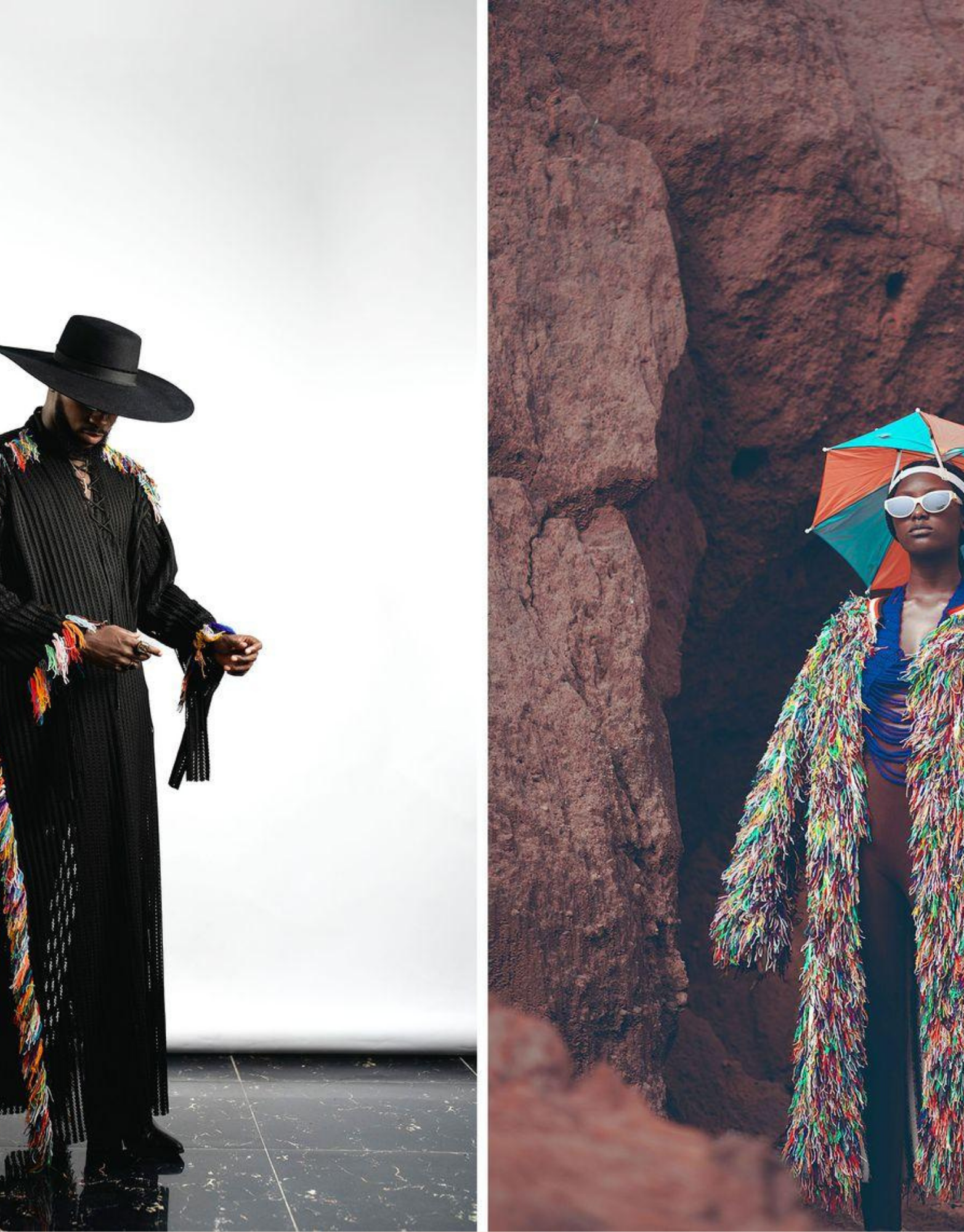
Across collections, there is an increasing presence of garments built from what already exists. Deadstock, discarded textiles, experimental fibres grown or extracted rather than manufactured at scale. These pieces do not attempt to hide their origins. They make them visible.
At the same time, not all responses are material in the traditional sense. Some exist in systems, others in refusal. Digital fashion, for instance, removes physical production altogether, raising questions about value, ownership, and presence. It does not solve environmental strain, but it complicates the assumptions around what must be produced in order to be seen.
Running parallel to these newer approaches is a return to methods that have never operated on excess. Indigenous and community-based practices across continents have long worked within limits, using what is available without depletion. What is changing is not the practice itself, but the attention it is receiving. These systems are no longer being framed as peripheral. They are being studied, adapted, and, in some cases, adopted.
This creates a tension worth paying attention to. Innovation is often associated with invention, with something entirely new. But within this space, it also looks like recognition. Like admitting that certain ways of working have always existed, just not within dominant narratives.
Art, in this context, becomes less about resolution and more about exposure. It reveals the structure behind what we consume. It slows down what has been accelerated. It asks uncomfortable questions without insisting on clean answers.
What is striking is how this is happening without a single centre. There is no dominant geography directing the movement. Work emerging from Lagos does not mirror what is happening in Copenhagen, and neither follows São Paulo or Seoul. Yet there is a shared awareness running through them. A refusal to ignore the conditions of making.